Middle East crisis live: US and Iran trade strikes again, after Trump warns Tehran will ‘pay the price’ for stalled talks
The US and Iran exchanged fresh strikes as Trump warned Tehran would 'pay the price' for stalled talks, while regional airspace alerts spread.
Intelligence analysis by GPT-5.4 Mini
This live blog says the conflict has entered a second straight day of back-and-forth strikes. US airstrikes hit Iranian military sites, Iran answered with attacks or alerts in Bahrain, Kuwait and Jordan, and the stalled negotiations look increasingly fragile.
Two countries are throwing punches again, and nearby places are getting worried. It is like two kids fighting in a hallway, while the whole school has to move out of the way so nobody else gets hurt.
Analysis
What happened
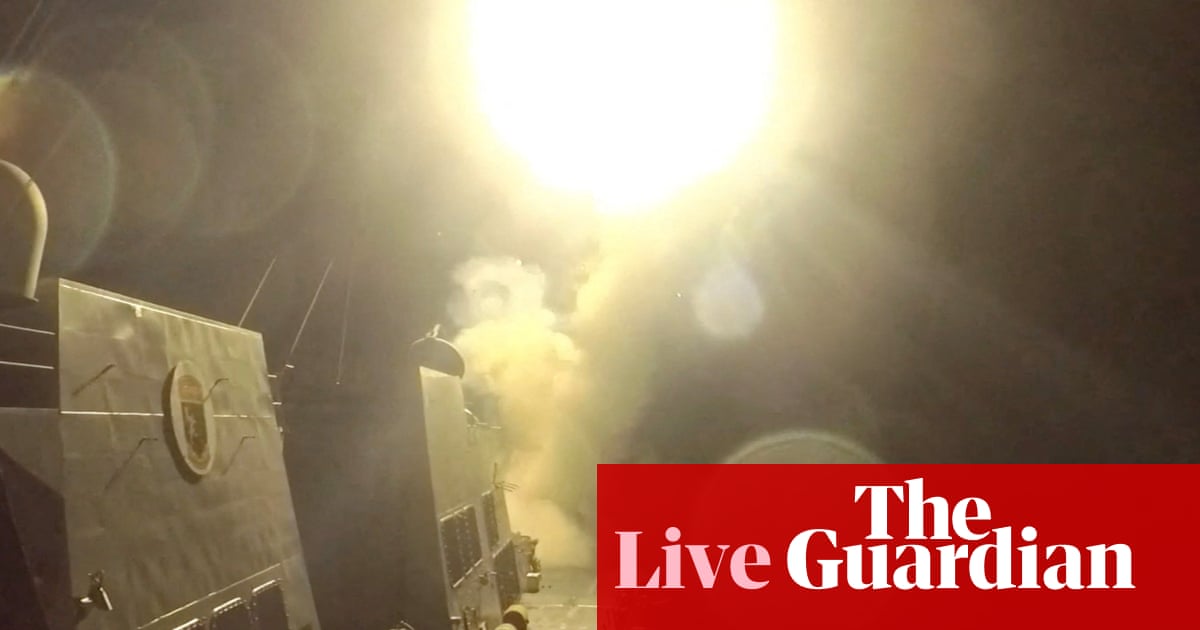
The Guardian’s live coverage says the US launched a second round of airstrikes on Iran after Donald Trump warned Tehran would “pay the price” for stalled negotiations. US Central Command said the latest strikes targeted Iranian military surveillance systems, communications equipment and air-defence sites, and involved the air force, Marines and Navy.
Iran responded with strikes or alerts affecting Bahrain, Kuwait and Jordan. Kuwait closed its airspace while its air defences responded to aerial targets, and flights were diverted elsewhere. Bahrain sounded missile alerts after Iran said it was attacking the US Navy’s Fifth Fleet, while the US embassy in Jordan warned that missiles, drones or rockets were reported in Jordanian airspace.
Why this matters
The live blog frames the exchange as the second consecutive day of back-and-forth attacks, testing a shaky two-month ceasefire. It also says Iran still intends to hold its leverage around the Strait of Hormuz, a key shipping route, which makes the conflict important well beyond the immediate battlefield.
The piece adds that crude oil traded above $93 a barrel on Wednesday, more than 25% higher than at the start of the war. That gives the story a clear global dimension: military escalation is already affecting air travel, shipping risk and energy prices.
Key points
- The US launched a second round of airstrikes on Iranian targets, according to the live blog.
- Iran responded with attacks or alerts involving Bahrain, Kuwait and Jordan.
- Kuwait closed its airspace as its air defences dealt with the threat.
- The article says the standoff is testing a fragile two-month ceasefire and stalled negotiations.
- Oil prices were already above $93 a barrel, more than 25% higher than at the start of the war.
If the pressure from the strikes pushes both sides back to talks, the ceasefire could hold and reduce the risk to Gulf airspace and shipping. A deal that includes some sanctions relief could also lower the temperature enough for negotiations to continue.
If the strikes keep crossing borders, the conflict could widen and drag in more countries and military targets. Continued disruption around the Strait of Hormuz would also keep oil and travel markets under strain.