Migrants depart Spain's N. Africa enclave as EU tightens borders
More than 48,000 migrants had already returned to Morocco from Spain's enclave of Ceuta in North Africa by Friday evening, officials said, as some EU countries bolstered their border controls over the sudden influx.
Intelligence analysis by Llama
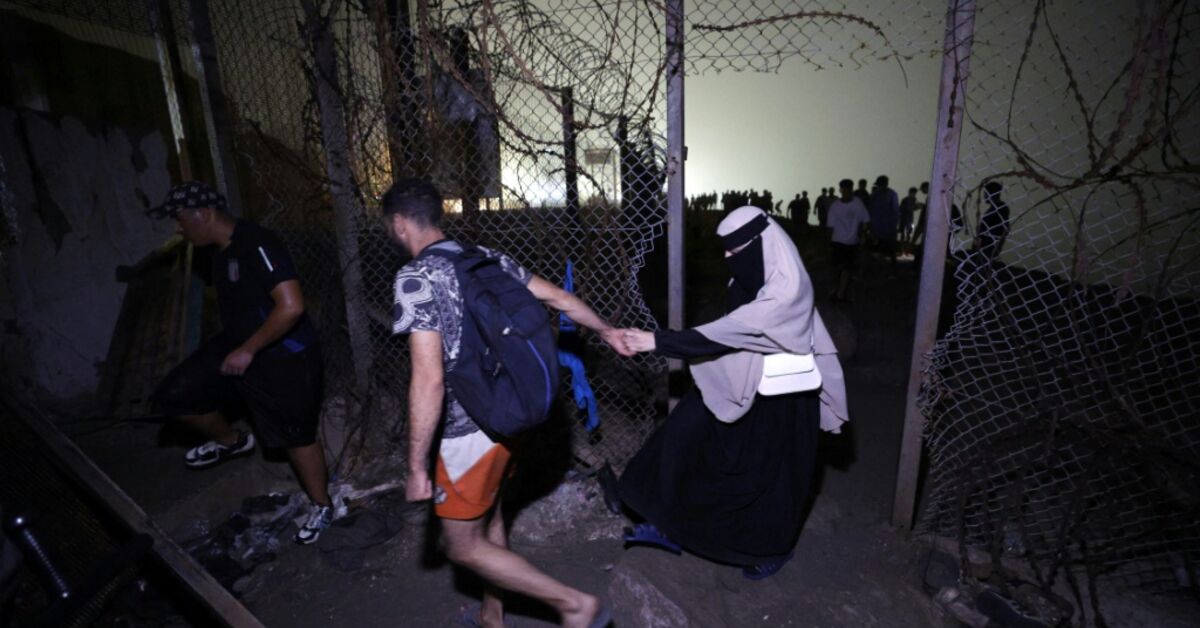
Tens of thousands of migrants entered Ceuta over a few days from neighboring Morocco, but most have now left as Spain and other EU countries tighten their borders. The sudden influx has sparked political panic in Europe.
A big group of migrants swam from Morocco to Spain's Ceuta enclave, but most of them went back home. They wanted to go to Europe to find work and see their families, but it's not easy to get there. Now, some European countries are making it harder for people to cross the border.
Analysis
A Mass Exodus from Ceuta
The sudden influx of migrants into Ceuta has left the Spanish government scrambling to respond. Over 60,000 migrants entered the enclave in a matter of days, but by Friday evening, more than 48,000 had already returned to Morocco. The remaining migrants continued to cross back over the border on Saturday morning, with Spanish soldiers and police watching over the scene. The migrants, mostly young people, were seen swimming around a small border barrier to enter Ceuta, with at least 34 people dying in the attempt.
Why the Migrants Are Leaving
The migrants are leaving Morocco in search of a better life in Europe. Many are motivated by the potential to visit their families or find work in Europe. Soufian, a 42-year-old security guard from Morocco, told AFP that he had been planning to make a swim from his coastal town to Ceuta when a friend told him that the border was open. He explained that he was motivated by the potential to visit his mother, who is ill and lives in Madrid.
The EU's Response
The sudden influx of migrants has sparked a political crisis in Europe, with some EU countries tightening their border controls and others calling for Spain's membership in the Schengen free movement zone to be suspended. France has tightened checks on its border with Spain and will increase its police presence there fivefold to 334 officers and gendarmes by Saturday. Italy has suspended its Schengen agreement with Spain, allowing for visa-free movement between borders, for one month. Spanish Prime Minister Pedro Sanchez has blasted the 'selfish' reaction by some EU countries and called for a video meeting of the bloc's interior ministers.
Key points
- More than 48,000 migrants had already returned to Morocco from Ceuta by Friday evening.
- The sudden influx of migrants has sparked a political crisis in Europe.
- Some EU countries are tightening their border controls, while others are calling for Spain's membership in the Schengen free movement zone to be suspended.
- At least 34 people died attempting to swim from Morocco to Ceuta.
- The migrants are motivated by the potential to visit their families or find work in Europe.
If the EU countries can work together to manage the migrant influx, it could lead to a more coordinated and humane approach to migration. This could also lead to increased cooperation between Spain and Morocco to address the root causes of migration.
If the EU countries continue to tighten their border controls, it could lead to a humanitarian crisis in Ceuta, with migrants being left stranded and without access to basic necessities. This could also lead to increased tensions between Spain and Morocco, potentially destabilizing the region.