Missiles and the Supreme Leader's 'Red Lines': Is Negotiation for the Islamic Republic of Iran a 'Pure Loss'?
BBC Persian examines how Iran's leaders are framing talks after recent fighting, with more emphasis on threats and red lines than compromise.
Intelligence analysis by GPT-5.4 Mini
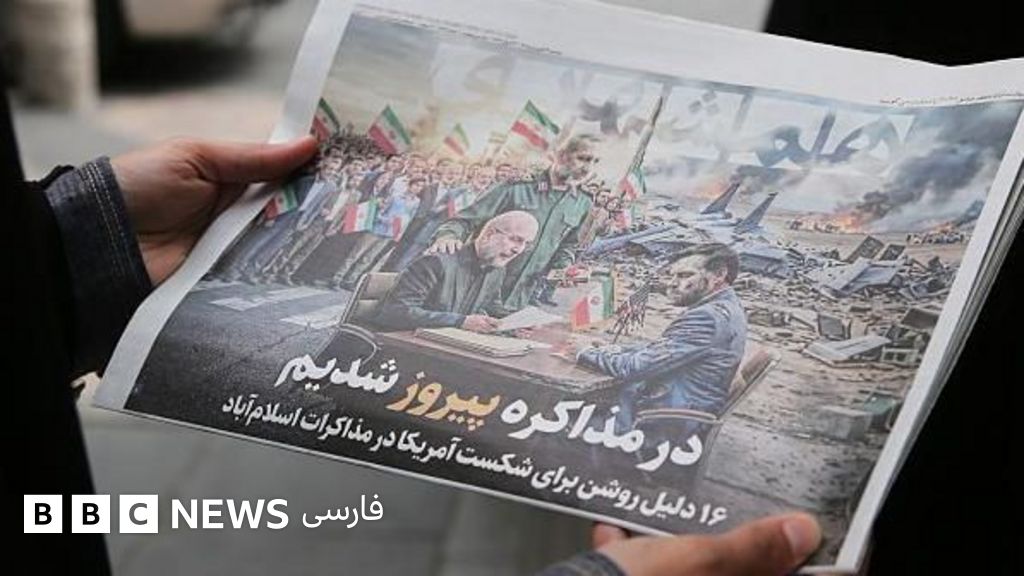
The article argues that, after years of talks and two recent rounds of conflict, Iran's debate over negotiation has turned into a contest over who sets the terms. Hardline voices are presenting any concession as a loss, while the public and markets are becoming less responsive to repeated talk of breakthroughs.
The article says Iran's leaders are arguing over whether talking or fighting works better, like two teams fighting over who gets to pick the rules of a game. Some people in power say talks only matter if Iran gets what it wants first, while others still hope talks can lower the danger.
Analysis
A shift from diplomacy to pressure
BBC Persian says Iranian officials are increasingly using the language of war and threat instead of diplomacy. It points to a recent post by Mohammad Bagher Ghalibaf, who wrote that Iran does not gain concessions through negotiation but with missiles, and only uses talks to make those concessions clear. The article treats that tone as part of a broader trend among senior political and military figures.
Competing narratives around talks
The story argues that the real fight is not only over whether negotiations happen, but over what they mean. Some officials and outlets close to the hardline camp present Iran as being in a position to dictate terms, not compromise. Abbas or Ibrahim Azizi, chair of parliament's national security committee, is quoted saying Trump should understand that Iran, as the winner, sets the conditions for talks.
At the same time, Mahmoud Nabavian, a conservative lawmaker and deputy chair of the same committee, described a possible agreement as "a pure loss," criticizing it for ambiguity over sanctions relief, no compensation, and what he called a violation of the Leader's conditions.
The role of 'red lines'
The article says much of the dispute centers on the red lines attributed in media reports to Mojtaba Khamenei. Those reported conditions include acceptance of enrichment, full lifting of primary and secondary sanctions, خروج of US combat forces from the region, compensation for Iran, and an end to fighting on all fronts, including against Hezbollah in Lebanon. The paper stresses that the talks' contents have not been officially released, so these conditions remain part of the political narrative rather than confirmed public text.
A familiar cycle
BBC Persian places this debate in the context of more than two decades of negotiations. It recalls earlier nuclear talks under Saeed Jalili that repeatedly stalled or reached deadlock. It also says that after the two military confrontations in the past year and the recent two-week ceasefire, discussion of war and negotiation has become central again. But markets now seem less sensitive to repeated headlines about progress, disagreement, or failure than they once were.
The article's main point is that the issue is no longer only whether talks resume, but whether the internal balance of power in Iran allows any meaningful flexibility.
Key points
- Iranian officials are increasingly using warlike language instead of a purely diplomatic tone.
- The article says the core dispute is over who sets the terms for any deal and how much flexibility the leadership will allow.
- Hardline lawmakers are calling a possible agreement a 'pure loss' and objecting to unclear sanctions relief and compensation terms.
- Media reports have amplified alleged red lines attributed to Mojtaba Khamenei, though the talks' formal text has not been published.
- After years of negotiations and recent military clashes, repeated talk of progress appears to have less effect on markets and public attention.
If the hardliners' conditions are used to define a clearer bargaining position, the article suggests talks could become more structured and less vague. A clearer framework might also reduce some of the confusion that has surrounded recent negotiations and help markets react less to rumors.
If the red-line politics harden further, the article suggests the talks could stall again or become little more than a public messaging battle. That would leave little room for compromise and could increase the chance of renewed confrontation if ceasefire tensions break down.