Mixed day for global equities as oil prices retreat
Oil prices retreated on Friday after Houthi rebels said they were not blocking traffic through the strategic Bab al-Mandeb Strait. The main international oil contract Brent North Sea fell back under US$100, helping US and European stock markets stabilise.
Intelligence analysis by Llama
Oil prices retreated on Friday after Houthi rebels said they were not blocking traffic through the strategic Bab al-Mandeb Strait. The main international oil contract Brent North Sea fell back under US$100, helping US and European stock markets stabilise. Despite the United States launching fresh strikes on Iran, there was relief on markets that some ships were still able to pass thro…
Imagine you're at a big restaurant with many tables. The price of the food at each table is like the price of oil. If the price of the food goes up, people might not want to eat as much, and that can affect the whole restaurant. In this case, the price of oil went up, but then it came back down a bit. This helped the restaurant (the global economy) to stay stable.
Analysis
A Mixed Day for Global Equities
The main international oil contract Brent North Sea fell back under US$100 on Friday after surging past the key milestone the previous day on escalating Middle East strikes. This helped US and European stock markets stabilise. The key US contract, West Texas Intermediate, declined more than three per cent after having gained more than six per cent on Thursday.
The sizeable jumps had come after Yemen's Houthi rebels struck oil tankers in the Red Sea, potentially opening a new front in the Middle East war. Despite the United States launching fresh strikes on Iran, there was relief on markets that some ships were still able to pass through the Bab al-Mandeb Strait, a crucial passage into the Red Sea.
"Ships with Saudi crude are still crossing ... so for now, it is not a full blockade, reducing a bit the risk of an even tighter oil market," Giovanni Staunovo, a commodities analyst at Swiss bank UBS, told AFP.
A Houthi spokesman said Friday that the rebels were not blocking traffic through the strategic strait.
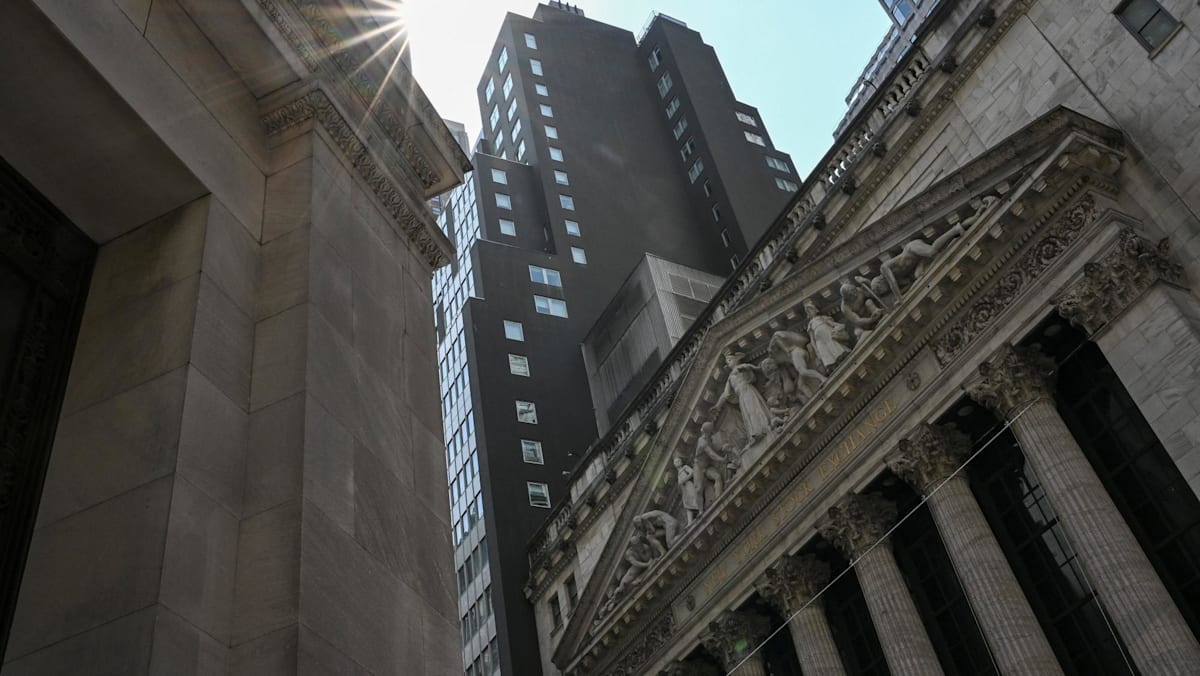
On Wall Street, both the Dow and S&P 500 rose, while the Nasdaq retreated again, with semiconductor shares enduring another round of selling. Angelo Kourkafas of Edward Jones described markets as buffeted by uncertainty over unpredictable geopolitical events and questions about how the Federal Reserve will weigh the latest jump in oil prices.
At the same time, "the bar is set high and there is also some skepticism about the sustainability" of this week's lofty corporate earnings, Kourkafas said.
David Morrison at Trade Nation said expectations that the US Federal Reserve could hike interest rates at its meeting next week have risen from 13 per cent last week to 30 per cent currently.
"Perhaps more seriously, the CME's FedWatch Tool shows a 90 per cent probability of at least one 25-basis point rate hike before year-end," he said.
Besides the Fed, next week's schedule includes another heavy calendar of quarterly results featuring tech giants such as Amazon and Apple, as well as major industrial players including Boeing and Ford.
With tech stocks not as predominant in Europe, that region's main stock markets advanced on Friday.
Asian stock markets followed the sell-off Thursday on Wall Street as world markets were battered by a perfect storm of the resurgent Middle East war, the spike in oil prices and concerns about the artificial intelligence boom.
Why Oil Prices Matter
Oil prices have a significant impact on the global economy. A rise in oil prices can lead to higher inflation, reduced economic growth, and increased costs for consumers.
The current situation in the Middle East and the potential for further conflict has significant implications for the global economy. The impact of oil prices on global equities is crucial for investors and policymakers.
The Road Ahead
The next few weeks will be crucial in determining the direction of oil prices and the impact on global equities. The Federal Reserve's decision on interest rates and the quarterly results of major corporations will be closely watched.
The situation in the Middle East will also continue to be a major factor in determining the direction of oil prices. The potential for further conflict and the impact on global equities will be closely watched.
Key points
- Oil prices retreated on Friday after Houthi rebels said they were not blocking traffic through the strategic Bab al-Mandeb Strait.
- The main international oil contract Brent North Sea fell back under US$100, helping US and European stock markets stabilise.
- The United States launched fresh strikes on Iran, but some ships were still able to pass through the Bab al-Mandeb Strait.
- The Federal Reserve's decision on interest rates and the quarterly results of major corporations will be closely watched.
- The situation in the Middle East will continue to be a major factor in determining the direction of oil prices.
If the situation in the Middle East stabilises and oil prices remain stable, the global economy could see a positive impact. This could lead to increased economic growth and reduced inflation.
If the situation in the Middle East escalates and oil prices continue to rise, the global economy could see a significant negative impact. This could lead to reduced economic growth, increased inflation, and higher costs for consumers.