Mojtaba Khamenei's written message replaces his father's annual speech on Khomeini's death anniversary
A written message attributed to Mojtaba Khamenei was read at Iran’s annual Khomeini memorial instead of Ali Khamenei’s usual speech.
Intelligence analysis by GPT-5.4 Mini
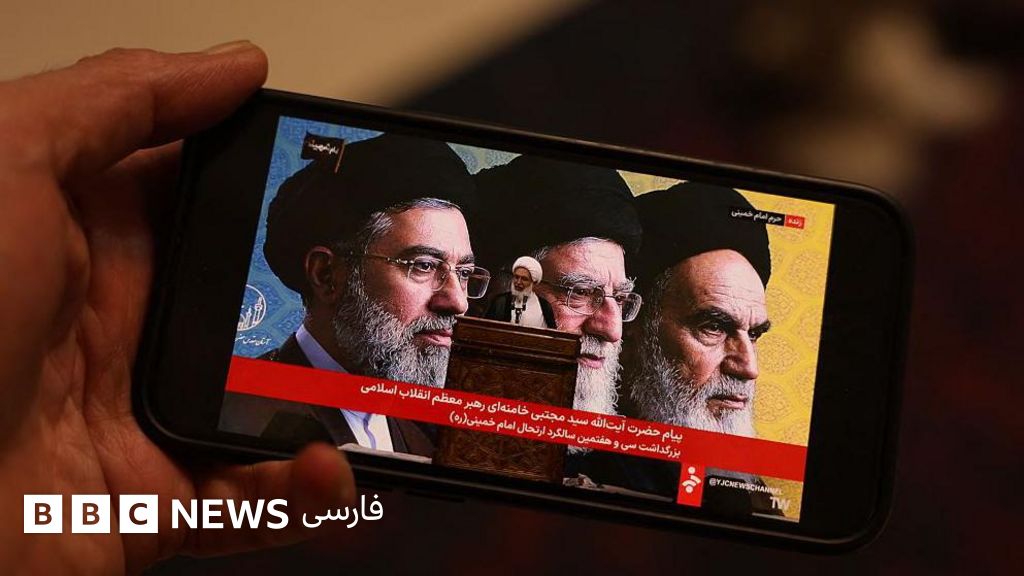
BBC Persian reports that this year’s 14 Khordad ceremony broke with 36 years of tradition: instead of Ali Khamenei’s annual address, Mohammad-Javad Haj-Ali-Akbari read a written message attributed to Mojtaba Khamenei. The message said the U.S. and Israel had been defeated, urged unity, and warned that distrust helps the enemy.
It was like a big school ceremony where the usual speaker stayed offstage and a written note was read instead. The note said Iran’s enemies had lost and told people to stay united, like teammates pulling the same rope.
Analysis
What changed
BBC Persian says the annual 14 Khordad ceremony in Tehran looked different from previous years. For 36 years, Ali Khamenei had delivered the main speech at the commemoration of Ruhollah Khomeini’s death. This time, however, the report says only a written message attributed to Mojtaba Khamenei was read aloud by Mohammad-Javad Haj-Ali-Akbari, Tehran’s temporary Friday prayer leader.
What the message said
According to the article, the message claimed that the United States and Israel had failed in their war against Iran and had suffered a decisive blow. It also said the country’s enemies were now experiencing a deep and meaningful humiliation. The message urged people to stand firm, preserve unity and cohesion, and keep mutual trust so that the enemy’s plans would be defeated.
The article adds that the message framed distrust and division as the main tools of the enemy. It quoted the message as saying officials have a major role in supporting unity, and that any action that causes public discouragement or suspicion is effectively helping the country’s enemies.
Wider political setting
BBC Persian places the ceremony against an unsettled backdrop. It says the fate of talks between Iran and the United States, and of the recent war, remains unclear. The article notes Donald Trump said negotiations were going well, while Iran’s foreign minister Abbas Araghchi said on Wednesday that no tangible progress had yet been made toward ending the Middle East war.
The ceremony itself also had fewer prominent figures than in past years. The report says no foreign guests attended, President Masoud Pezeshkian and parliament speaker Mohammad-Bagher Ghalibaf were absent, and only judiciary chief Gholamhossein Mohseni-Ejei was present among the heads of the three branches.
Bottom line
The piece reads as both a report on a highly symbolic ceremony and a sign of how public ritual, wartime messaging, and leadership visibility are being managed in Iran.
Key points
- A written message attributed to Mojtaba Khamenei was read instead of Ali Khamenei’s usual annual speech at the Khomeini memorial.
- The message said the United States and Israel had been defeated and had suffered a decisive blow.
- It urged people to preserve unity, cohesion, and mutual trust to block the enemy’s plans.
- The article says the ceremony was smaller and less traditional than in previous years, with no foreign guests and fewer top officials present.
- BBC Persian places the event against unresolved Iran-U.S. talks and unclear wartime developments.
If the message’s call for unity is taken seriously, it could help officials and the public project more cohesion during a tense political and military period. A calmer, more coordinated stance could also make Iran’s position in any talks easier to manage.
If the ceremony is read as a sign of growing uncertainty or hidden power struggles, it could deepen speculation about leadership and succession. The article also suggests the wider conflict and negotiations remain unresolved, which leaves room for more instability and sharper confrontation.