More than a million fans celebrate Spanish world champions in Madrid
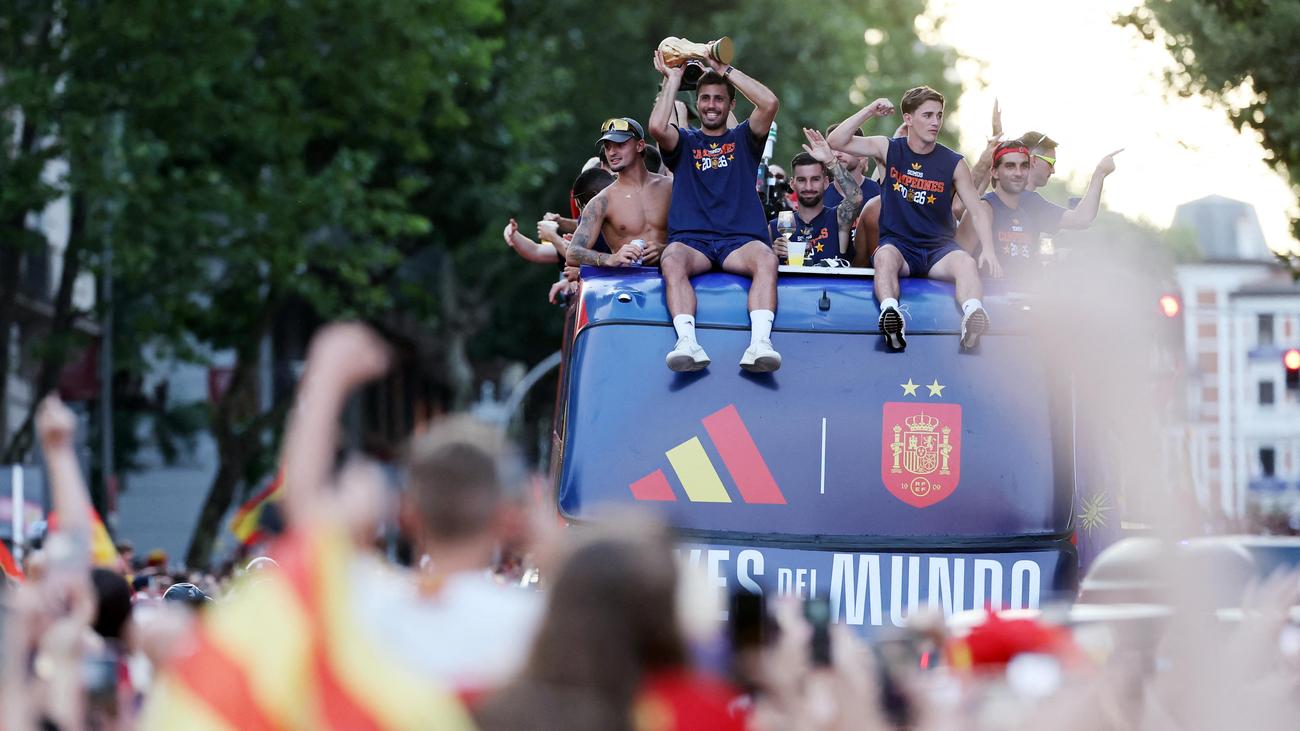
Spain’s world champions were welcomed home in Madrid with a huge parade, as fans filled the streets and Cibeles Square. The liveblog also recapped the tournament’s standout moments and its controversies.
Intelligence analysis by GPT-5.4 Mini
The article closes the World Cup liveblog on Spain’s victory parade, where the team was celebrated by a massive crowd in Madrid after winning the final against Argentina. It also frames the tournament as one defined by historic performances, surprising underdogs, and several off-field disputes.
Spain won the soccer World Cup, and when the team came home, a giant crowd in Madrid cheered like it was the biggest birthday party in the city. The article also says the tournament had great players, surprise teams, and some messy arguments.
Analysis
Madrid Turns the Title Into a Civic Event
Spain’s return home is presented less like a routine sports celebration and more like a citywide ritual. The parade through central Madrid, the open bus, and the final stage at Cibeles Square turned the victory into a public performance of national pride. The article’s crowd estimates, ranging from about 1.8 million to nearly 2 million, underline the scale of the moment.
That scale matters because it shows how a World Cup win can become a shared civic memory, not just a trophy in a cabinet. The king’s reception reinforced that framing, placing the team inside a broader national story of achievement and recognition. The article suggests the team’s success will be remembered not only for the result, but for the way it was received at home.
A Tournament Remembered for More Than the Winner
The liveblog does not treat Spain’s triumph as the only important storyline. It highlights Lionel Messi’s late-career brilliance, Kylian Mbappé’s scoring record, and the defensive strength Spain showed by conceding only once in the tournament. It also notes the strong performances of outsiders such as Cape Verde and the DR Congo, which gives the tournament a wider competitive texture.
At the same time, the article makes clear that the event was not free of controversy. It mentions the lifting of Balogun’s suspension after intervention from U.S. President Trump, denied entries for referees, and commercial breaks disguised as water breaks. That mix of sporting excellence and administrative awkwardness is part of why this tournament is described as memorable in several different ways.
What the Closing Image Says About the Next Cycle
Ending the liveblog on jubilant scenes in Madrid gives the tournament a deliberate emotional finish. The article uses the celebration to seal the memory of a 39-day event with 104 matches, suggesting that the final image should be joy rather than dispute. That is a classic editorial choice: to let the champions have the last word.
For German readers, the closing also sits beside an implicit reminder of what did not go well for Germany. The article’s opening references Germany’s round-of-16 exit and Julian Nagelsmann’s resignation, which makes Spain’s finish feel even more decisive by comparison. The next cycle starts with Spain as the benchmark and with other major teams, including Germany, left to rebuild.
Key points
- Spain’s world champions were welcomed back in Madrid with a huge parade and a packed celebration at Cibeles Square.
- The article says crowds in the capital may have reached roughly 1.8 million to nearly 2 million people.
- It frames the World Cup as memorable for Messi, Mbappé, Spain’s defense, and surprise runs from Cape Verde and the DR Congo.
- The liveblog also notes controversies, including disciplinary issues after the final and criticism of tournament procedures.
- Germany’s early exit and Julian Nagelsmann’s resignation are part of the broader backdrop to the piece.
If Spain’s title sparks lasting excitement, the team could turn this win into a stronger sense of unity and confidence at home. The celebration in Madrid also shows how a successful tournament can leave fans with a shared, positive memory that lasts beyond the final whistle.
The article also shows how quickly a celebration can be overshadowed by disputes, from red cards after the final to complaints about officiating and tournament organization. For teams like Germany, the contrast is less flattering: a title run for others can sharpen the pressure to address their own early exit and reset quickly.