Moroccans ejected from Spain's Ceuta lament 'broken dreams'
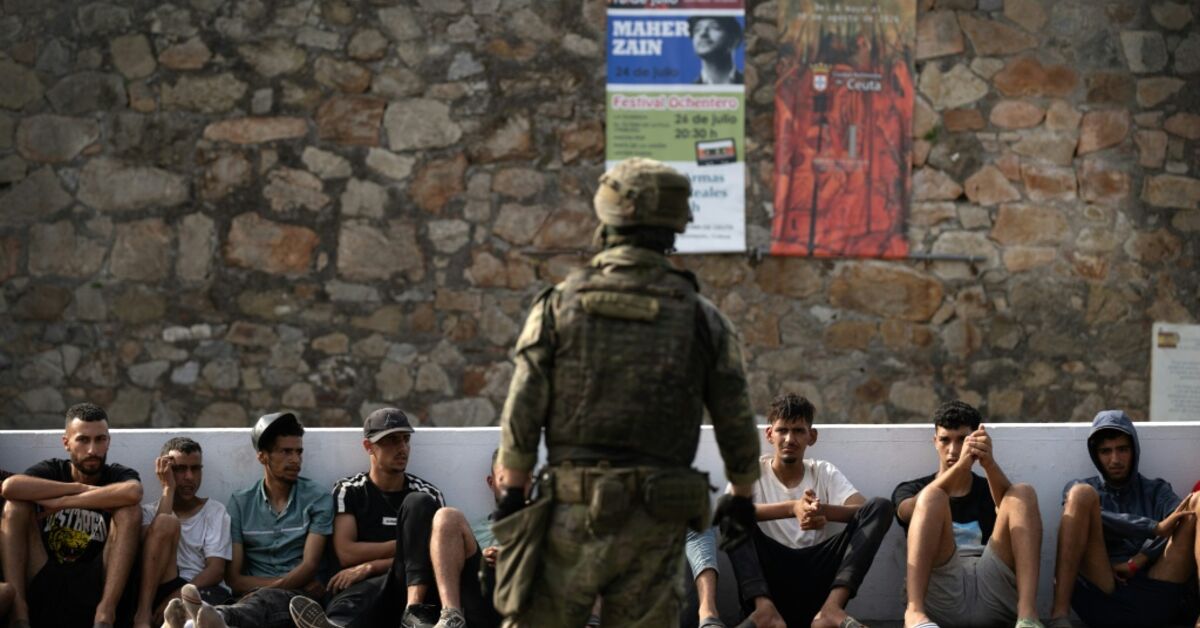
Thousands of Moroccans who forced their way into the Spanish enclave of Ceuta this week were returning home, many with their dreams broken and newly convinced that reaching Spain was not worth the risks.
Intelligence analysis by Llama
Moroccans who entered Ceuta were met with racism and mistreatment, leading many to return home and advise others not to attempt the journey. The Spanish government has blamed misinformation about a recent supreme court ruling on migration for the influx.
Thousands of Moroccans tried to enter Spain's Ceuta, but they were met with racism and mistreatment. Many are now returning home, warning others not to attempt the journey. It's like trying to get into a crowded amusement park, but instead of fun rides, you face trouble and hardship.
Analysis
A Rumor, a Rush: Chaos at Morocco Border with Spain's Ceuta
The recent influx of migrants into the Spanish enclave of Ceuta has left many with broken dreams and a newfound appreciation for the risks involved. Thousands of Moroccans who forced their way into Ceuta this week were returning home, many with tales of racism and mistreatment at the hands of Spanish authorities.
Mohamed Nias, a 23-year-old fruit seller from Tangier, was one of the many who attempted to enter Ceuta. He told AFP that he had gone 'in search of a better life' but found 'nothing but suffering and racism' on the other side of the border. Nias warned those who might follow in his footsteps, saying 'Never come here, you'll only suffer.'
The Spanish government has blamed misinformation about a recent supreme court ruling on migration for the influx. However, experts familiar with Morocco's security apparatus expressed puzzlement at the absence of reinforcements from the police or the powerful military, even as migrants began pouring into Fnideq at the start of the week.
The people of Ceuta were 'racists,' said Youssef, a 27-year-old lifeguard who was turned back from Ceuta with a group of friends. 'In the end, there's nowhere better than Morocco,' he said, decrying their 'bad experience' on the other side of the border.
The Confederation of Businesses of Ceuta had advised shops and other commercial establishments to remain closed 'until security can be guaranteed.' Abdelouahed Fetachi, an aluminium joiner from Rabat, found himself without anything to eat after attempting to enter Ceuta. 'Everyone is going back. I wouldn't advise anyone to come. We had a dream but they broke it,' he said.
The story highlights the challenges faced by migrants attempting to enter Spain and the consequences of misinformation about migration policies. It also raises questions about the role of social media in amplifying rumors and the need for more effective communication between governments and the public.
Key points
- Thousands of Moroccans attempted to enter Spain's Ceuta, but were met with racism and mistreatment.
- The Spanish government blamed misinformation about a recent supreme court ruling on migration for the influx.
- Many migrants are now returning home, warning others not to attempt the journey.
- The story highlights the challenges faced by migrants attempting to enter Spain and the consequences of misinformation about migration policies.
The Spanish government's efforts to address the root causes of migration, such as poverty and unemployment, could lead to a reduction in the number of migrants attempting to enter Ceuta. Additionally, the Moroccan government's economic boom could provide opportunities for young people to stay in their home country and pursue their dreams.
The influx of migrants into Ceuta could lead to increased tensions between Spain and Morocco, potentially resulting in a deterioration of relations between the two countries. Additionally, the mistreatment of migrants by Spanish authorities could lead to a loss of trust and cooperation between the two nations.