Mysterious Stonehenge travelogue: A journey through history
A Malayali traveler recounts her visit to Stonehenge in Wiltshire, UK, a UNESCO World Heritage site renowned for its ancient, mysterious megalithic structure, believed to be 5,000 years old.
Intelligence analysis by Gemini 2.5 Flash
The article is a personal travelogue detailing a visit to Stonehenge, highlighting its enduring mysteries regarding construction methods, the origin of its massive stones, and its true purpose. It emphasizes the monument's prehistoric age, its astronomical alignments, and the awe it inspires in visitors despite unanswered questions.
Imagine a giant circle of really big rocks, some as heavy as many cars, that people put there a super long time ago, even before the Egyptian pyramids! Nobody knows exactly how they moved them or why, but they line up perfectly with the sun on the longest and shortest days of the year, like a giant ancient clock. It's a big mystery that makes people wonder about the clever folks who built it.
Analysis
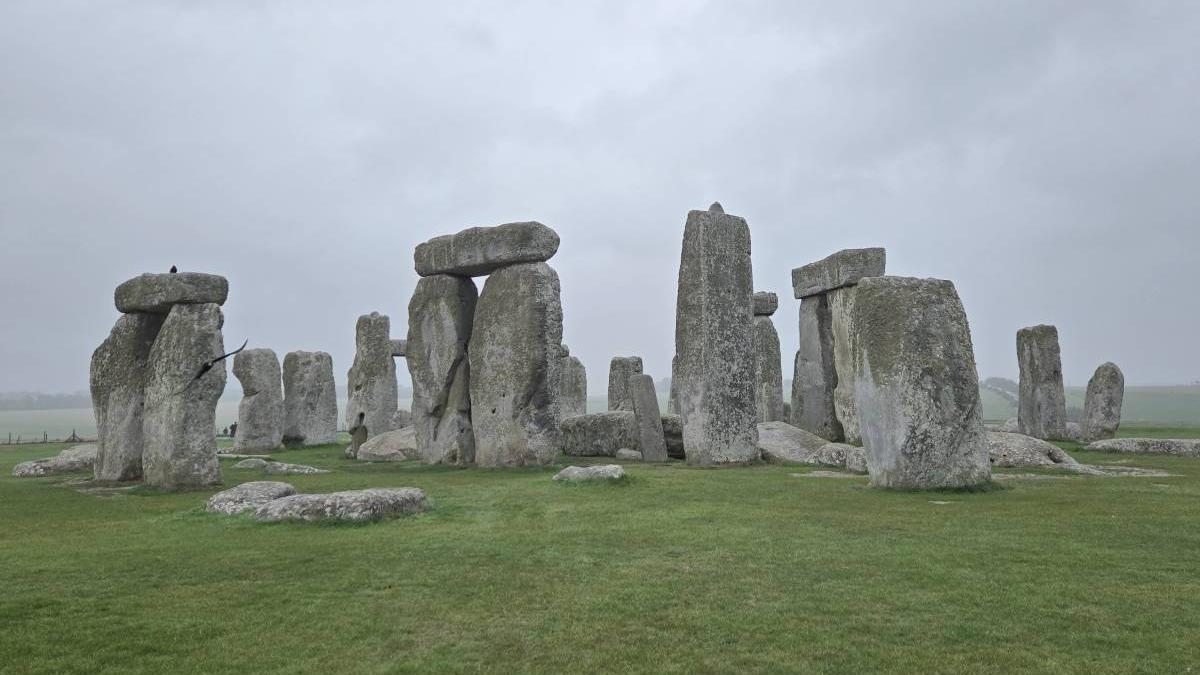
Stonehenge, a prehistoric monument in Wiltshire, Southern England, continues to captivate visitors and researchers alike with its profound mysteries. Located approximately 140 kilometers from London, it stands as one of the UK's most famous tourist attractions and a designated UNESCO World Heritage site. Thousands of people from around the world flock to this ancient wonder annually, drawn by the unanswered questions surrounding its construction and purpose. The monument's serene setting amidst green pastures further enhances its enigmatic appeal, inviting contemplation on the ingenuity of its ancient builders.
Sarsens
The construction of Stonehenge involved the meticulous placement of two distinct types of stones: the colossal 'Sarsens' and the somewhat smaller 'Bluestones'. Each Sarsen stone is estimated to weigh around 25 tons, while the Bluestones, though smaller, still tip the scales at a substantial 4 to 5 tons. The sheer scale of these megaliths, coupled with the fact that some were transported from locations many kilometers away, presents a formidable archaeological puzzle. In an era devoid of modern machinery like cranes or trucks, the methods employed by the prehistoric builders remain a subject of intense debate among researchers. Theories often involve the use of wooden rollers, ropes, and immense collective human strength, yet a definitive explanation for this monumental feat of engineering continues to elude full comprehension.
Summer Solstice
One of the most astonishing aspects of Stonehenge is its precise astronomical alignment, particularly with the sun's movements. On the Summer Solstice, which marks the longest day of the year, the rays of the rising sun are observed to pass directly through specific gaps in the stone arrangement. Conversely, during the Winter Solstice, the year's longest night, the setting sun's light aligns perfectly with the stones. This sophisticated understanding of celestial mechanics, achieved without any known advanced scientific instruments, suggests a profound purpose for the monument. Archaeologists speculate that Stonehenge may have served as a complex calendar, a sacred site for worship, a ceremonial ground, or even a burial site, given the discovery of human remains during excavations. However, its ultimate function remains a topic of ongoing scholarly discussion and fascination.
Key points
- Stonehenge is a 5,000-year-old UNESCO World Heritage site in Wiltshire, UK, attracting thousands of global tourists annually.
- Its construction involved massive 'Sarsen' stones (up to 25 tons) and 'Bluestones' (4-5 tons), some transported from distant locations without modern machinery.
- The monument's true purpose remains a mystery, with theories suggesting it was a ceremonial site, a place of worship, or a burial ground.
- Stonehenge exhibits precise astronomical alignments with the sun during both the Summer and Winter Solstices.
- Visitors can walk around the monument on designated paths, observing the stones from various angles, but cannot approach them directly for preservation.