NASA shares beautiful timelapse of the Psyche spacecraft's view over Mars
NASA stitched thousands of Psyche spacecraft images into a timelapse of its May Mars flyby, showing the planet, surface detail, and its south pole.
Intelligence analysis by GPT-5.4 Mini
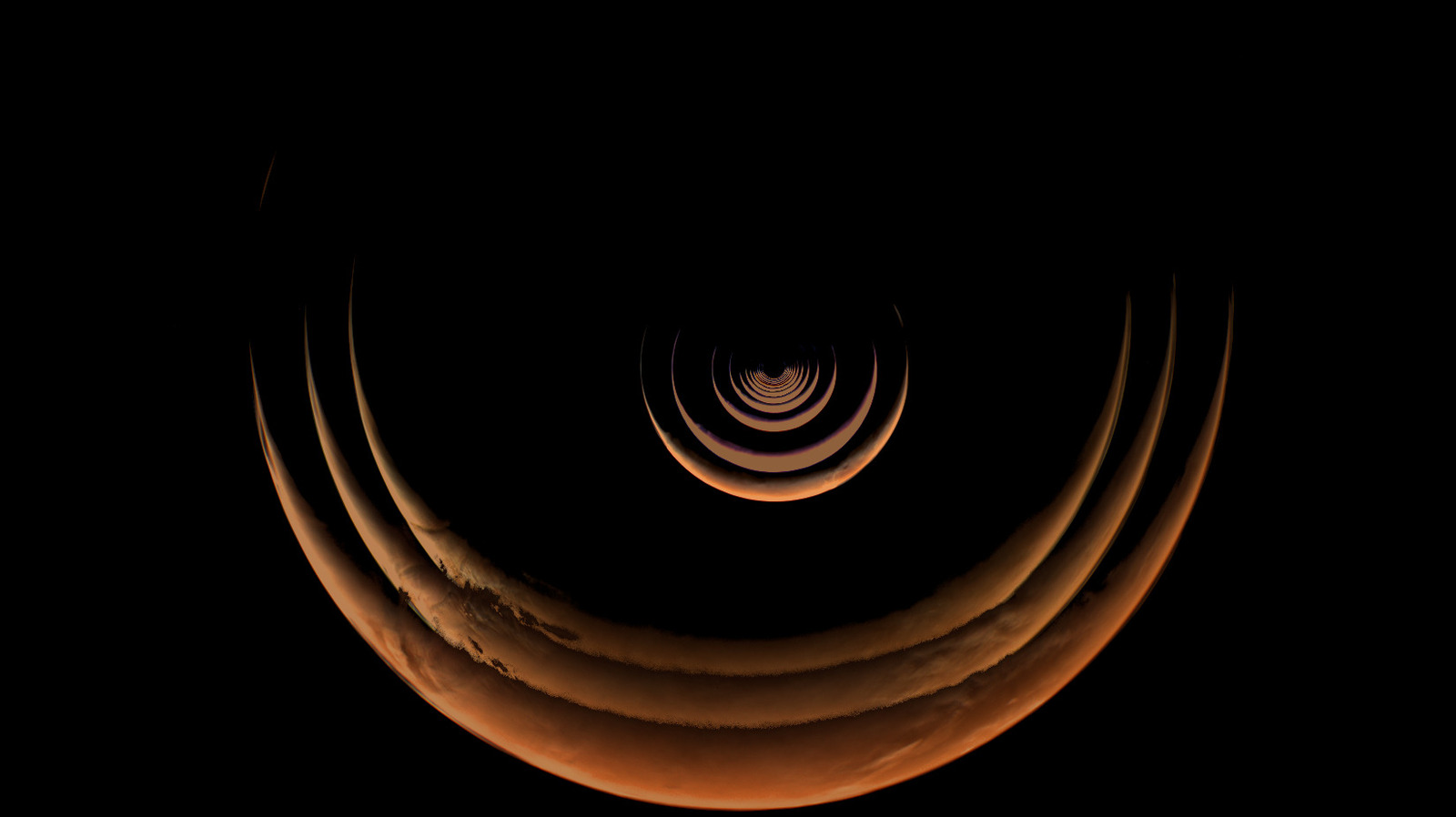
The Psyche mission used Mars for a gravity assist on its way to the asteroid Psyche, and NASA turned the encounter into a striking video. The flyby was also a technical check, confirming the spacecraft’s imager worked well while practicing for future moonlet searches.
The spaceship used Mars like a swing to go faster, then took lots of photos and made them into a movie. It also checked its camera by spotting tiny moon dots around Mars, like practice before a bigger treasure hunt.
Analysis
A Gravity Assist With Two Jobs
Psyche's Mars flyby was not just a scenic detour. According to NASA, the spacecraft used the encounter in May to get a speed boost and bend its path toward the asteroid Psyche, while conserving propellant for the rest of the journey.
That matters because deep-space missions are often won or lost on efficiency. A gravity assist is one of the cleanest examples of mission design doing more with less, letting the spacecraft borrow momentum from a planet instead of burning extra fuel.
Turning Calibration Into Content
NASA says Psyche captured thousands of images with its multispectral imager as it approached and passed Mars. Those frames were later stitched into a timelapse that shows a crescent Mars on arrival, surface detail in the middle, and the planet's icy south pole as the spacecraft departed.
The article also frames the flyby as a hardware test. Jim Bell, the imager instrument lead at Arizona State University, said the imager performed brilliantly and that the team could test calibration and sensitivity to scattered light during the pass.
Why The Moonlet Hunt Comes First
The Mars encounter was also rehearsal for the main event. Bell said the team even picked out Phobos and Deimos from far away as practice for the satellite search they will use at asteroid Psyche to look for moonlets.
That is a subtle but important point: the mission is not only about reaching a destination, but about proving the camera and analysis pipeline can do the kind of faint-object work that future science depends on. The spacecraft is expected to reach the asteroid in 2029, so these early tests help reduce risk long before arrival.
Key points
- Psyche used Mars for a gravity assist on its way to the asteroid Psyche.
- NASA shared a timelapse made from thousands of images captured during the flyby.
- The imager was tested for calibration and sensitivity to scattered light.
- The team also used the pass to practice spotting small moons like Phobos and Deimos.
- The spacecraft is expected to reach asteroid Psyche in 2029.
The flyby suggests the spacecraft and its imager are working as planned, which is a good sign for the long trip ahead. If that performance continues, the mission will arrive at asteroid Psyche with better confidence in its instruments and its ability to spot small moons.
A successful Mars pass does not guarantee the rest of the mission will go smoothly. The spacecraft still faces a long cruise to 2029, and any later issue with calibration, sensitivity, or propulsion would be harder to fix far from Earth.