“National Team in Limbo”: Belgium, Egypt, and New Zealand Are Not the Only Opponents Facing Iran
Iran’s World Cup squad faces political pressure, public anger, and security constraints as it prepares for the 2026 tournament in North America.
Intelligence analysis by GPT-5.4 Mini
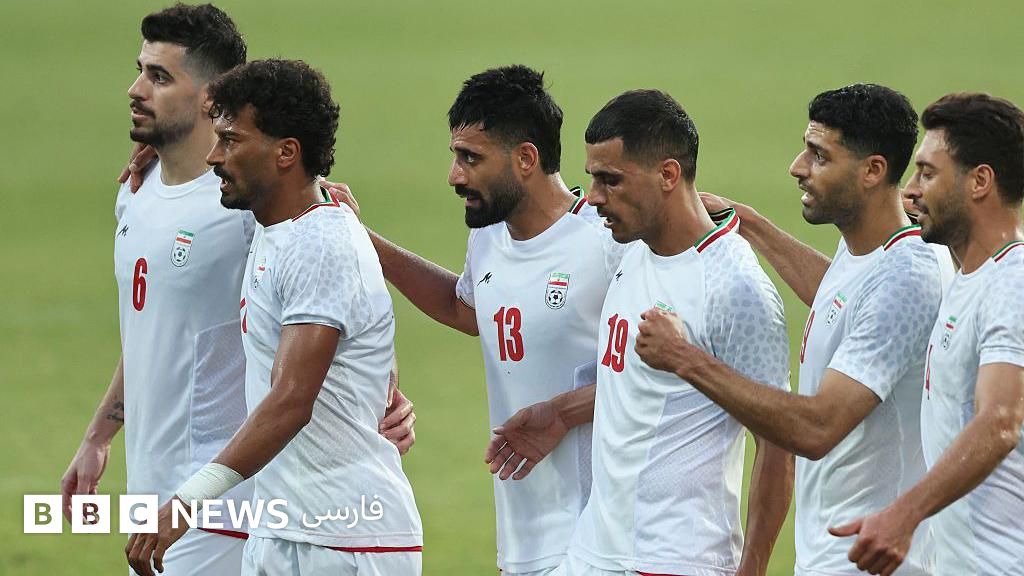
BBC Persian says Iran’s players are entering the 2026 World Cup caught between government pressure, public hostility, and the fallout from war and protest politics. Their camp was moved to Tijuana after Washington rejected lodging in the U.S.
Iran’s soccer team is like kids trying to play a game while adults are arguing all around them. Some people want them to stand with the government, others want them to stand with protesters, so even a smile or silence can cause a fight.
Analysis
A team caught between politics and sport
BBC Persian describes Iran’s national team entering the 2026 World Cup under unusual pressure. After controversy over threats from officials to pull out of the tournament and the cancellation of most warm-up matches, the United States opposed housing the delegation on U.S. soil, so the squad’s training camp was moved to Tijuana, Mexico.
Why the pressure is so heavy
The report says the team is being watched from three directions at once: the Iranian government, which expects loyalty; opponents of the Islamic Republic, who see the squad as too close to the state; and a diaspora audience in cities such as Los Angeles and Seattle, where many Iranian exiles live. BBC Persian argues that the national shirt, once a symbol of unity, became deeply polarizing after the 2022 protests following Mahsa Amini’s death, and then more so after the killings on 18 and 19 Dey 1404.
The article recalls how smiling celebrations after a friendly against Uruguay, public photos with FIFA, and thanks to former president Ebrahim Raisi widened the gap with protesters. It also says the team’s silence after killings of demonstrators and its response during the 2022 World Cup deepened resentment. For critics, even neutral behavior now reads as support for repression.
Competing expectations
At the same time, the article says some players have tried to show opposition to war and support for the country through symbolic gestures, such as black armbands and school bags carried in a friendly against Nigeria. Others, according to the report, joined government rallies mainly because they wanted to secure their World Cup place. The result is a squad carrying heavy psychological stress, where nearly every gesture can be read as a political statement.
Key points
- Iran’s World Cup camp was moved to Tijuana after Washington opposed the team staying in the United States.
- The squad is under pressure from the Iranian government, anti-government critics, and the diaspora.
- BBC Persian says the national team shirt became a polarizing symbol after the Mahsa Amini protests.
- Players’ gestures, silence, and participation in state events are being read as political statements.
- The article frames the team’s main challenge as psychological and political, not just athletic.
If the players can keep the focus on football and avoid more symbolic missteps, they may reduce the backlash around the squad. A calmer tournament could give the team some space to compete without adding new political wounds.
If the players continue to be seen as aligned with state messaging or silent on killings and protests, the public split may deepen. That would leave the squad carrying even more psychological pressure into the World Cup.