National unity has played decisive role in foiling enemy’s plots
Pezeshkian said unity and amity helped thwart enemy plots against Iran. He urged less factionalism and more use of capable people.
Intelligence analysis by GPT-5.4 Mini
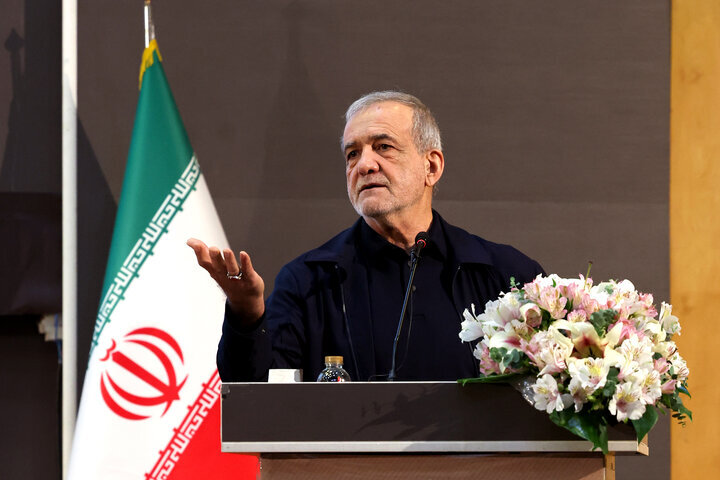
President Masoud Pezeshkian told a Tehran meeting that national cohesion has been crucial in blocking hostile efforts against Iran. He tied the message to recent attacks and said the country’s progress depends on solidarity, talent, and moving beyond factional divides.
Pezeshkian said Iran is like a house under pressure from outside, and the best way to keep it strong is for everyone inside to work together. He said fighting among groups weakens the house, while unity helps protect it.
Analysis
What Pezeshkian said
At a meeting of the General Assembly of Iran’s Academy of Medical Sciences in Tehran, President Masoud Pezeshkian said national unity and amity have played a decisive role in foiling what he described as enemy plots against Iran. He linked that message to what he called hostile actions by adversaries, including recent acts of aggression by the US and the Zionist regime.
The political message
Pezeshkian said attacks targeting Supreme Leader Ayatollah Seyyed Ali Khamenei, senior military commanders, scientists, and scientific capabilities were meant to stop Iran’s progress and development. He argued that the Iranian people have continued to defend the country’s independence, dignity, and territorial integrity despite outside pressure and threats.
He also urged the country to move beyond political disputes and factional divisions. In his remarks, partisan behavior and competition driven by personal interests were described as weaknesses Iran has faced in the past.
His broader argument
The president said Iran’s path forward depends on empowering capable people, collective cooperation, and using all available capacities. He added that qualified people should not be blocked from serving because of narrow or restrictive viewpoints.
Pezeshkian called national cohesion and solidarity the country’s most valuable asset under current conditions. He said the public has repeatedly shown readiness to defend national interests, and said recent events proved that public resilience and unity had disrupted many enemy calculations and plans.
Takeaway
The speech combines a security message with a domestic political one: Iran, in his telling, is strongest when it is united internally and firm against outside pressure.
Key points
- Pezeshkian said national unity has helped foil hostile plots against Iran.
- He linked recent attacks to efforts to block Iran’s progress and development.
- He urged the country to move beyond factional disputes and personal-interest politics.
- He said qualified people should be allowed to serve without restrictive viewpoints blocking them.
- He called cohesion and solidarity Iran’s most valuable asset under current conditions.
If the message leads to less factional fighting and more cooperation, the government may be able to use more skilled people in public service. The article suggests that stronger unity could also help Iran maintain resilience against outside pressure.
If political divisions remain sharp, the call for unity may not translate into real cooperation. The article also shows the leadership still views the situation through the lens of external threats, which could keep tensions high.