Neither threat nor attack will force Iran to retreat or surrender
Iran's position on the Strait of Hormuz crisis is clear: accepting its sovereignty is the condition for a ceasefire and any agreement. The US must accept this reality and move towards diplomacy based on mutual respect.
Intelligence analysis by Llama
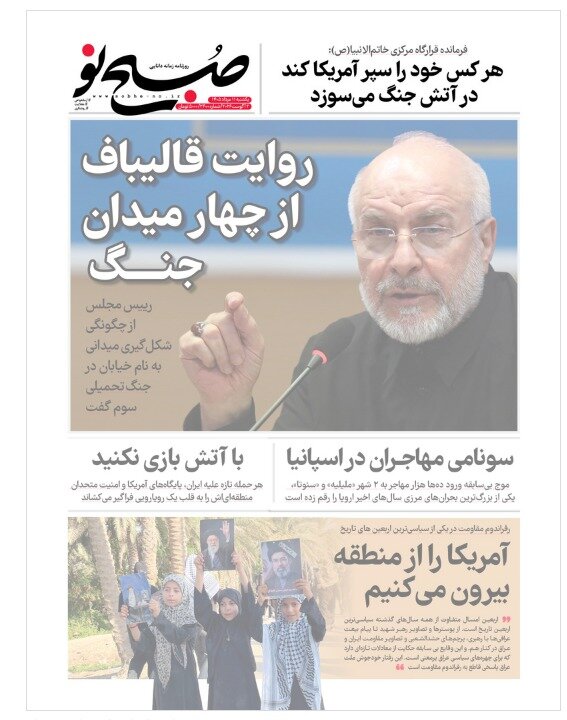
Iran's stance on the Strait of Hormuz crisis is non-negotiable, and the US must accept its sovereignty to avoid further economic costs and regional instability.
Iran is saying that it won't back down from its position on the Strait of Hormuz, and the US needs to accept its sovereignty to avoid more problems in the region.
Analysis
A $60B Vote of Confidence
Iran's position on the Strait of Hormuz crisis is clear: accepting its sovereignty is the condition for a ceasefire and any agreement. This stance is not a maximalist demand but arises from on-the-ground realities and the provisions of the Islamabad memorandum, which had previously been agreed upon through Pakistan's mediation. As Trump himself has acknowledged and praised Iran's resistance, the time has now come for Washington to accept this reality, move away from the path of threats and war, and step toward diplomacy based on mutual respect.
Why Cursor?
The US and the Zionist regime, which have faced defeat in their direct attacks on Iran and the Resistance, are now seeking to trap Arab countries in a brother-against-brother war so that, under the cover of that safe shadow, they can rebuild themselves and continue the occupation of the region. Certainly, Iran and the other resistant nations of the region—from Iraq and Yemen to Lebanon and Palestine—will not yield to this scheme, just as Iran continues its crushing responses to aggressors and maintains the closure of the Strait of Hormuz, and Yemen bravely stands against the Saudi aggressors.
The Road Ahead
Today, regional equations are shaped not by America's delusions and those of its partners, but by the principles of Resistance, and the delusional ones will soon have no option but to abandon their crude fantasies. The attack on the Egyptian port was the work of the Zionist regime, not Iran, as investigations indicate. Iran has consistently denied involvement in such incidents and has announced its actions quickly and courageously.
Key points
- Iran's position on the Strait of Hormuz crisis is non-negotiable.
- The US must accept Iran's sovereignty to avoid further economic costs and regional instability.
- The US and the Zionist regime are seeking to trap Arab countries in a brother-against-brother war.
- Iran and the other resistant nations of the region will not yield to this scheme.
- The attack on the Egyptian port was the work of the Zionist regime, not Iran.
If the US accepts Iran's conditions, it could lead to a peaceful resolution of the crisis and improved relations between the two countries.
If the US continues to threaten and attack Iran, it could lead to further escalation and destabilization of the region, with potential consequences for global oil prices and economic stability.