Nepal Seeks Climate Justice After Himalayan Disaster
Nepal seeks climate justice after devastating glacial collapse disaster in Rasuwa district, killing over 1,200 people and leaving 4,750 missing.
Intelligence analysis by Qwen 2.5 (3B)
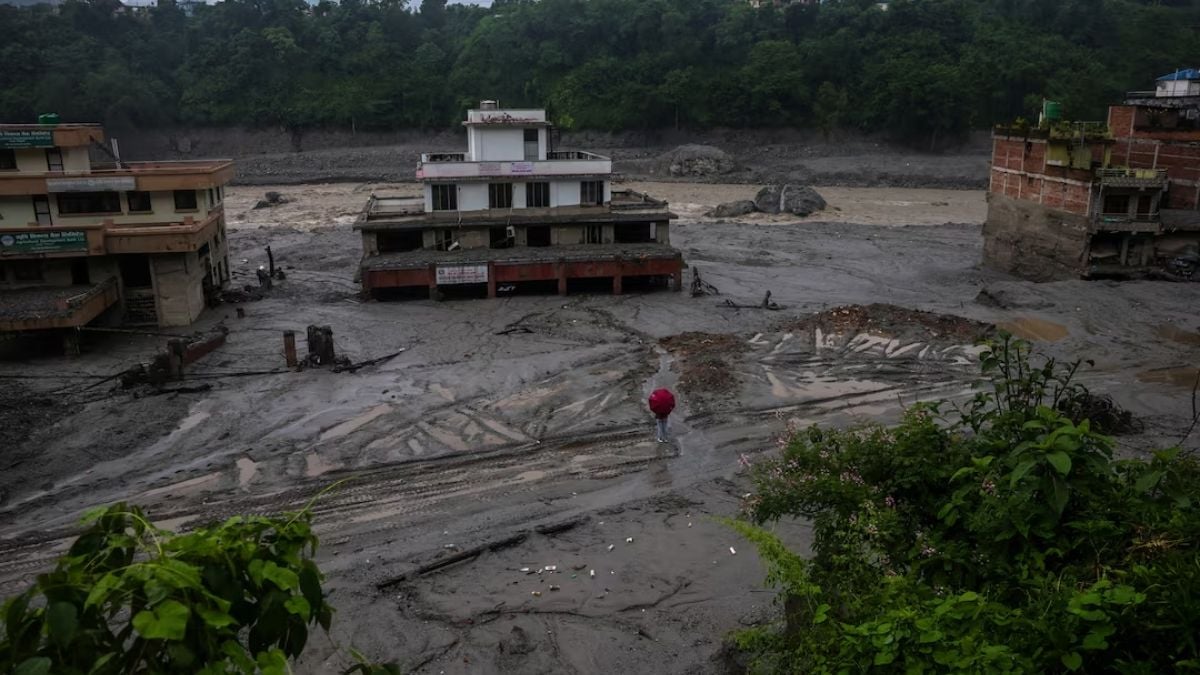
Nepal has suffered a devastating glacial collapse disaster, killing over 1,200 people and leaving 4,750 missing. The country is seeking climate justice and international support for reconstruction.
A big piece of ice from a mountain in Nepal broke off and caused a flood that killed lots of people and destroyed homes. Nepal is asking other countries to help because they didn't do anything to cause the problem, but it's happening anyway.
Analysis
{"causes_and_impacts":"
Causes and Impacts of the Glacial Collapse\nThe glacial collapse in Nepal was caused by climate change, melting glaciers, and the resulting flood. The disaster killed over 1,200 people and left 4,750 missing. The impacts include destroyed homes, villages, towns, roads, bridges, and multiple hydropower dams.\n\n
Climate Change and Nepal's Vulnerability\nNepal is one of the most climate-vulnerable countries, but it is also one of the most climate-friendly. The country's leaders have called for international support to adapt to the rapidly changing mountain environment.\n\n
International Response and Support\nThe United Nations launched a 'loss and damage' fund in 2025 to aid the impacts of climate change, though it has not yet begun distributing its limited cash. The disaster has also highlighted the need for data-sharing mechanisms to help warn of future disasters.","expert_opinions":"
Expert Opinions on Climate Change and Nepal\nNepali glaciologist Tenzing Chogyal Sherpa said wealthy industrialised countries driving global emissions should accept their role. 'They should take some responsibility, and there should be some accountability,' he said. Disaster specialist Saswata Sanyal at Kathmandu-based International Centre for Integrated Mountain Development (ICIMOD) said the region is warming roughly 'at twice the rate' of anywhere else in the world. 'We have seen cascading disasters, like what we saw August 26, where one event triggers multiple events,' he said.","reconstruction_and_support":"
Reconstruction and Support\nNepal's leaders have called for long-term international support to adapt to a rapidly changing mountain environment. Prime Minister Balendra Shah said Nepal must 'strongly raise' with the international community the disasters it has experienced as a result of climate change. Foreign Minister Shisir Khanal called it a 'warning signal'. He told AFP that the support to Nepal should not be viewed only 'from an angle of aid or charity, but should be seen from a perspective of climate justice as well.'"}
Key points
- Nepal suffered a devastating glacial collapse disaster in August 2026, killing over 1,200 people and leaving 4,750 missing.
- The disaster was caused by climate change, melting glaciers, and the resulting flood.
- Nepal's leaders have called for long-term international support to adapt to the rapidly changing mountain environment.
- The United Nations launched a 'loss and damage' fund in 2025 to aid the impacts of climate change, though it has not yet begun distributing its limited cash.
- The disaster has also highlighted the need for data-sharing mechanisms to help warn of future disasters.
The 'loss and damage' fund launched by the United Nations could provide much-needed support for Nepal's reconstruction efforts. Data-sharing mechanisms could also help prevent future disasters in the region.
The disaster could lead to more climate change debates and discussions, but it may be too late to prevent further damage and loss of life.