No longer token economy? SenseTime bets on ‘task economy’ as token prices set to drop
Chinese AI company SenseTime predicts a shift from a 'token economy' to a 'task economy' in AI commercialization, driven by declining token prices and the maturation of foundational models.
Intelligence analysis by Gemini 2.5 Flash
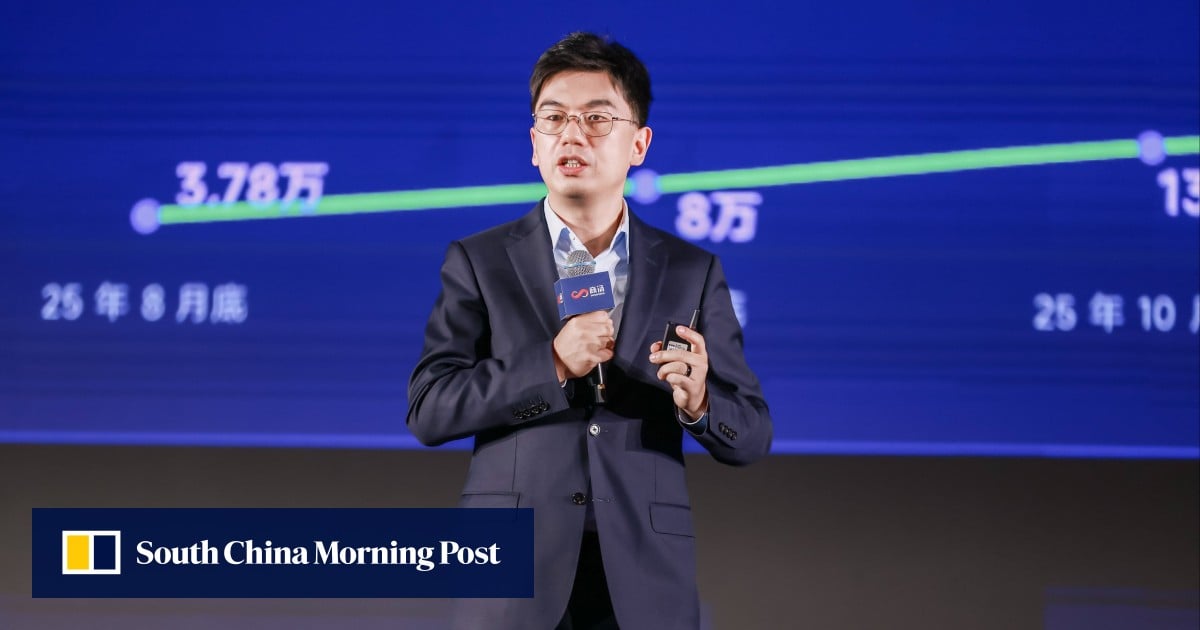
SenseTime CEO Xu Li argues that as AI foundational models and computing power become commoditized, the commercial value will move towards users paying for complex, completed tasks rather than raw computing usage. This transition, dubbed the 'task economy,' is expected to significantly expand the total addressable market for AI applications beyond professionals to the general public.
Imagine you want a robot to build a LEGO castle. Right now, you might pay for each tiny LEGO brick the robot uses. But soon, a company like SenseTime thinks you'll just pay one price for the whole finished castle, no matter how many bricks the robot used. This makes it easier for everyone to get cool things done with AI, not just computer experts, because you pay for the final result, not the tiny pieces of work.
Analysis
The Impending Shift from Tokens to Tasks
SenseTime CEO Xu Li has articulated a significant paradigm shift in the commercialization of artificial intelligence, moving away from what he terms the 'token economy' towards a 'task economy.' This transition is predicated on the inevitable decline in the pricing of AI tokens, drawing a parallel to the commoditization of telecoms data two decades ago. As foundational models and raw computing power become ubiquitous and cheaper, their direct billing as 'tokens' will lose commercial viability. The core argument is that the true value proposition of AI will no longer reside in the computational units consumed but in the complex, end-to-end tasks that AI systems can autonomously complete for users.
This strategic pivot suggests that AI companies will increasingly focus on delivering integrated solutions that solve specific problems, such as reviewing architectural blueprints or generating product videos. Instead of charging for the number of tokens processed, the pricing model will reflect the value of the completed task. This approach aims to simplify AI consumption for end-users, making it more accessible and intuitive, as they will pay for tangible outcomes rather than abstract computational resources. The shift is seen as a natural evolution as AI technology matures and becomes a more integrated part of daily operations and creative processes.
Expanding the AI Market Beyond Professionals
Xu Li emphasizes that this move to a 'task economy' is crucial for unlocking the next phase of AI adoption and market expansion. While early AI applications, particularly in areas like AI coding, have primarily targeted professionals and enterprises seeking productivity boosts, the 'task economy' is designed to reach a much broader audience. By offering AI capabilities as readily consumable tasks, the technology can transcend specialized professional use cases and become accessible to the masses. This democratization of AI is expected to dramatically increase the total addressable market.
SenseTime projects that this expansion could lead to a tenfold increase in the market size, as AI moves beyond its current niche of programmers and early adopters. The vision is for AI to become an everyday tool, integrated into various aspects of work and design scenarios for a general user population. This implies a future where AI-powered task completion is as common and straightforward as using a search engine or a word processor, fundamentally altering how individuals and small businesses interact with advanced technology.
SenseTime's Strategic Positioning
SenseTime's proactive stance on the 'task economy' positions it to capitalize on this anticipated market evolution. By focusing on delivering complex, completed tasks, the company aims to differentiate itself in an increasingly competitive AI landscape where raw computing power and foundational models are becoming commodities. This strategy suggests a move up the value chain, from providing underlying infrastructure or basic AI components to offering comprehensive, outcome-oriented solutions. The company's comments at the World AI Conference (WAIC) in Shanghai underscore its commitment to this vision.
This strategic direction also reflects a broader trend in the tech industry where platforms and services evolve to offer more integrated, user-friendly experiences. For SenseTime, betting on the 'task economy' means investing in the development of sophisticated AI agents and applications capable of handling multi-step processes and delivering high-quality final outputs. This approach could enable SenseTime to capture a larger share of the burgeoning AI market by appealing to a wider range of customers who prioritize ease of use and tangible results over technical specifications.
Key points
- SenseTime predicts AI commercialization will shift from a 'token economy' to a 'task economy'.
- This transition is driven by the expected decline in AI token prices, similar to past telecoms data costs.
- In a 'task economy,' users will pay for completed, complex tasks (e.g., reviewing blueprints, generating videos) rather than raw computing usage.
- The shift is expected to expand the total addressable market for AI by at least 10 times, reaching beyond professionals to the general public.
- SenseTime CEO Xu Li highlighted this vision at the World AI Conference (WAIC) in Shanghai.
This shift could significantly democratize AI, making advanced capabilities accessible to a much wider audience beyond technical professionals, potentially expanding the total addressable market by tenfold. It promises to simplify AI consumption, allowing users to pay for tangible outcomes rather than complex computational units, fostering innovation in task-oriented AI applications.
The transition to a 'task economy' might face challenges if AI systems struggle to consistently deliver complex tasks with high accuracy and reliability, leading to user dissatisfaction. Furthermore, the commoditization of foundational models could intensify competition, potentially squeezing profit margins for companies that fail to differentiate their task-oriented solutions effectively.