'No one ever heard of her': Trump goes off on petty rant after Nobel Peace Prize snub
Former US President Donald Trump launched a scathing attack on the decision to award South African jurist Navanethem "Navi" Pillay the Nobel Peace Prize, claiming he deserved multiple awards himself.
Intelligence analysis by Gemini 2.5 Flash
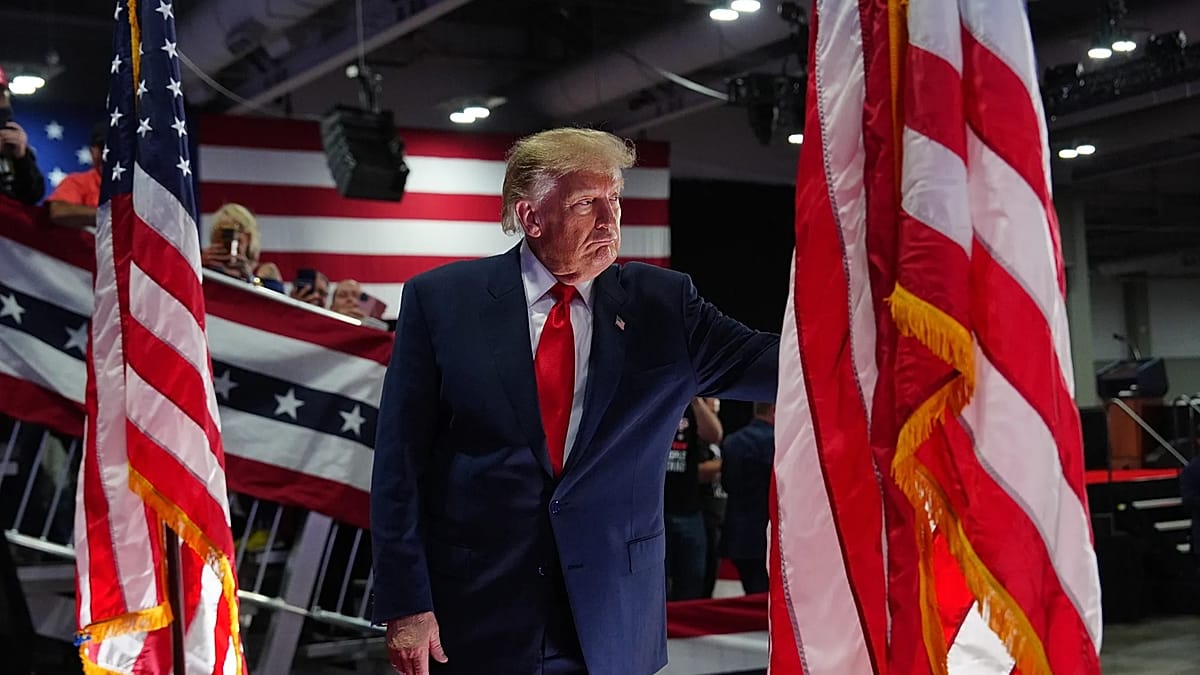
Donald Trump publicly denounced the Nobel Peace Prize committee's choice of Navi Pillay, calling it an "indelible stain on Norway" and dismissing her career. He asserted his own diplomatic achievements, claiming he had "settled 8 wars" and should have won eight Nobel Peace Prizes, while also criticizing Pillay as a "liberal person" who "hates Israel." This outburst followed a campaign…
Imagine a big award given out every year for helping people get along and stop fighting, like a special medal for being super kind. This year, a really smart judge named Navi Pillay won it because she's spent her life helping people and making sure everyone is treated fairly, especially after big problems like war. But a famous person, Donald Trump, got really upset and said she didn't deserve it. He said he should have won it many times for stopping fights, and he called the award silly. At the same time, his country also said they wouldn't work with the court where Navi used to be a judge, because they didn't like some of its decisions.
Analysis
The recent Nobel Peace Prize award to South African jurist Navanethem "Navi" Pillay has ignited a fierce reaction from former US President Donald Trump, underscoring deep divisions in international relations and perceptions of justice. Trump's lengthy rant on Truth Social, following earlier remarks at a campaign rally, not only dismissed Pillay's extensive career but also served as a platform for him to tout his own perceived diplomatic successes, claiming he should have received multiple Nobel Peace Prizes for "settling 8 wars." This public denouncement from a figure who remains highly influential in US politics, and potentially globally, casts a shadow over the prestige of the Nobel Committee's decision and the broader landscape of international recognition.
Navanethem "Navi" Pillay
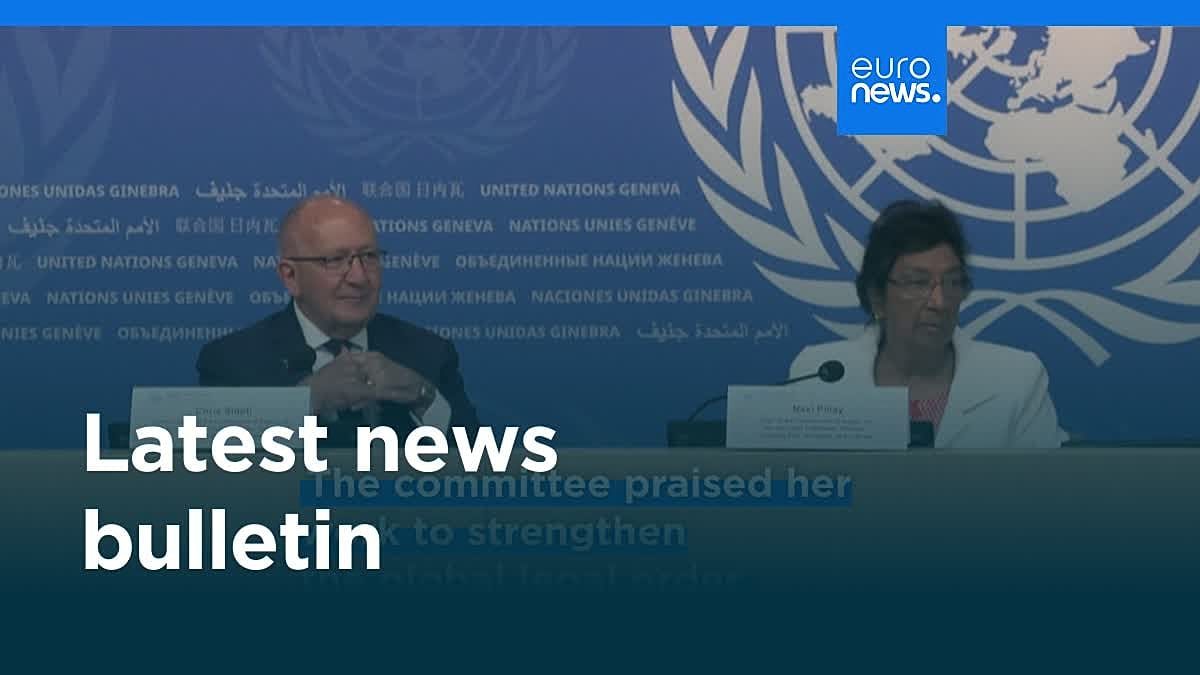
Navanethem "Navi" Pillay's career is marked by a profound commitment to human rights and international justice, a stark contrast to the dismissive rhetoric employed by Donald Trump. Born in Durban, South Africa, Pillay's early work as a defense attorney for anti-apartheid activists, including those on Robben Island, laid the foundation for a distinguished legal career. Her subsequent roles as an acting judge on the South African High Court, a judge on the International Criminal Tribunal for Rwanda, and a judge on the International Criminal Court, where she served in the Appeals Chamber, demonstrate her deep engagement with complex legal and humanitarian issues.
From 2008 to 2014, Pillay served as the UN High Commissioner for Human Rights, a critical period for global human rights advocacy. More recently, in 2025, as chair of the Independent International Commission of Inquiry on the Occupied Palestinian Territory, including East Jerusalem, and Israel, she accused Israel of genocide in Gaza. This accusation, highlighted by Trump, likely fueled his criticism, framing her as a "liberal person who works at the United Nations" and someone who "hates Israel." Pillay's playful jab at Trump upon learning of her award, suggesting she might share it with him, indicates an awareness of his likely reaction and a subtle defiance.
Donald Trump
Donald Trump's response to the Nobel Peace Prize announcement is consistent with his past behavior of challenging established norms and institutions, particularly when they do not align with his self-perception or political agenda. His claim of having "settled 8 wars," including conflicts between Cambodia and Thailand, Kosovo and Serbia, and Israel and Hamas, is presented without detailed substantiation in the article, yet forms the basis of his assertion that he deserved the prize multiple times over. This self-aggrandizing narrative, coupled with his dismissal of Pillay as unknown and anti-Israel, reflects a broader strategy of discrediting opponents and institutions that do not validate his actions or views.
Trump's characterization of the Nobel "Peace" Prize as "forever discredited by a handful of radical ideologues who are anti-democracy, and enemies of civilization!" is a significant rhetorical escalation. Such language not only undermines the integrity of the award but also contributes to a climate of distrust towards international bodies and their decisions. His focus on the wars in Iran and Ukraine, which he claims he will soon "settle, or win," further positions him as a decisive global actor, contrasting with his portrayal of Pillay as an ineffective UN bureaucrat. This narrative aims to bolster his image as a strong leader capable of resolving complex international conflicts, despite the ongoing nature of many of the situations he cited.
International Criminal Court
The controversy surrounding the Nobel Peace Prize is further complicated by the US government's decision to sanction the International Criminal Court (ICC), an institution where Navi Pillay previously served. US Secretary of State Marco Rubio announced these sanctions, accusing the ICC of "politicised actions" and of "targeting Israel." This move, which includes banning transactions with the court to "cut off their resources and crippling their ability to operate against us," signifies a direct challenge to the authority and legitimacy of international legal frameworks. The US stance, articulated by Rubio, is that "the United States and the American people are not subject to the jurisdiction of this fake ICC."
This action by the US government, occurring concurrently with Trump's criticism of Pillay, creates a powerful narrative of skepticism and opposition towards international justice mechanisms. The sanctions against the ICC could have far-reaching implications for global governance, potentially weakening the court's ability to investigate and prosecute war crimes, genocide, and crimes against humanity. It also sends a strong message to other nations about the limits of international jurisdiction when it conflicts with the interests of powerful states. The confluence of Trump's rhetoric and the US government's policy towards the ICC suggests a coordinated effort to diminish the influence of international bodies perceived as hostile or biased against US interests or allies.
Key points
- Donald Trump launched a scathing rant against the Nobel Peace Prize committee for awarding the prize to South African jurist Navanethem "Navi" Pillay.
- Trump claimed he deserved "8 Nobel Peace Prizes" for having "settled 8 wars" and dismissed Pillay as unknown and anti-Israel.
- Navi Pillay has a distinguished career, including serving as UN High Commissioner for Human Rights and a judge on the International Criminal Court.
- Pillay recently accused Israel of genocide in Gaza while chairing an independent commission.
- US Secretary of State Marco Rubio announced sanctions against the International Criminal Court, accusing it of "politicised actions" and "targeting Israel."
The US government's sanctions against the International Criminal Court, coupled with high-profile criticism of international awards, risk undermining global institutions and the rule of international law. This could embolden other nations to disregard international legal frameworks, potentially leading to a more fragmented and less accountable global landscape for human rights and justice.