Norman Bethune’s story still holds lessons for China-Canada relations
The piece says Bethune’s life shows China-Canada ties rest on people, conviction and service, not only official diplomacy.
Intelligence analysis by GPT-5.4 Mini
Wenran Jiang revisits Norman Bethune at a Hebei memorial and argues the Canadian doctor should be seen as a real person, not just a propaganda symbol. In a period of cooler Ottawa-Beijing ties, Bethune is presented as a reminder that lasting friendship starts with people-to-people contact.
The article says Bethune was like a bridge between two countries: a Canadian doctor who went far away to help people because he believed it was right. The writer says remembering that story can help China and Canada act more like neighbors than strangers.
Analysis
Bethune as more than a symbol
Wenran Jiang says he grew up in China with Norman Bethune treated almost like a saintly figure, quoted through Mao’s 1939 essay and remembered as a model of selflessness and internationalism. For years, the author says, Bethune felt like a familiar cliché tied to official propaganda.
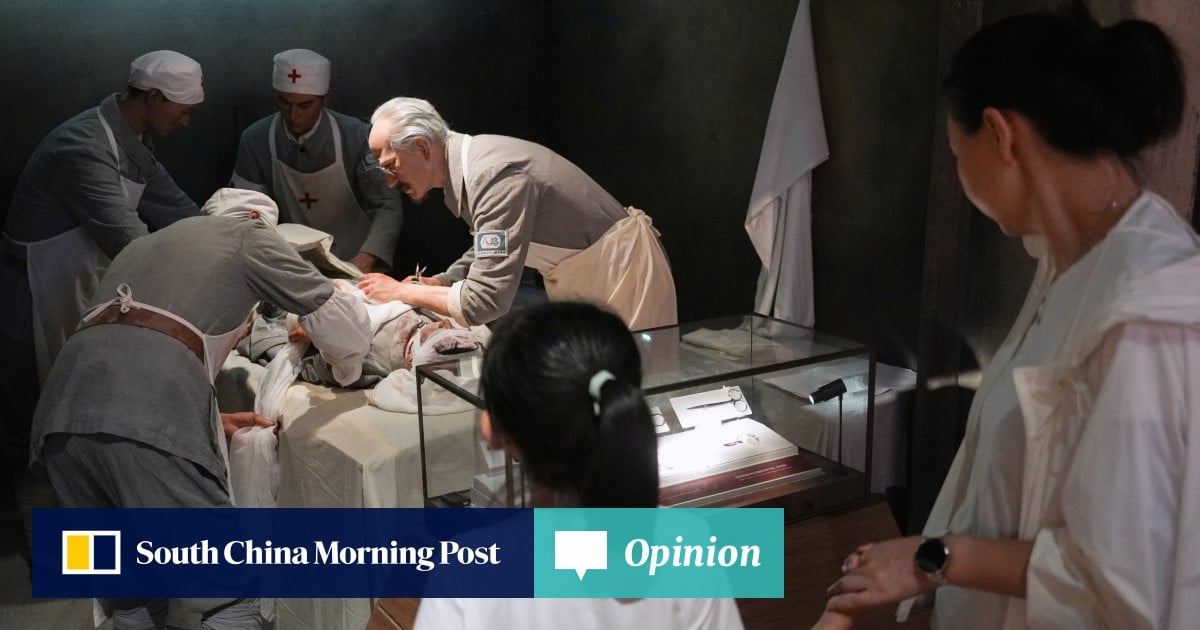
A recent visit to the Norman Bethune memorial in Shijiazhuang changed that. The memorial’s artifacts trace Bethune’s path from Detroit to Montreal, where he worked as a thoracic surgeon and artist, then to his support for socialized medicine, his service in the Spanish Civil War, and finally to northern China. The sketches, medical tools and letters in the exhibit make him look less like a slogan and more like a committed person with a broad moral life.
Why the author thinks that matters now
The article places that reflection against a colder political backdrop. Ottawa and Beijing are described as being framed by trade disputes, strategic rivalry and mutual suspicion. The election of Mark Carney as prime minister, his visit to China in January, and Foreign Minister Wang Yi’s recent visit to Ottawa are presented as meaningful, but still distant from the experience of ordinary people.
The central argument is that Bethune’s commitment was not a diplomatic gesture. It came from what the author calls a moral imperative rooted in witnessing inequality. That makes Bethune relevant today not because he serves as a neat symbol, but because his life suggests that durable China-Canada friendship has to be built from conviction, shared values and human contact, not only top-level meetings.
Key points
- The author says Bethune was celebrated in China from childhood, but often as a slogan rather than as a full human being.
- A visit to Bethune’s memorial in Shijiazhuang led the author to see Bethune as a surgeon, artist and political volunteer with strong convictions.
- The article argues that Bethune’s devotion was driven by moral belief, not by diplomacy or public relations.
- The piece connects Bethune’s legacy to today’s strained China-Canada relationship, which is marked by trade disputes and mutual suspicion.
- The author suggests that people-to-people ties matter more than elite gestures if the relationship is to improve.
If Bethune’s story is taken seriously, it could give China and Canada a shared moral reference point that outlasts trade disputes. The article suggests memorials and public memory can keep people-to-people friendship alive even when official ties are cool.
If relations stay defined by trade disputes, rivalry and suspicion, Bethune risks remaining only a ceremonial symbol. The column also implies official gestures may matter little if ordinary connections do not deepen.