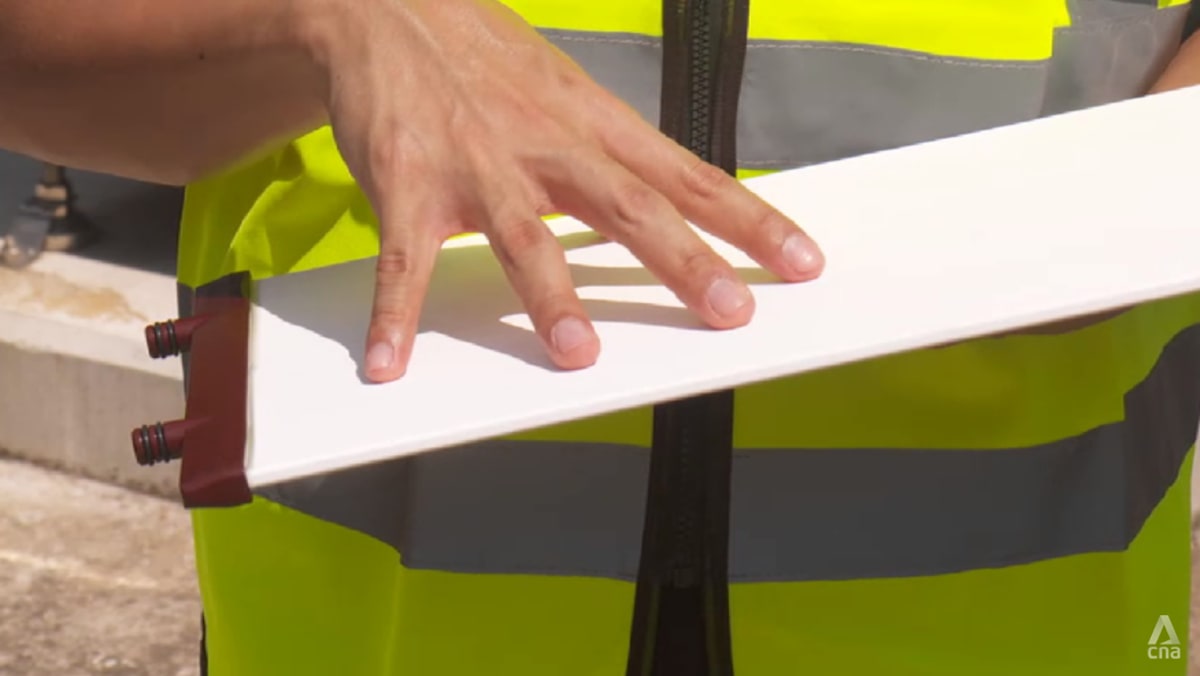
NTU-built electric aircraft completes first phase of flight tests in Germany
NTU-built electric aircraft completes first phase of flight tests in Germany. Prototypes of the electric vertical take-off and landing were tested for 2½ weeks in July.
Intelligence analysis by Llama
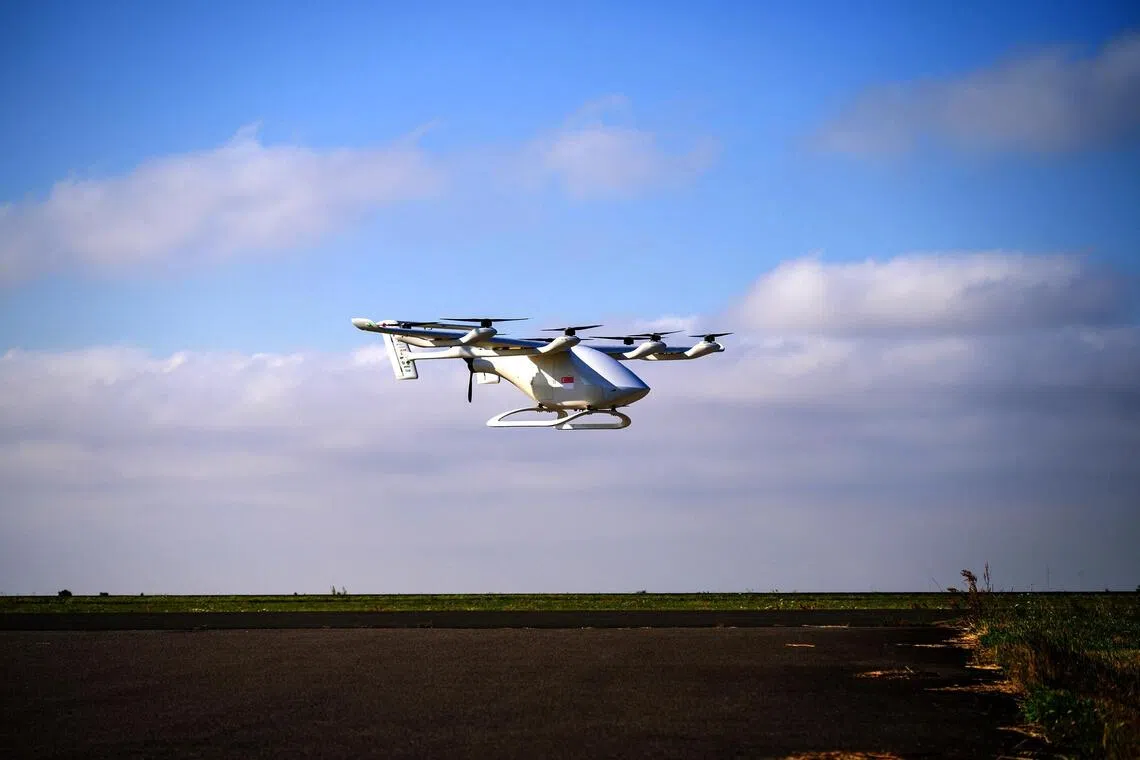
NTU's electric aircraft prototypes completed their first phase of flight tests in Germany, with the team planning to improve autonomous flight, explore hydrogen power, and scale designs to carry passengers and cargo.
Imagine a plane that can take off and land vertically, like a helicopter, but can also fly like a regular plane. That's what NTU's eVTOL aircraft is. It's like a super cool, high-tech taxi that can take you places without making a lot of noise or pollution. The team is still working on making it better and safer, but it's a really cool idea!
Analysis
Background
NTU's eVTOL aircraft project has been in the works for several years, with a team of over 20 students and alumni, as well as Professor James Wong, working tirelessly to design, engineer, and build the aircraft. The project has received $25 million in funding from the Government so far, and the team is now looking to secure an additional $975 million to support commercial operations in Singapore.
What Changed
The successful completion of the first phase of flight tests in Germany marks a significant milestone in the development of eVTOL technology. The tests, which spanned 2½ weeks in July, saw the smaller 3m prototype gain two hours' worth of flight mileage, while the 8m prototype flew for a combined duration of 42 minutes across 19 flights. The larger variant reached an altitude of 92m, while the smaller one reached 60m and a speed of around 120kmh.
What's Next
The team will continue running tests to improve the aircraft's autonomous flight capabilities and ranges. They are also looking into using hydrogen to power these aircraft and enhance their battery capacity. The goal is to create an aircraft that can be scaled to different sizes, including a variant with a 14m wingspan that can ferry five people and a 3m version for cargo. Commercial operations in Singapore are expected to begin around 2035, with the team needing to secure $975 million from investors, recruit the right talent, and gain enough support from the Government.
Key points
- NTU's eVTOL aircraft project has completed its first phase of flight tests in Germany.
- The team plans to improve autonomous flight, explore hydrogen power, and scale designs to carry passengers and cargo.
- Commercial operations in Singapore are expected to begin around 2035.
- The team needs to secure $975 million from investors, recruit the right talent, and gain enough support from the Government to make commercial operations a success.
If the eVTOL aircraft project is successful, it could potentially revolutionize the transportation industry in Singapore, reducing noise and pollution, and making travel more efficient and convenient. The team's goal of creating an aircraft that can be scaled to different sizes, including one that can ferry five people, is also a promising development.
However, the development of eVTOL technology is still in its early stages, and there are many challenges that need to be overcome before it can become a reality. The team will need to secure significant funding, recruit the right talent, and gain enough support from the Government to make commercial operations a success.