Nubia sets Sept. 16 launch for Doubao-powered NaviX Ultra
Nubia, a brand co-developed by ZTE and ByteDance, is set to launch its NaviX Ultra smartphone on September 16, featuring ByteDance's Doubao mobile assistant and positioned as an AI agent phone. The device will incorporate domestically produced LPDDR5X memory from ChangXin…
Intelligence analysis by Gemini 2.5 Flash
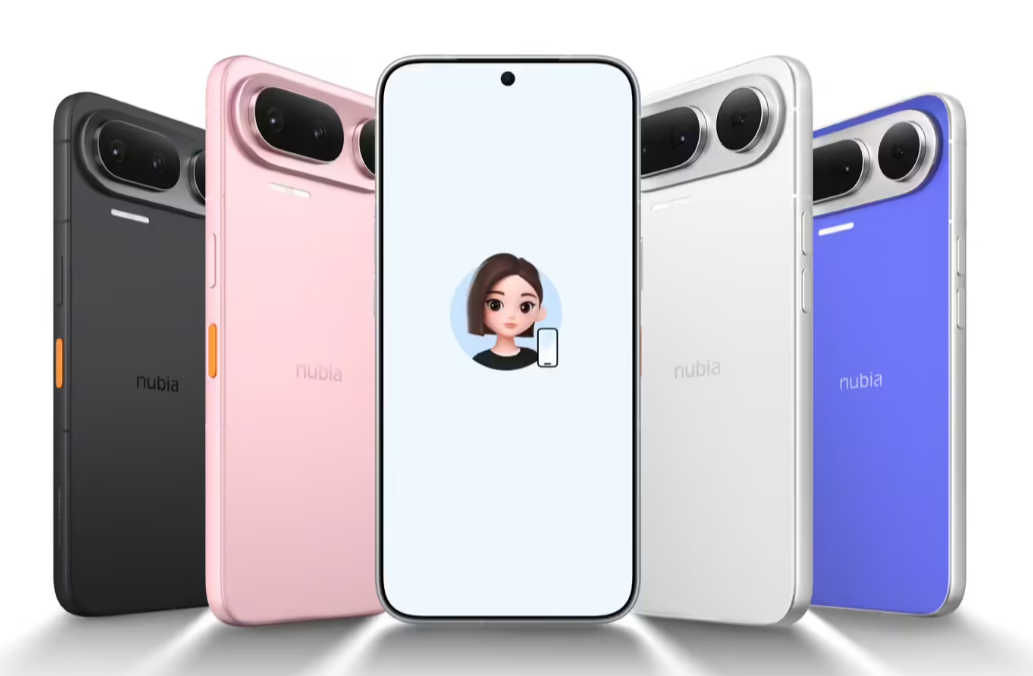
Nubia is preparing to unveil its NaviX Ultra, an "AI agent phone" that integrates ByteDance's Doubao assistant. This launch highlights a significant step in the convergence of smartphone hardware and advanced AI capabilities, particularly with the inclusion of high-speed, domestically manufactured memory components, signaling a strategic move in the mobile tech sector.
Imagine your phone getting a super smart brain that can help you do things without you even asking, like a helpful robot friend inside. This new phone, called NaviX Ultra, is getting a special brain from a company called ByteDance, and it also has super fast memory chips made right at home in China. It's like giving your phone a personal assistant that's always learning and ready to help you out really quickly.
Analysis
The upcoming launch of the Nubia NaviX Ultra on September 16 marks a notable development in the mobile technology landscape, particularly at the intersection of hardware innovation and artificial intelligence. Positioned as an "AI agent phone," the device is a collaborative effort between ZTE and ByteDance, integrating the latter's Doubao mobile assistant. This strategic partnership suggests a concerted push to embed advanced AI functionalities directly into the core user experience of smartphones, moving beyond simple voice assistants to more comprehensive, agent-driven interactions. The emphasis on an "AI agent phone" indicates a future where mobile devices are not just tools, but proactive digital companions capable of complex task execution and personalized assistance, potentially redefining user expectations for mobile computing.
NaviX Ultra
The Nubia NaviX Ultra is poised to be a flagship device, with reported specifications hinting at high-end performance crucial for its AI ambitions. While unconfirmed, the mention of a Snapdragon 8 Elite Gen 5 processor suggests a powerful computing backbone necessary to support sophisticated on-device AI operations, including complex neural network processing and real-time data analysis. A large 7,000mAh battery is also reported, which would be critical for sustaining the significant power demands of continuous AI agent processing and high-speed memory operations without compromising daily usability. The device's design and feature set are clearly geared towards showcasing its AI capabilities, aiming to differentiate it in a competitive smartphone market by offering a more intelligent and deeply integrated user experience that leverages its advanced hardware.
Doubao
At the heart of the NaviX Ultra's AI capabilities is ByteDance's Doubao mobile assistant, a key software component that will define the user's interaction with the device. This integration signifies ByteDance's ambition to extend its AI prowess, likely derived from its extensive experience in recommendation algorithms, content generation, and large language models, into the hardware domain. The Doubao assistant is expected to provide advanced functionalities, potentially including highly personalized recommendations, intelligent task automation across various applications, and more natural, context-aware language interactions. The success of the NaviX Ultra will, in part, depend on how seamlessly and effectively Doubao can deliver on the promise of an "AI agent," offering a truly transformative mobile experience that goes beyond current smartphone paradigms and establishes new benchmarks for intelligent personal assistants.
ChangXin Memory Technologies
A key hardware highlight for the NaviX Ultra is its use of LPDDR5X memory supplied by ChangXin Memory Technologies, a significant detail for both performance and industrial strategy. Operating at an impressive 10,667Mbps, this marks a notable milestone as the first mass-production application of domestically produced LPDDR5X chips at such high speeds. This not only underscores China's growing self-sufficiency and technological advancement in critical semiconductor components but also provides the necessary high-bandwidth memory for demanding AI workloads, enabling faster data processing and more efficient on-device model execution. The collaboration with ChangXin, alongside other announced partners like Qualcomm, BOE, Samsung Semiconductor, and Goodix, illustrates a complex supply chain strategy that balances global expertise with domestic innovation, aiming for both cutting-edge performance and strategic independence in key technological areas.
Key points
- Nubia will launch its NaviX Ultra AI agent phone on September 16.
- The phone is a joint development by ZTE and ByteDance, featuring ByteDance's Doubao mobile assistant.
- It will use domestically produced LPDDR5X memory from ChangXin Memory Technologies, operating at 10,667Mbps.
- This marks the first mass-production application of Chinese-made LPDDR5X chips at this speed.
- Reported specifications include a Snapdragon 8 Elite Gen 5 processor and a 7,000mAh battery, though unconfirmed.
The launch of the NaviX Ultra could accelerate the adoption of AI agent technology in consumer devices, leading to more intuitive and personalized mobile experiences. It also highlights China's progress in developing high-performance domestic semiconductor components, potentially fostering greater technological self-reliance and innovation in the global market.
If the Doubao AI agent fails to deliver a truly differentiated or superior user experience, the NaviX Ultra might struggle to gain traction against established smartphone brands. Furthermore, reliance on new domestic memory technology, while strategic, could introduce unforeseen production or performance challenges if not perfectly optimized.