Number of Employees in Germany Decreases Despite Economic Growth
Germany's workforce declined by 0.5% in the second quarter, with 45.7 million people employed, despite three consecutive quarters of economic growth. The Federal Statistical Office reported a decrease of 212,000 individuals compared to the previous year.
Intelligence analysis by Gemini 2.5 Flash Lite
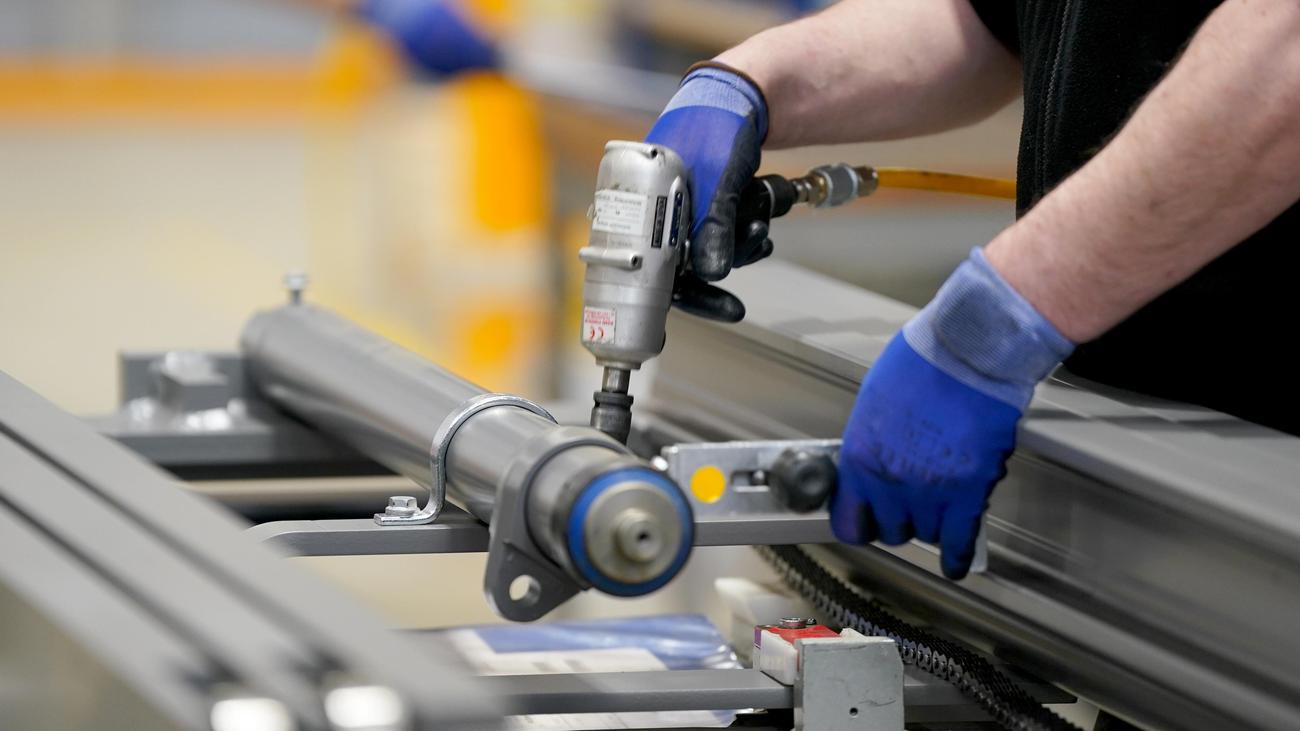
Despite a growing German economy, the number of employed individuals has fallen for the first time since the pandemic, particularly in the industrial and service sectors. This trend is expected to continue due to demographic changes and global political uncertainties.
Imagine Germany's economy is like a growing plant, but fewer people are tending to it. Even though the plant is getting bigger (economic growth), the number of gardeners (workers) is shrinking, especially in factories and shops. This is happening because fewer young people are entering the workforce, and global issues are making it harder for businesses.
Analysis
45.7 Million Employees
The German labor market saw a notable decrease in employment during the second quarter, with an average of approximately 45.7 million people actively working. This figure represents a 0.5 percent reduction, or 212,000 fewer individuals, compared to the same period in the previous year. The Federal Statistical Office highlighted that this decline is accelerating slightly, with seasonally adjusted figures showing 53,000 fewer jobs. This trend is particularly concerning as it occurs against a backdrop of positive economic performance, with the German Gross Domestic Product (GDP) growing for the third consecutive quarter, albeit at a modest 0.2 percent in the second quarter.
Industrial Sector Decline
The manufacturing and industrial sectors experienced the most significant downturn, with a 2 percent drop in employment, equating to 159,000 fewer workers. This sharp decline is attributed to a confluence of factors, including the impact of US tariffs and increasing competition from China, which are particularly affecting Germany's export-oriented industries. The service sector, which had previously shown resilience, also saw its first contraction since the pandemic began. Within services, trade, transport, and hospitality sectors lost 115,000 jobs, while business services, including temporary employment agencies, shed 52,000 positions. The information and communication technology sector also contributed to the decline, with a 1.5 percent reduction or 24,000 fewer employees.
Public Sector Growth
In contrast to the widespread declines, the public sector, including education and health services, demonstrated growth. This area saw an increase of 187,000 employees, a 1.5 percent rise compared to the previous year. This divergence suggests that while core industrial and commercial activities are contracting in terms of employment, public services are expanding. The government anticipates that the labor market will see little recovery in the coming months, citing demographic shifts and a volatile global political landscape as key challenges. The construction sector also experienced a slight decrease in employment, down by 0.7 percent, while agriculture, forestry, and fishing saw a reduction of 9,000 workers.
Key points
- Germany's employment fell by 0.5% (212,000 people) in Q2, despite three quarters of economic growth.
- The industrial sector saw the largest job losses, down 2% (159,000 workers), due to trade tensions and competition.
- Service sectors, including trade and hospitality, also experienced a decline in employment.
- Public services, education, and health saw employment increase by 1.5% (187,000 workers).
- The government expects limited labor market recovery due to demographic changes and global political risks.
If Germany successfully navigates its demographic challenges and global uncertainties, the current decline in employment could be a temporary phase. A potential upside is that a smaller, more efficient workforce, coupled with increased automation and productivity gains, could lead to higher per-capita economic output and improved working conditions for those employed.
The continued decline in the workforce, especially in key industrial sectors, coupled with demographic shifts and global instability, could lead to a prolonged period of economic stagnation. This might result in labor shortages for critical industries, reduced competitiveness, and a strain on social security systems as the proportion of retirees increases.