OCC chief says Democrats are applying the only political pressure in World Liberty charter choice
Jonathan Gould denied serving Trump’s interests and said Democrats are the only source of political pressure over World Liberty’s bank-charter bid.
Intelligence analysis by GPT-5.4 Mini
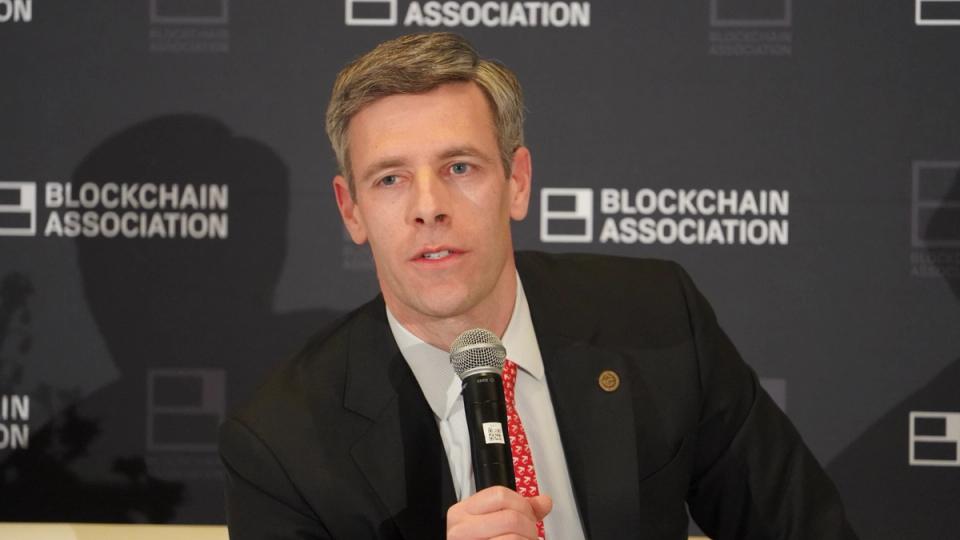
A House hearing on stablecoin rules also turned into a fight over World Liberty Financial, the Trump-linked crypto firm seeking a national trust-bank charter. OCC chief Jonathan Gould said his agency will follow the statute and that Democratic lawmakers, not Trump, are driving the political pressure.
The story is like a school principal deciding whether a club tied to a famous parent can get a special hall pass. At the same time, adults are arguing about new digital money rules and whether they are safe.
Analysis
Charter fight meets stablecoin rulemaking
The House Financial Services Committee hearing brought two threads together: the future of stablecoin regulation and the controversy around World Liberty Financial’s application for a national trust-bank charter. World Liberty is tied to President Donald Trump and his family, which has made the application a political flashpoint.
OCC chief Jonathan Gould rejected the idea that he is acting on Trump’s behalf. In response to questioning from Rep. Gregory Meeks, Gould said the only political pressure he has felt on the charter decision has come from Democrats. He said the agency will handle the application under the statute that governs charters and that it is following ethics laws.
Democrats argued that the company’s links raise disqualifying concerns. They pointed to foreign investors and crypto partners that have previously been associated with illicit behavior, including Binance, and said it is inappropriate for a Trump appointee to decide whether a business partly owned by the president and his family should receive a banking benefit.
The hearing also served as a progress report on the GENIUS Act, the new stablecoin law. FDIC Chairman Travis Hill said another rule is coming soon, including a requirement for customer-identification programs for stablecoin issuers. Other regulators said they have already issued several proposed rules to carry out the law.
Stablecoins were defended by some officials as a faster payment rail. NCUA Chairman Kyle Hauptman said wider use could make payments settle more quickly and could help deliver tax refunds or emergency stimulus faster. But Rep. Brad Sherman warned against using stablecoins for government payments, arguing that they could create a tax-evasion-friendly alternative to the dollar and that regulators need rules that hold up to legal workarounds.
The hearing also touched on the Fed’s recent limited approval of a master account for Kraken, which officials said will be closely watched as regulators work toward broader rules for access to the payments system.
Key points
- OCC chief Jonathan Gould said Democrats, not Trump, are applying the political pressure over World Liberty’s charter bid.
- World Liberty Financial, tied to President Donald Trump and his family, is seeking a national trust-bank charter.
- The hearing also focused on implementation of the GENIUS Act stablecoin law.
- FDIC Chairman Travis Hill said a rule on customer-identification programs for stablecoin issuers is coming soon.
- Lawmakers also discussed the Fed’s limited master-account approval for Kraken and what it could mean for wider crypto access.
If regulators stick to the statute and finish the GENIUS Act rules, stablecoin oversight could become clearer and more predictable. That could help issuers and banks plan around clearer standards for identification checks and payments access.
If the World Liberty charter fight stays tied to partisan pressure, the process could become harder to separate from politics. The broader stablecoin push could also slow if lawmakers and regulators cannot agree on rules that address interest, illicit finance, and payments risk.