OCC Head Says he only Feels ‘Political Pressure’ from Democrats over Crypto Trust Charter
US Comptroller of the Currency Jonathan Gould stated he only feels political pressure from Democrats regarding crypto trust charter applications, specifically mentioning World Liberty Financial.
Intelligence analysis by Gemini 2.5 Flash
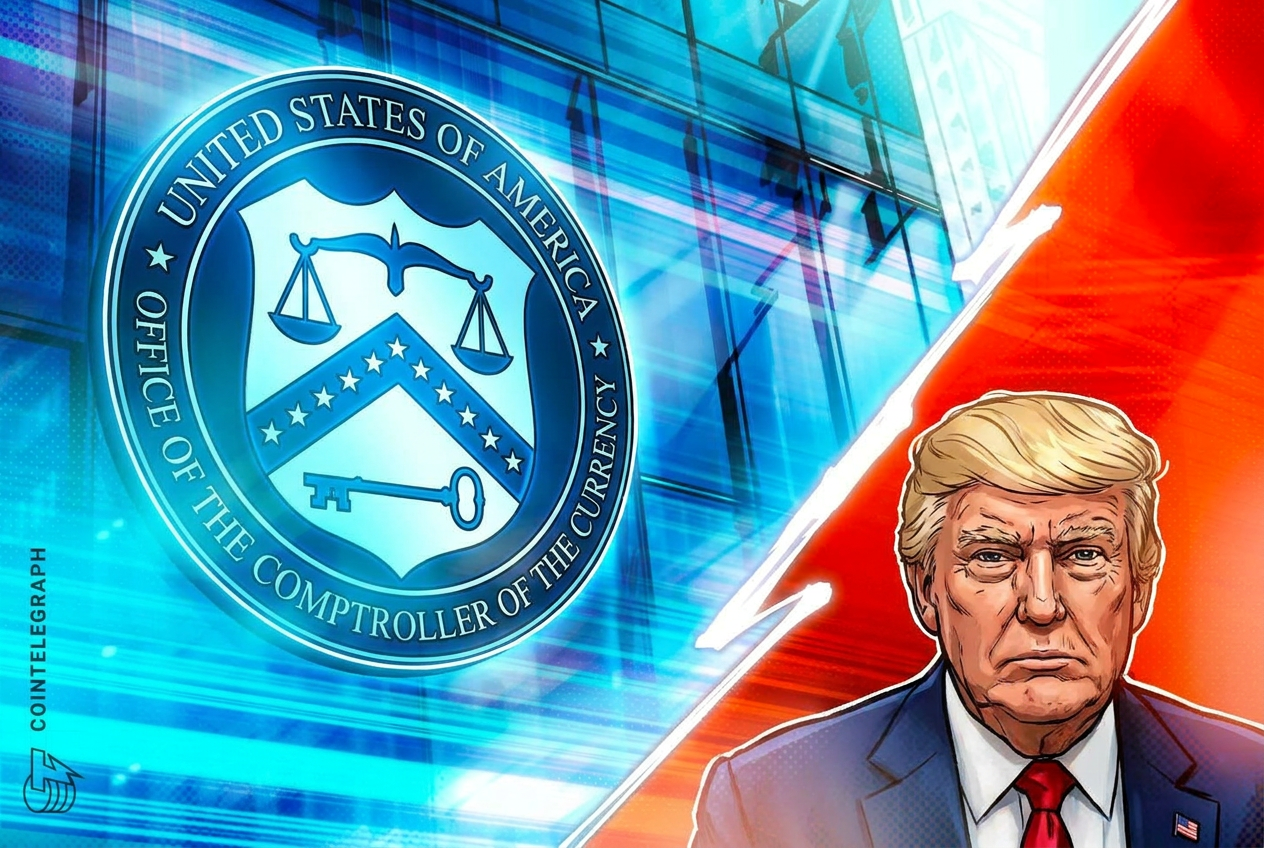
During a House Financial Service Committee hearing, OCC Comptroller Jonathan Gould clashed with Representative Gregory Meeks, who accused Gould of being biased towards World Liberty Financial, a crypto company tied to Donald Trump's family, in its application for a national trust charter.
Imagine a special club that lets some companies do bank-like things without all the super strict rules of regular banks. A company owned by a famous family wants to join, and some lawmakers think the person in charge of the club might give them special treatment because of who they know. But the club leader says he's only being pushed by people who don't want the company to join, not by the famous family.
Analysis
During a House Financial Service Committee oversight hearing, US Comptroller of the Currency (OCC) Jonathan Gould, a Donald Trump nominee, implied he had not received orders from the president to favor a national trust charter application from World Liberty Financial.
Conflict of Interest Allegations
New York Representative Gregory Meeks questioned Gould about World Liberty Financial's connections to foreign governments and Binance. The company, co-founded by Donald Trump and his sons, applied for an OCC charter in January, drawing criticism from Democratic lawmakers who alleged conflicts of interest.
Meeks argued that the company "actively lines the pockets of the president’s family" and urged Gould to apply the same standards to World Liberty as to other applicants. Meeks accused Gould of being "Trump’s fixer," suggesting the application would be approved.
Gould's Response
Gould responded to Meeks, stating, "Your attempts to continue to pressure me are the only political pressure I’ve felt from anyone other than your Senate colleagues." He described the pressure as "very unfortunate and unprecedented."
Previous OCC Approvals and Criticisms
Prior to this exchange, the OCC had already approved or conditionally agreed to several national trust charter applications from other crypto companies, including Coinbase, Ripple, BitGo, Circle, Fidelity Digital Assets, and Paxos. Gould took office in July 2025. In January, after World Liberty’s application, Gould asserted the agency would be "apolitical and nonpartisan" in its review. However, Massachusetts Senator Elizabeth Warren also called for a pause on World Liberty’s application review, claiming previous approvals were for "seemingly ineligible companies" and violated federal banking laws.
Significance of a National Trust Bank Charter
Approval for a national trust bank charter allows crypto companies to offer certain services without being subject to the full regulatory requirements of traditional banks. Kraken's parent company, Payward, also filed an application in May.
Legislative Context
The CLARITY Act, a comprehensive digital asset market structure bill, is expected to proceed to a full Senate vote after advancing in key committees. Treasury Secretary Scott Bessent indicated the Trump administration aims for its passage this summer, with some senators anticipating a vote before August.
Key points
- US Comptroller Jonathan Gould stated he feels political pressure from Democrats regarding crypto trust charter applications, not from the Trump administration.
- Representative Gregory Meeks accused Gould of being a 'fixer' for World Liberty Financial, a crypto company tied to Donald Trump's family, due to its application for a national trust charter.
- The OCC has previously approved or conditionally agreed to applications from other crypto companies like Coinbase and Ripple.
- Senator Elizabeth Warren raised concerns about prior OCC approvals for 'seemingly ineligible companies' and urged a pause on World Liberty's application.
- The CLARITY Act, a comprehensive digital asset market structure bill, is expected to go to a Senate vote this summer, potentially clarifying crypto regulation.
The potential passage of the CLARITY Act this summer could establish a clearer regulatory framework for digital assets, fostering innovation and providing more certainty for crypto companies seeking to offer financial services. Gould's commitment to an apolitical review suggests that the process could ultimately be fair, allowing deserving companies to expand.
The ongoing political pressure and allegations of conflicts of interest could further complicate and delay the approval process for crypto trust charters, creating uncertainty for companies like World Liberty Financial and Kraken. If the perception of bias persists, it could undermine public trust in regulatory decisions and potentially lead to legal challenges or stricter oversight.