Oil jumps after Iran attempts 'surprise attack'; chip stocks slump further as AI sell-off continues – business live
Oil prices surge 3.8% after the US said it intercepted an Iranian missile barrage targeting a base in Jordan, while chip stocks slide further in Asia and the US.
Intelligence analysis by Llama
A reported Iranian missile attack on US forces in Jordan has pushed Brent crude up 3.8% to $87.26. The sell-off in chip stocks deepened overnight, with South Korea's KOSPI down 8.3% and SK Hynix and Samsung sliding. All eyes now turn to the Fed's interest rate decision later today.
Imagine one country got angry and shot rockets at another country's base, and that made the price of oil jump almost 4%. At the same time, the companies that make computer chips used for AI are having a really bad week because investors think they sold too much stuff. Later today, the people who set interest rates have to decide what to do.
Analysis
Tehran Breaks a Fragile Calm
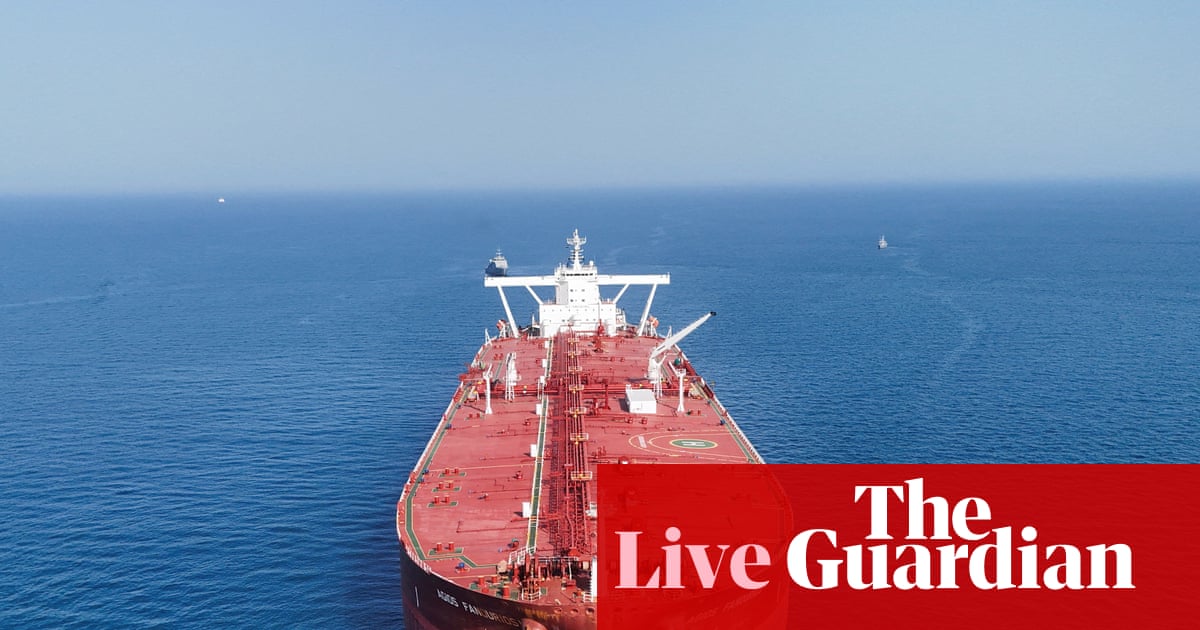
Brent crude jumped 3.8% to $87.26 a barrel after the US military said it intercepted multiple Iranian ballistic missiles aimed at a base in Jordan, ending what had been a brief pause in fighting. Washington framed the barrage as "an attempted surprise attack" by Tehran, and coordinated with Saudi forces to strike sites in Iraq used by Iran-backed militias. The episode, reported by Axios, shows how quickly the oil market reprices when the Strait of Hormuz corridor and Gulf production infrastructure come back into the crosshairs. Even a 1% move in crude is meaningful; a 3.8% intraday jump on a geopolitical headline signals traders are now pricing a real probability of supply disruption rather than treating the conflict as background noise.
For the broader economy, the immediate channel is energy costs. Jim Reid of Deutsche Bank noted that the renewed escalation complicates the inflation outlook at exactly the wrong moment for central bankers, raising the risk that the energy shock feeds through to consumer prices just as the post-pandemic disinflation appeared to be settling. Companies like Reckitt Benckiser, reporting today, explicitly cited the Iran war as a factor in cost forecasting, even as it beat profit expectations.
The Chip Rout Spreads East
The AI-linked sell-off that punished US semiconductor names on Tuesday has migrated to Asia with a vengeance. South Korea's stock market, heavily weighted toward SK Hynix and Samsung Electronics, fell 8.3% overnight. SK Hynix slumped 9% even after reporting a six-fold surge in quarterly profit, a reminder that the market is no longer rewarding strong results and is instead fixated on whether the AI capex cycle has run too far. Samsung, due to report earnings tomorrow, fell 6%. The previous session's US damage was stark: Sandisk dropped 14%, Western Digital 6.9%, Micron 8.9%, and AMD 8.1%, dragging the Nasdaq down 1%.
The FTSE 100 has been largely insulated, touching an intraday high of 10,951 points this morning on the strength of energy and finance heavyweights such as Standard Chartered, Reckitt and Rio Tinto. Russ Mould of AJ Bell attributed the divergence to the index's lack of technology and AI exposure, alongside a string of strong corporate results. That bifurcation, with UK and European cyclicals outperforming while Asia and US tech retreats, is the defining cross-asset story of the week.
A Fed Meeting With No Easy Answer
Reid described the FOMC decision as "the most finely poised in years," with markets pricing just a 32% chance of a rate hike going into the meeting, the most uncertain such split since December 2018. The Fed's communication regime has also shifted; Chair Warsh has shied away from policy guidance, leaving traders to price off data and headlines rather than Fed speak. Deutsche Bank's US economists expect rates to be held steady but flag significant hike risk, with at least a couple of dissents if rates are left unchanged. Mid-July pricing had fallen as low as 10% following a soft June CPI print before climbing to 38% on Monday, illustrating how reactive the market has become to incoming data and now to oil-driven inflation pass-through. With Meta and Microsoft reporting after the bell, tonight's session will shape sentiment for the rest of the quarter.
Key points
- Brent crude up 3.8% to $87.26 after US said it intercepted Iranian ballistic missiles aimed at a base in Jordan
- South Korea's KOSPI falls 8.3% as SK Hynix drops 9% despite a six-fold profit surge and Samsung slides 6%
- US chip stocks were hammered on Tuesday: Sandisk -14%, Micron -8.9%, AMD -8.1%, Western Digital -6.9%, dragging the Nasdaq down 1%
- FTSE 100 touches an intraday high of 10,951, helped by energy and finance heavyweights and its low exposure to AI names
- The FOMC decision tonight is the most finely priced since December 2018, with markets giving just a 32% chance of a rate hike
If today's Fed decision confirms rates on hold and Iran's barrage is contained without further escalation, Brent could give back part of its 3.8% spike and ease inflation pressure. Strong earnings from Reckitt, Rio Tinto and Standard Chartered suggest the UK and European earnings cycle remains healthy, and a successful Fed communication could help stabilise sentiment across chip names that overshot on the downside.
If the Fed surprises with a hike, or if Iran's attack triggers retaliatory strikes that threaten Gulf oil infrastructure, Brent could push decisively above $90 and reignite the inflation impulse. The chip sell-off could deepen into a broader AI-capex unwind if tonight's Microsoft and Meta reports disappoint, dragging the Nasdaq further and exposing any remaining froth in tech valuations.