Pair charged with conspiracy to counterfeit Singapore $100 notes
Two Chinese nationals, Han Wenqian and Yang Zelong, were charged with conspiring to counterfeit Singapore currency notes. They allegedly committed the offence at the Marina Bay Sands hotel between Aug 20 and 24.
Intelligence analysis by Llama
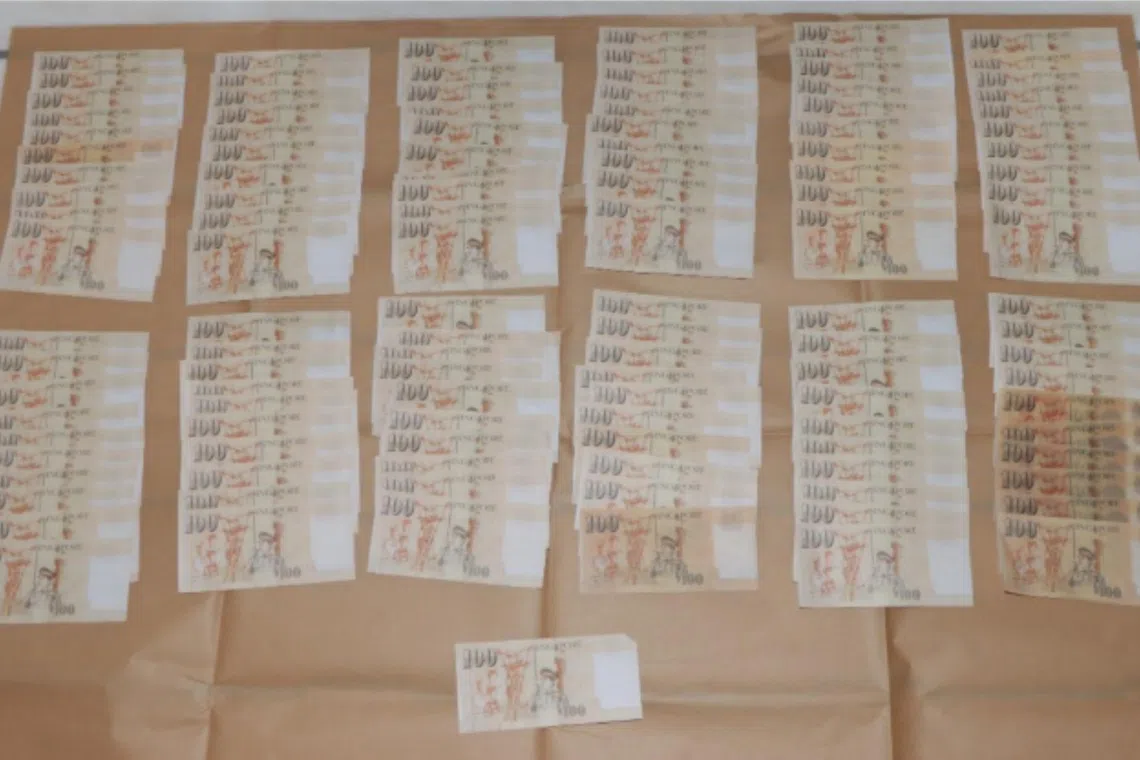
Two Chinese nationals, Han Wenqian and Yang Zelong, were charged with conspiring to counterfeit Singapore currency notes. They allegedly had over 100 pieces of fake $100 bills in their possession.
Two Chinese nationals, Han Wenqian and Yang Zelong, were caught trying to make fake Singapore $100 bills. They were using a printer and other tools to make the fake money. If they are found guilty, they could go to jail for up to 20 years and get a fine.
Analysis
Counterfeiting in Singapore: A Growing Concern
The recent case of Han Wenqian and Yang Zelong highlights the growing concern of counterfeiting in Singapore. The two Chinese nationals were charged with conspiring to counterfeit Singapore currency notes, with over 100 pieces of fake $100 bills in their possession. This is not an isolated incident, as the Singapore Police Force has been actively combating counterfeiting in recent years.
The alleged offences took place at the Marina Bay Sands hotel between Aug 20 and 24, where the pair allegedly used counterfeiting instruments, including ink, paper, and a paper cutter. The police were alerted to the case when a cashier at the casino contacted the authorities after Yang allegedly tried to deposit $150,000 into his casino account at about 4am on Aug 24. The cashier had noticed the word “COPY” printed on one of the notes.
The consequences of counterfeiting in Singapore are severe, with offenders facing up to 20 years in jail and a fine. This is a stark reminder of the importance of being vigilant and reporting any suspicious activity to the authorities.
The Role of Technology in Counterfeiting
The use of technology in counterfeiting is a growing concern in Singapore. The pair allegedly used a printer to produce the counterfeit notes, highlighting the ease with which technology can be used to facilitate counterfeiting. This is a worrying trend, as it suggests that counterfeiting is becoming increasingly sophisticated and difficult to detect.
The Importance of Public Awareness
Public awareness is crucial in combating counterfeiting in Singapore. The public needs to be educated on the risks of counterfeiting and the importance of reporting any suspicious activity to the authorities. This can be achieved through public campaigns and awareness programs, which can help to prevent counterfeiting and reduce the risk of financial loss.
Conclusion
The recent case of Han Wenqian and Yang Zelong highlights the growing concern of counterfeiting in Singapore. The alleged offences took place at the Marina Bay Sands hotel between Aug 20 and 24, where the pair allegedly used counterfeiting instruments, including ink, paper, and a paper cutter. The consequences of counterfeiting in Singapore are severe, with offenders facing up to 20 years in jail and a fine. It is essential that the public is vigilant and reports any suspicious activity to the authorities to prevent counterfeiting and reduce the risk of financial loss.
Key points
- Two Chinese nationals, Han Wenqian and Yang Zelong, were charged with conspiring to counterfeit Singapore currency notes.
- The alleged offences took place at the Marina Bay Sands hotel between Aug 20 and 24.
- The pair allegedly used counterfeiting instruments, including ink, paper, and a paper cutter.
- The consequences of counterfeiting in Singapore are severe, with offenders facing up to 20 years in jail and a fine.
If the authorities are able to successfully prosecute the pair and prevent them from continuing to counterfeit Singapore currency notes, it could help to reduce the risk of financial loss for individuals and businesses in Singapore.
If the pair are able to evade prosecution and continue to counterfeit Singapore currency notes, it could lead to a significant increase in the number of counterfeit notes in circulation, causing financial loss for individuals and businesses in Singapore.