Pakistan, Uzbekistan Agree to Use China Corridor for Transit Trade
Pakistan and Uzbekistan have agreed in principle to utilize a China corridor for bilateral transit trade, establishing an alternative route following disruptions in the traditional Afghan and Iranian corridors. This framework aims to ensure the uninterrupted movement of g…
Intelligence analysis by Gemini 2.5 Flash
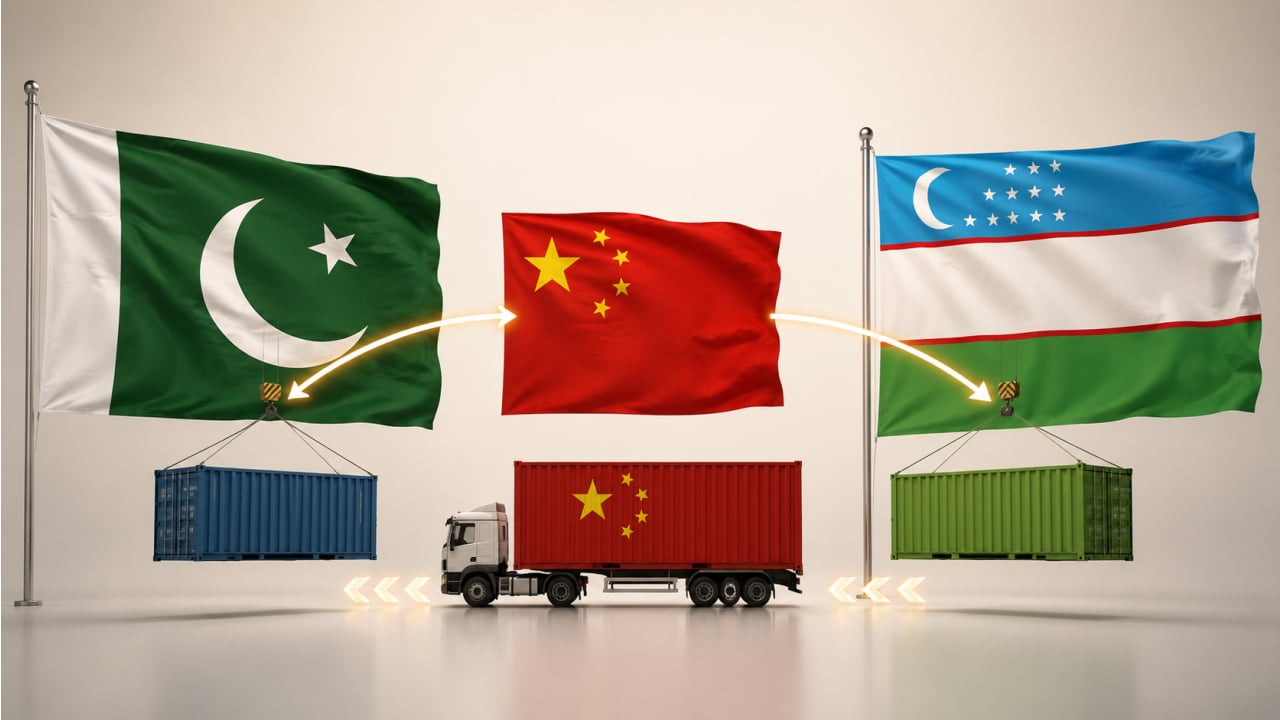
Pakistan and Uzbekistan are set to formalize an agreement to utilize a China-based corridor for transit trade, diversifying their trade routes. This strategic move comes in response to ongoing instability and disruptions affecting traditional corridors through Afghanistan and Iran, aiming to bolster regional trade resilience and connectivity.
Imagine two friends, Pakistan and Uzbekistan, want to send toys to each other. Their usual paths are sometimes blocked or bumpy, making it hard for the toys to get through. So, they've decided to use a new, smoother path that goes through China, like finding a reliable shortcut on a map. This way, their toys can always get through safely and quickly, helping them trade more things and be better friends.
Analysis
Addressing Regional Instability in Trade
The recent agreement between Pakistan and Uzbekistan to leverage a China corridor for transit trade marks a significant strategic shift in regional commerce. This decision directly addresses the persistent challenges and disruptions faced along the traditional Afghan and Iranian trade routes, which have been plagued by regional instability and security concerns. By diversifying their transit options, both nations aim to safeguard the flow of goods, ensuring that bilateral trade remains robust and predictable even amidst geopolitical uncertainties. The move underscores a proactive approach to mitigating supply chain vulnerabilities and fostering greater economic resilience in the region.
The existing Pakistan-Uzbekistan Transit Trade Agreement, in force since March 2022, has laid the groundwork for structured trade, but the evolving security landscape necessitated a re-evaluation of primary transit arteries. The closure of the Afghan corridor and disruptions along the Iranian route have highlighted the urgent need for reliable alternatives. This new understanding is poised to be formalized through a protocol during Uzbekistan's Deputy Prime Minister's visit to Pakistan, signaling a concrete commitment to this revised framework and its potential to stabilize regional trade dynamics.
The Strategic Significance of the China Corridor
The adoption of a 'China corridor' as an additional transit route holds profound strategic implications for both Pakistan and Uzbekistan. While the article does not explicitly name the specific infrastructure, it likely refers to routes leveraging China's Belt and Road Initiative, such as the China-Pakistan Economic Corridor (CPEC) or other related connectivity projects. For Pakistan, this corridor offers enhanced access to the lucrative Central Asian markets, positioning it as a vital gateway for landlocked nations like Uzbekistan. Conversely, Uzbekistan gains a more secure and potentially efficient pathway to Pakistani seaports, facilitating its global trade.
This strategic alignment with China's infrastructure initiatives could unlock new avenues for economic cooperation and integration across Eurasia. The diversification of routes not only reduces dependence on politically sensitive areas but also potentially improves logistical efficiency and reduces transit times. The agreement allows Pakistan to extend its trade reach into Central Asia more reliably, while Uzbekistan maintains crucial access to the Arabian Sea, fostering a symbiotic relationship that benefits both economies through improved market access and reduced transportation risks.
Bolstering Bilateral Trade and Economic Ties
Uzbekistan currently stands as Pakistan's second-largest trading partner in Central Asia, with bilateral trade reaching $445.9 million in 2025. Pakistan's exports to Uzbekistan amounted to $120.9 million, while imports from Uzbekistan totaled $325 million. The introduction of the China corridor is expected to significantly boost these figures by providing a more stable and predictable environment for trade expansion. Uninterrupted movement of goods is a critical factor for businesses, and this agreement aims to provide just that, encouraging greater investment and trade volumes.
Beyond direct trade, the enhanced connectivity could stimulate economic growth in various sectors, including logistics, manufacturing, and services, in both countries. The agreement's provisions, covering customs infrastructure, transport permits, warehousing facilities, and multiple entry visas for truck drivers, are designed to streamline cross-border operations. By addressing these practical aspects, Pakistan and Uzbekistan are laying the foundation for a more integrated and prosperous economic partnership, ultimately contributing to regional stability and shared prosperity.
Key points
- Pakistan and Uzbekistan have agreed in principle to use a China corridor for bilateral transit trade.
- This new route provides an alternative to traditional Afghan and Iranian corridors, which have faced disruptions.
- The agreement aims to ensure uninterrupted movement of goods and diversify trade routes for both nations.
- Uzbekistan is Pakistan's second-largest trading partner in Central Asia, with bilateral trade reaching $445.9 million in 2025.
- A protocol to amend the existing Pakistan-Uzbekistan Transit Trade Agreement is expected to be signed on July 20-21, 2026.
The new China corridor could significantly boost bilateral trade by providing a stable and efficient route, fostering greater economic integration between Pakistan and Central Asian republics. It could also enhance Pakistan's strategic position as a gateway for landlocked Central Asian nations, attracting more investment and development.
Potential challenges include the operational complexities of establishing and maintaining a new corridor, possible geopolitical sensitivities related to China's involvement, and the risk of new disruptions if the chosen route faces unforeseen obstacles. The success also hinges on the full implementation of the protocol and sustained regional stability.