Pallas-1 sees China’s Galactic Energy join reusable launch push, closing in on SpaceX
Chinese rocket maker Galactic Energy successfully launched its Pallas-1 medium-to-large reusable rocket into orbit, marking a significant step in China's efforts to develop reusable launch capabilities.
Intelligence analysis by Gemini 2.5 Flash
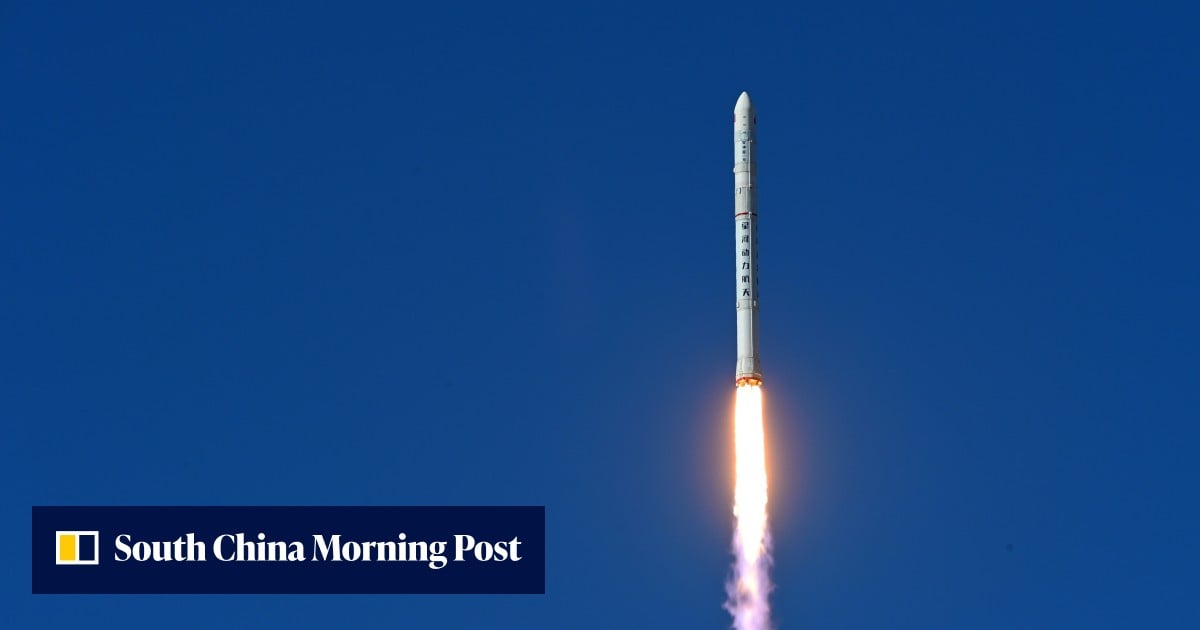
The orbital mission of the Pallas-1 rocket from the Jiuquan Satellite Launch Centre highlights China's ambition to become a leading space power and narrow the technological gap with companies like SpaceX. Galactic Energy plans to test recovery systems for future high-frequency commercial reuse, aligning with Beijing's national space strategy.
Imagine if every time you wanted to fly a paper airplane, you had to build a brand new one from scratch. That would be a lot of work and waste! Now, imagine if you could just pick up your paper airplane after it landed and fly it again and again. That's what China's Galactic Energy is trying to do with its Pallas-1 rocket, just like how SpaceX does it. They want to make space travel cheaper and easier by reusing rockets, which is a big step for sending things like internet satellites into space.
Analysis
China's private space sector has achieved a significant milestone with Galactic Energy's successful orbital launch of its Pallas-1 reusable rocket. This event marks a crucial step in Beijing's broader strategy to enhance its space capabilities and compete with established global players like SpaceX. The Pallas-1, a medium-to-large liquid-propellant rocket, demonstrates China's growing prowess in advanced rocketry, particularly in the complex domain of reusability, which is key to reducing launch costs and increasing mission frequency.
Pallas-1
The Pallas-1 rocket, standing 52 meters tall with a 3.35-meter diameter, represents a substantial engineering feat for Galactic Energy. Its successful lift-off from the Jiuquan Satellite Launch Centre's commercial pilot zone and subsequent entry into designated orbit highlights the operational readiness of both the rocket and the company's self-built launch infrastructure. With a lift-off mass of approximately 283 tonnes and a thrust of 350 tonnes-force, the Pallas-1 is designed to carry up to 7 tonnes into low Earth orbit. This payload capacity positions it as a versatile platform for various satellite deployment missions, including those for communication, earth observation, and scientific research.
The rocket's first stage is powered by seven in-house developed liquid oxygen-kerosene engines, named CQ-50, underscoring China's advancements in propulsion technology. While the initial mission did not include a booster recovery attempt, the Pallas-1 is engineered for remarkable durability, designed to withstand up to 25 flights. This ambitious reusability target, if achieved, would significantly lower the per-launch cost, making space access more economical and frequent for both commercial and governmental clients.
Galactic Energy
Galactic Energy's strategic focus on reusable launch technology is a clear indicator of the evolving landscape within China's private space industry. The company's immediate plans involve rigorous testing of re-entry control, grid fins, braking, and deceleration systems. These are critical components for achieving controlled descent and landing, which are prerequisites for successful booster recovery. The initial recovery attempts are slated for targeted sea or land landings, a methodical approach to mastering the complex dynamics of vertical landing.
This incremental strategy reflects a pragmatic understanding of the technical challenges involved in rocket reusability, a domain where SpaceX has set a high bar. By systematically validating each stage of the recovery process, Galactic Energy aims to build confidence and refine its technology, ultimately paving the way for high-frequency commercial reuse. The company's investment in a self-built launch pad also signifies its commitment to end-to-end control over its launch operations, a model that offers greater flexibility and efficiency.
SpaceX
The successful launch of Pallas-1 places Galactic Energy firmly in the global race for reusable launch capabilities, directly challenging the dominance of Elon Musk's SpaceX. While SpaceX has pioneered and perfected vertical landing and rapid reuse with its Falcon 9 rockets, China's entry into this arena signals a narrowing of the technological gap. Beijing's explicit objective to become a "space power," as outlined in its latest five-year plan, provides a strong governmental impetus for private companies like Galactic Energy to innovate and accelerate their development.
The competition with SpaceX is not merely about technological parity but also about strategic influence and economic advantage in the burgeoning space economy. Reusable rockets are fundamental to deploying large satellite constellations, such as Starlink, which offer global internet connectivity and other services. As China develops its own satellite infrastructure and expands its presence in space, the ability to launch and re-launch payloads cost-effectively will be paramount. This competitive dynamic is likely to drive further innovation and potentially lower global launch costs, benefiting the broader space industry.
Key points
- Galactic Energy successfully launched its Pallas-1 reusable rocket into orbit from the Jiuquan Satellite Launch Centre.
- The Pallas-1 is a two-stage, liquid-propellant rocket designed to carry up to 7 tonnes into low Earth orbit.
- The rocket's first stage is powered by seven in-house developed CQ-50 liquid oxygen-kerosene engines.
- Galactic Energy plans to test re-entry control and landing systems for future vertical recovery, aiming for up to 25 flights.
- This mission marks a key milestone in China's push to develop reusable launch capabilities and compete with SpaceX.
This successful launch could lead to significantly lower costs for accessing space, fostering greater innovation and competition in the global space industry. Increased reusability would enable more frequent and affordable satellite deployments, benefiting various sectors from communication to scientific research.
Despite this milestone, Galactic Energy still faces considerable technical challenges in perfecting booster recovery and achieving high-frequency reuse, meaning a significant gap with SpaceX's proven capabilities may persist for some time. Delays in developing full reusability could hinder China's broader space ambitions.