Past failures haunt Quad’s US$20 billion critical minerals push
The Quad nations have unveiled a US$20 billion critical minerals initiative to reduce China's dominance in the supply chain, but its success is uncertain due to past unfulfilled pledges and private sector caution.
Intelligence analysis by Gemini 2.5 Flash
The Quadrilateral Security Dialogue's new US$20 billion critical minerals framework aims to counter China's near-monopoly on essential materials for modern industries. Analysts, however, are skeptical, citing the Quad's history of policy declarations without concrete results and the need to overcome private-sector hesitancy.
Imagine a world where special rocks called "critical minerals" are like secret ingredients for all our cool new gadgets, like electric cars and big windmills. One country, China, has almost all the factories that turn these rocks into usable parts. Now, a team of four countries, called the Quad, is trying to build their own factories so they don't have to rely so much on China. It's like if only one candy store made all the best candies, and now other friends want to make their own too, but it's really hard because the first candy store has been doing it for a very long time.
Analysis
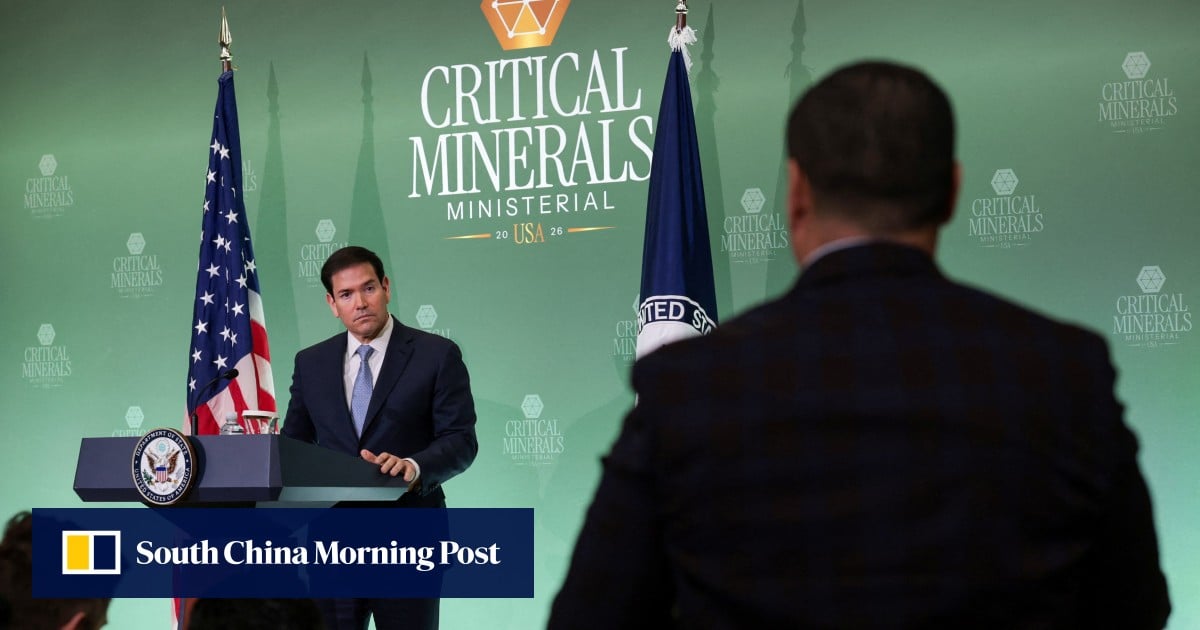
The Quadrilateral Security Dialogue (Quad), comprising Australia, the United States, India, and Japan, has launched a US$20 billion initiative aimed at diminishing China's near-monopoly on critical minerals. These materials are fundamental to modern defense, technology, and clean energy sectors. The announcement, made after a meeting of Quad foreign ministers on May 27, is widely seen as a direct response to China's commanding position in the global supply chains of these essential resources.
China's Dominance in Critical Minerals
China's influence in the critical minerals sector is substantial. According to the International Energy Agency, China leads in refining 19 out of 20 strategically important energy minerals. It controls, on average, 70 to 90 percent of the global processing capacity for vital elements such as lithium, cobalt, graphite, and manganese. These minerals are indispensable for manufacturing electric vehicle batteries, wind turbines, solar panels, semiconductors, and advanced aerospace technologies.
Beijing's Willingness to Restrict Supply
Beijing has previously demonstrated its readiness to control the supply of these critical materials. Earlier this year, following a diplomatic dispute, China imposed restrictions on shipments of certain "dual-use goods" to Japan. This highlights the strategic leverage China possesses due to its control over these supply chains.
Challenges for the Quad Initiative
Experts like William Heidlage, senior director of technology at BowerGroupAsia, emphasize that China's dominant position was established over many decades through strategic industrial policy, extensive scale, and significant processing capacity. For the Quad initiative to succeed, its members must transition from mere policy declarations to delivering tangible and measurable outcomes. The initiative faces challenges from private-sector caution and a history of the Quad's unfulfilled commitments, which could impede its ability to break China's long-standing near-monopoly. The core challenge for the Quad is to build a robust and resilient supply chain that can compete with China's entrenched infrastructure and policy support.
Key points
- The Quad is launching a US$20 billion critical minerals framework to challenge China's near-monopoly.
- China controls 70-90% of global processing capacity for many key minerals like lithium and cobalt.
- The success of the initiative depends on moving beyond policy declarations to measurable outcomes.
- Past failures of Quad pledges and private sector caution are significant hurdles.
- China has previously demonstrated its willingness to restrict critical mineral supplies.
If the Quad's US$20 billion initiative successfully mobilizes private sector investment and overcomes past implementation hurdles, it could foster a more diversified and resilient global supply chain for critical minerals, reducing geopolitical risks and ensuring stable access for essential modern industries. This could lead to greater innovation and energy security for the participating nations and their allies.
The initiative might falter due to a lack of concrete measurable outcomes, persistent private-sector reluctance to invest, and the Quad's historical difficulty in translating policy declarations into action. China's entrenched dominance, built over decades, makes it challenging to rapidly establish competitive alternative supply chains, potentially leaving the Quad's efforts with limited impact.