Pezeshkian: US and Israel can only dream of Iran’s capitulation
Pezeshkian said Iran will not surrender to U.S. or Israeli pressure as ceasefire talks stall and exchanges of fire continue.
Intelligence analysis by GPT-5.4 Mini
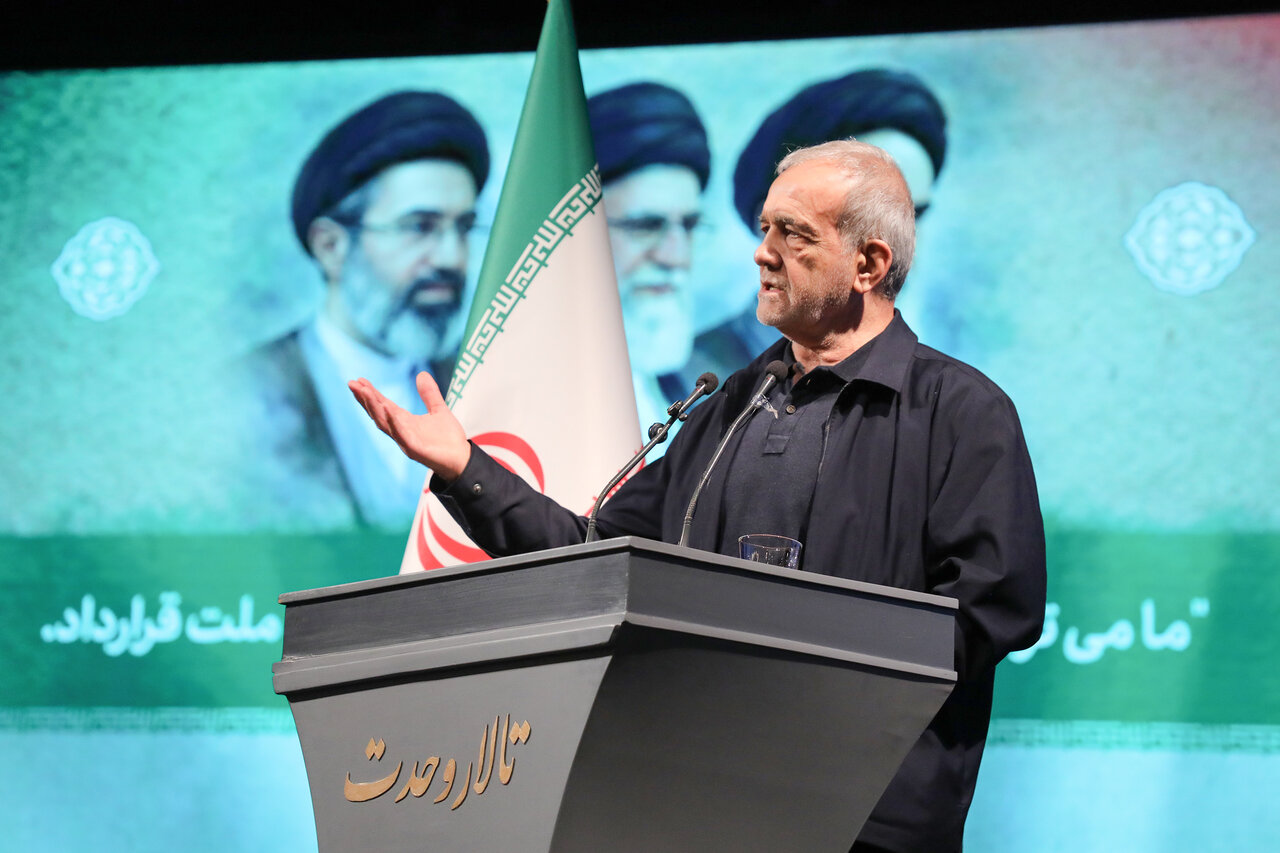
The Iranian president cast public backing as the country’s strongest security asset, arguing that pressure and destabilization failed to break Iran’s will. He said war is not in Iran’s interest, but that the country will not compromise on dignity, territory, or sovereignty.
Pezeshkian is saying Iran will not bow to pressure from the U.S. or Israel. It is like a kid saying, “I’ll talk, but I won’t let anyone take my lunch money.”
Analysis
What Pezeshkian said
President Masoud Pezeshkian said Iran will not yield to threats or pressure amid the latest fighting involving Iran, the United States, and Israel. He said Iranians would never surrender to any violation of their dignity, independence, or territorial integrity.
His core argument
Pezeshkian said Washington and Tel Aviv miscalculated by believing pressure and destabilization would quickly break the Iranian public. In his view, the country’s social support proved to be its main source of security and progress, because people remained active in public life instead of backing down.
Where the conflict stands
The article says an April 8 ceasefire stopped the U.S.-Israeli war, but efforts to end the conflict permanently have failed so far. Tehran blames Washington for making “excessive” demands, while recent exchanges of fire have led Iran to accuse both sides of violating the truce.
Bottom line
Pezeshkian’s message is that Iran does not want war, but it will not accept terms it sees as an attack on sovereignty. The article also says officials still leave the door open to talks, while warning that any new aggression will bring a forceful response.
Key points
- Pezeshkian said Iran will not surrender to threats or pressure from the U.S. and Israel.
- He said Iran’s public support is the country’s greatest pillar of security and progress.
- The article says an April 8 ceasefire stopped the war, but a lasting settlement has not been reached.
- Tehran says Washington’s demands have blocked diplomacy and both sides have accused each other of violating the truce.
- Iran says it is open to talks but will respond with force to new aggression.
If the ceasefire holds and talks resume, the conflict could still move toward a more permanent end. The article also says Iran remains open to negotiations, which leaves some room for diplomacy if the demands on both sides change.
If the “excessive” demands stay in place and ceasefire violations continue, the conflict could keep flaring up. Pezeshkian’s warning that Iran will answer aggression with force suggests the standoff could deepen rather than ease.