Philippine military assures ‘no vacuum’ over top officer’s retirement
The Philippine military has assured that there will be no leadership vacuum despite the expected retirement of chief of staff General Romeo Brawner Jnr. The transition comes at a sensitive time due to ongoing tensions in the South China Sea and Manila’s row with some reti…
Intelligence analysis by Llama
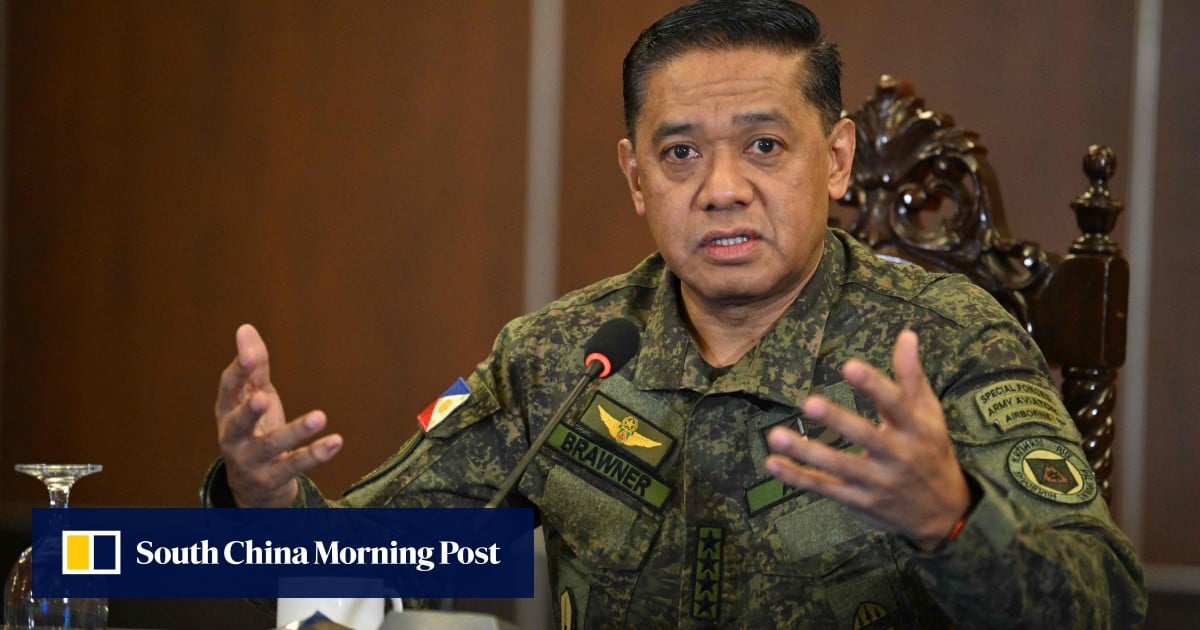
The Philippine military has emphasized continuity among the military leadership, with the expected retirement of chief of staff General Romeo Brawner Jnr coming at a sensitive moment for President Ferdinand Marcos Jnr. The transition is expected to ensure that the armed forces can focus on combating external threats and insulate themselves from domestic political turmoil.
Imagine the Philippine military is like a big team working together to protect the country. When the leader of the team retires, there might be a little confusion, but the team will still work together to keep everyone safe. The new leader will make sure the team stays focused on its job and doesn't get distracted by internal conflicts.
Analysis
A Sensitive Transition Amid Ongoing Tensions in the South China Sea
The expected retirement of chief of staff General Romeo Brawner Jnr comes at a sensitive time for President Ferdinand Marcos Jnr. The Philippines is currently facing pressure from Beijing in the South China Sea, and the military's support for Marcos is being questioned by several retired officers. The transition is expected to ensure that the armed forces can focus on combating external threats and insulate themselves from domestic political turmoil.
Ensuring Continuity Amid Change
The Philippine military has emphasized continuity among the military leadership, with Colonel Francel Margareth Padilla, the spokeswoman for the Philippine military, assuring that there will be no leadership vacuum. Padilla pointed out that the military would always have an officer in charge even if a particular senior post was vacant. The transition is expected to ensure that the armed forces can maintain stability and focus on their core mission of defending the country.
Implications for the Philippines and China
The transition in the Philippine military leadership has significant implications for the country's relationship with China. The Philippines has been a key player in the South China Sea dispute, and the military's support for Marcos is being closely watched by Beijing. The transition is expected to ensure that the Philippines can maintain its independence and sovereignty in the face of growing Chinese influence.
Key points
- The Philippine military has assured that there will be no leadership vacuum despite the expected retirement of chief of staff General Romeo Brawner Jnr.
- The transition comes at a sensitive time due to ongoing tensions in the South China Sea and Manila’s row with some retired officers over Marcos.
- The new leader will be expected to ensure that the armed forces can focus on combating external threats and insulate themselves from domestic political turmoil.
The transition in the Philippine military leadership could lead to a more stable and focused military, better equipped to handle external threats and maintain stability in the face of growing Chinese influence. The new leader may also be able to address some of the concerns raised by retired officers and improve the military's relationship with the government.
The transition in the Philippine military leadership could also lead to a power vacuum, allowing external forces to exert influence over the military. The new leader may struggle to maintain stability and focus on the military's core mission, leading to a decline in the country's ability to defend itself.