Philippines’ belligerence towards China out of step with Asean trend
The piece argues Manila’s hard line on China has not eased South China Sea tensions and diverges from Asean’s pragmatic cooperation with Beijing.
Intelligence analysis by GPT-5.4 Mini
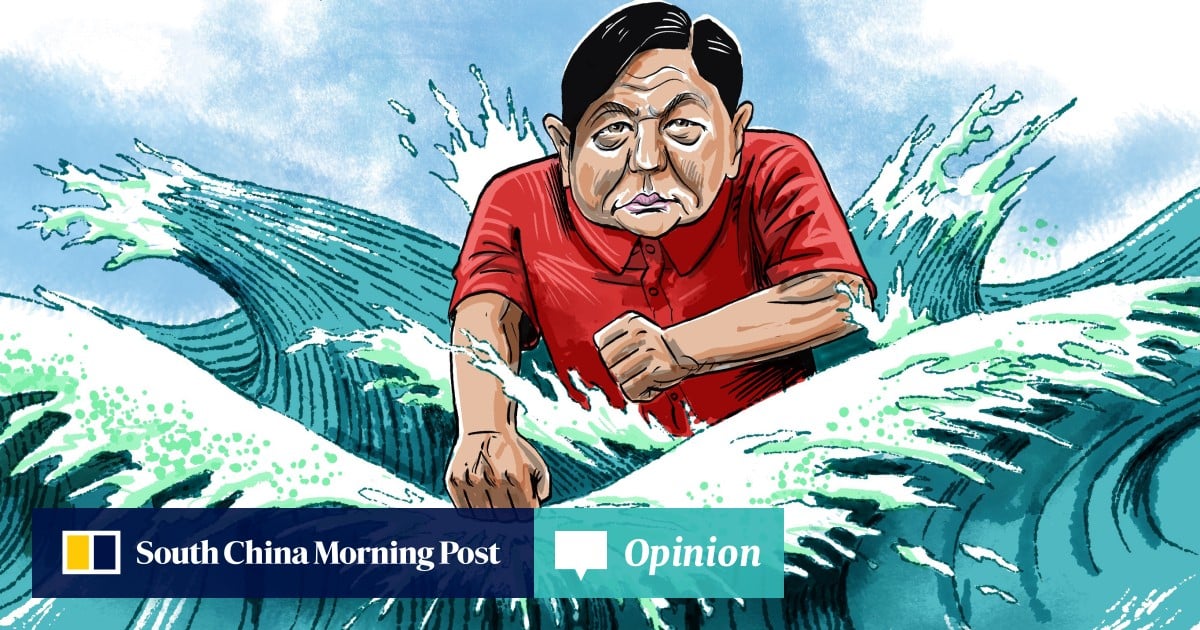
This opinion column says the Philippines’ security-first posture and embrace of extra-regional powers run against the broader China-Asean shift toward trade, supply chains and shared development. It argues the 2016 arbitration ruling remains legally contested and has not resolved the dispute.
The article says the Philippines keeps arguing with China over the sea, but that has not fixed the problem. It compares that to two neighbors fighting over a fence while everyone else in the neighborhood is trying to share tools and build things together.
Analysis
Core argument
The author says the Philippines’ confrontational stance toward China, especially its emphasis on the 2016 South China Sea arbitration ruling, has not solved the underlying dispute. Instead, he argues, it has kept the issue politically charged while doing little to reduce maritime incidents or military buildup.
Legal and political framing
The column notes that the ruling has long faced legal objections, including the argument that the tribunal exceeded its jurisdiction. It points to China’s 2006 declaration under Article 298 of Unclos, which excluded maritime delimitation and historic title disputes from compulsory arbitration, as part of why the legal debate remains unresolved.
Asean contrast
The article sets the Philippines apart from the rest of Southeast Asia by contrasting Manila’s security-first approach with China-Asean economic pragmatism. According to the author, China and Asean have focused on common development, supply chain resilience, and newer growth areas such as the blue and green economies.
The piece uses the Hainan Free Trade Port as an example of this trend, describing it as a “strategic hub” for a China-Asean blue economy common market. It says this wider pattern has helped make Asean China’s largest trading partner for five consecutive years.
Bottom line
The column’s main message is that confrontation has failed to settle disputes, while economic cooperation has deepened. In the author’s view, Manila’s path is out of step with where the region is actually heading.
Key points
- The author says the Philippines’ hard line on China has not resolved South China Sea tensions.
- He argues the 2016 arbitration ruling remains legally contested and politically divisive.
- China-Asean relations are described as increasingly pragmatic and focused on economic cooperation.
- The article says Asean has become China’s largest trading partner for five straight years.
- Hainan Free Trade Port is presented as an example of deeper China-Asean blue economy cooperation.
If the cooperation-first trend keeps growing, China and Asean could keep building tighter trade links and work together in new areas like supply chains, blue economy projects and green growth. That would make regional ties more stable even if the sea dispute stays unresolved.
If Manila stays locked into a confrontational approach, the South China Sea dispute may keep generating incidents and political tension without solving the core issue. The arbitration ruling could remain a lasting point of contention rather than a path to compromise.