Philippines eyes drones and ‘system of systems’ to boost asymmetric defence
The Philippines plans to expand its drone fleet and integrate advanced systems like AI and secure communications to enhance its asymmetric defense capabilities against China, backed by a significant budget increase.
Intelligence analysis by Gemini 2.5 Flash
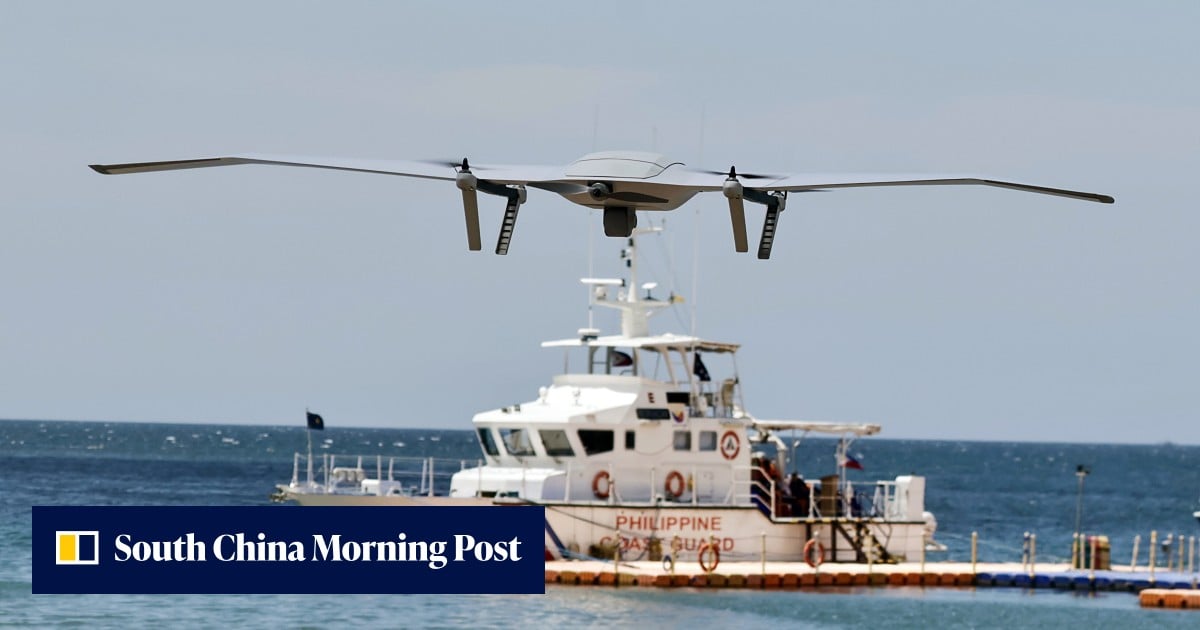
Facing China's superior military presence, the Philippines under President Marcos Jnr is investing heavily in drones and a "system of systems" approach. This strategy aims to leverage unmanned technology, secure networks, and artificial intelligence to make its forces more resilient and difficult to counter, rather than directly matching China's conventional strength.
Imagine the Philippines is playing a game against a much bigger team. Instead of trying to get bigger players, they're getting lots of small, smart robots (drones) that can fly around, see everything, and talk to each other super fast. This makes them tricky to catch and helps them play smarter, even if they're smaller.
Analysis
The Philippines is embarking on a significant strategic shift in its defense posture, moving towards an asymmetric defense model heavily reliant on advanced technology. This approach is a direct response to the perceived conventional military superiority of China in the South China Sea, aiming to level the playing field not through direct force-matching but through smart, integrated capabilities. The core of this strategy involves the extensive deployment of drones and the development of a sophisticated "system of systems" to enhance the military's intelligence, surveillance, and reconnaissance (ISR) capabilities, making its forces more elusive and effective.
Ferdinand Marcos Jnr
Under the administration of President Ferdinand Marcos Jnr, the Philippines has explicitly prioritized the expansion of its military's drone fleet as a cornerstone of its external defense strategy. This focus underscores a pragmatic recognition that directly competing with China's naval and air power is economically and militarily unfeasible for the archipelagic nation. Instead, the strategy seeks to leverage unmanned systems as force multipliers, enabling the Philippines to monitor its vast maritime territory more effectively and respond to incursions with greater agility.
The emphasis is not merely on acquiring hardware but on integrating these assets into a cohesive, resilient network. This involves securing communications, incorporating artificial intelligence for data processing and decision-making, and establishing robust operational networks. The goal is to create a defense system that is harder for a larger adversary to detect, suppress, and ultimately outmaneuver, thereby enhancing the Philippines' deterrent capabilities in contested waters.
50 billion-peso
The financial commitment to this ambitious modernization drive is substantial, with a proposed 50 billion-peso (US$810 million) allocation earmarked for military modernization in 2027. This represents a significant 25 percent increase from the current year's budget, signaling Manila's serious intent to rapidly advance its defense capabilities. The funding is crucial not only for the procurement of new unmanned aerial vehicles (UAVs) but also for the development of the underlying infrastructure necessary to operate them effectively.
This investment highlights a long-term vision for the Philippine military, moving beyond traditional platforms to embrace cutting-edge technologies. The allocation will support the acquisition of more advanced drones and, critically, the sophisticated systems they carry, which provide the real intelligence and operational advantages. The focus on connectivity and secure networks is paramount, as these elements are essential for real-time data exchange and coordinated operations across the integrated defense system.
Gilberto Teodoro Jnr
Defence Secretary Gilberto Teodoro Jnr has articulated the strategic imperative behind this shift, emphasizing that the primary challenge is not the acquisition of drones themselves, but rather the integration of their capabilities and the establishment of proper working procedures. He stressed the critical need for robust and secure connectivity to operate these unmanned systems in real-time, acknowledging that this is a more sensitive and complex issue than simply purchasing equipment. The Secretary noted ongoing "close contact" with several countries possessing drone expertise, indicating a reliance on international partnerships for technological transfer and operational know-how.
Teodoro's statements underscore a holistic understanding of modern defense, where technological prowess is intertwined with operational readiness and secure infrastructure. The current fleet of UAVs already provides vital intelligence, surveillance, and reconnaissance services, and the plan is to mature these capabilities further. This strategic evolution aims to transform the Philippine military into a more agile and technologically advanced force, capable of defending its sovereignty and interests in a complex geopolitical environment.
Key points
- The Philippines is adopting drones and a "system of systems" approach for asymmetric defense.
- This strategy aims to counter China's larger military presence by making Filipino forces harder to detect and outmaneuver.
- President Marcos Jnr's administration is expanding the military's drone fleet and integrating AI and secure communications.
- A proposed 50 billion-peso (US$810 million) budget increase for 2027 will fund this modernization.
- The main challenge lies in securing connectivity and integrating the systems, not just acquiring drones.
The Philippines' investment in asymmetric defense could significantly enhance its ability to monitor and respond to regional threats, potentially deterring aggression and safeguarding its maritime interests through innovative, cost-effective means.
Despite increased investment, building a truly credible asymmetric defense network is a multi-year challenge, and the Philippines faces the risk of technological gaps or insufficient integration capabilities against a much larger and more advanced adversary.