PM Fed Peacocks and Cows, Shared Video Before Red Fort Visit; What Did He Say?
Prime Minister Narendra Modi shared a video on social media showcasing his morning routine of feeding cows and peacocks before his departure for the Red Fort.
Intelligence analysis by Gemini 2.5 Flash
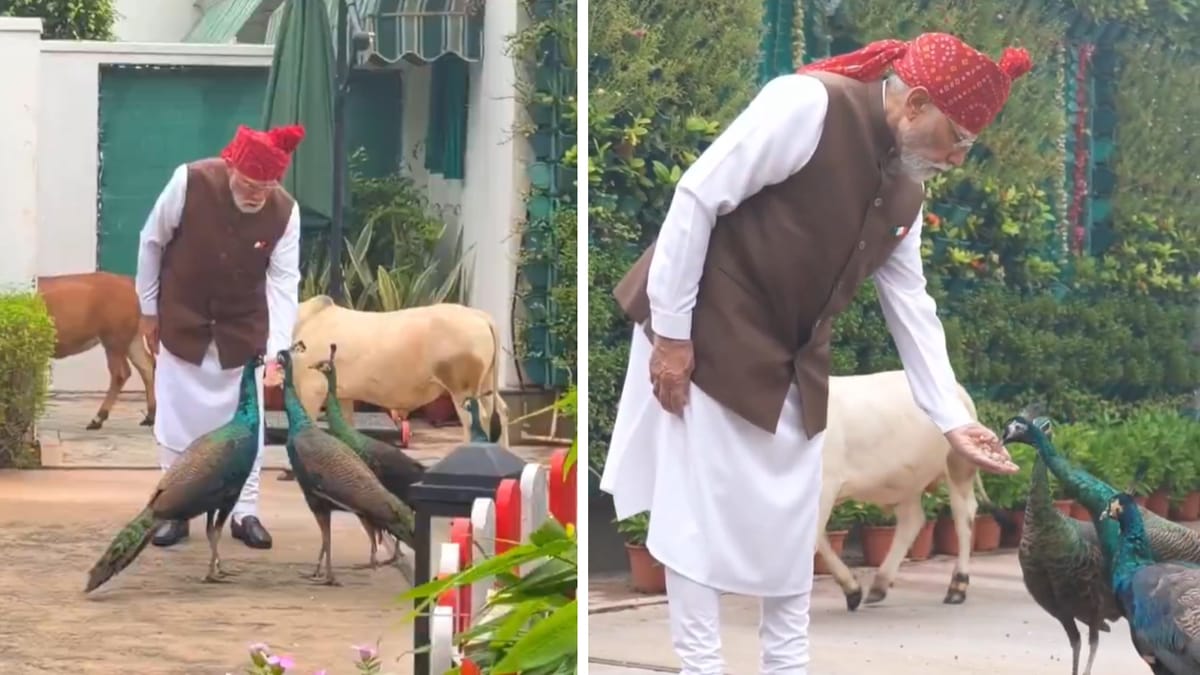
Prime Minister Narendra Modi offered a personal glimpse into his daily life by posting a video on Instagram where he is seen feeding animals. He described this act as his daily routine, noting that his 'friends' (the animals) seemed to sense his early departure for the Red Fort and came to meet him.
Imagine your principal, who is usually very busy, sharing a video of himself feeding birds and cows in his garden before going to a big school event. That's kind of what India's Prime Minister, Mr. Modi, did! He showed everyone his morning routine of giving food to his animal 'friends' before going to a very important place called the Red Fort. It's like showing a secret, kind part of his day.
Analysis
Prime Minister Narendra Modi's recent social media post, featuring him feeding cows and peacocks, offers a curated look into his personal life, a move that often resonates deeply with the Indian populace. The video, shared on his Instagram account, depicts a serene morning ritual, contrasting with the usual high-stakes political narratives surrounding his office. This deliberate sharing of a personal moment can be interpreted as a strategic effort to cultivate a softer, more approachable public image, emphasizing his connection to nature and traditional values.
Narendra Modi
Prime Minister Narendra Modi has consistently leveraged social media platforms to communicate directly with citizens, bypassing traditional media filters. This particular post, however, deviates from policy announcements or public addresses, instead focusing on a private, almost intimate, aspect of his day. By referring to the animals as his 'friends' and suggesting they 'somehow found out' about his early departure, Modi employs a narrative that is both endearing and relatable, aiming to build a more personal rapport with his followers. Such carefully crafted public displays can serve to reinforce his image as a leader who is not only powerful but also grounded and compassionate.
Red Fort
The mention of the Red Fort in the context of his morning routine adds a layer of symbolic significance to the post. The Red Fort is an iconic historical monument in Delhi, traditionally associated with national addresses, particularly on Independence Day. By linking his personal ritual to his departure for such a significant national landmark, the Prime Minister subtly intertwines his private persona with his public duties. This connection can evoke a sense of continuity and dedication, suggesting that even amidst his demanding schedule, he maintains a connection to simple, nurturing acts before engaging in national responsibilities. It frames his public service as an extension of his personal values.
Instagram, a platform primarily known for visual content, serves as an ideal medium for sharing such a video. The visual nature of the post—showing the Prime Minister directly interacting with animals—is highly engaging and easily digestible for a wide audience. Unlike text-heavy platforms, Instagram allows for immediate emotional connection through imagery. The choice of Instagram for this particular message underscores a broader trend in political communication, where leaders increasingly use visual storytelling to convey messages and shape public perception, often aiming for virality and direct engagement with a younger demographic.
Key points
- PM Modi shared a video on social media depicting his morning routine.
- The video shows him feeding cows and peacocks.
- He referred to the animals as his 'friends' in the accompanying post.
- Modi stated the animals seemed to sense his early departure for the Red Fort.
- The post was shared on his official Instagram account.
The sharing of such a personal video could enhance PM Modi's public image, fostering a sense of connection and relatability with citizens. It might also subtly promote animal welfare and traditional Indian values of caring for nature, inspiring others to engage in similar acts.
While seemingly innocuous, such posts can be perceived by some as a calculated public relations move, potentially distracting from more pressing political or economic issues. Critics might view it as an attempt to cultivate a specific image rather than genuine transparency or a focus on governance.