PM Modi meets CEOs of 20 space startups, ask them for wider applications of space tech to improve people’s lives
PM Narendra Modi interacted with CEOs and founders of 20 space startups, including India's leading companies Skyroot Aerospace, Agnikul Cosmos, Pixxel, Dhruva Space, GalaxEye, PierSight, Bellatrix Aerospace, and Digantara, in New Delhi. He called for wider applications of…
Intelligence analysis by Llama
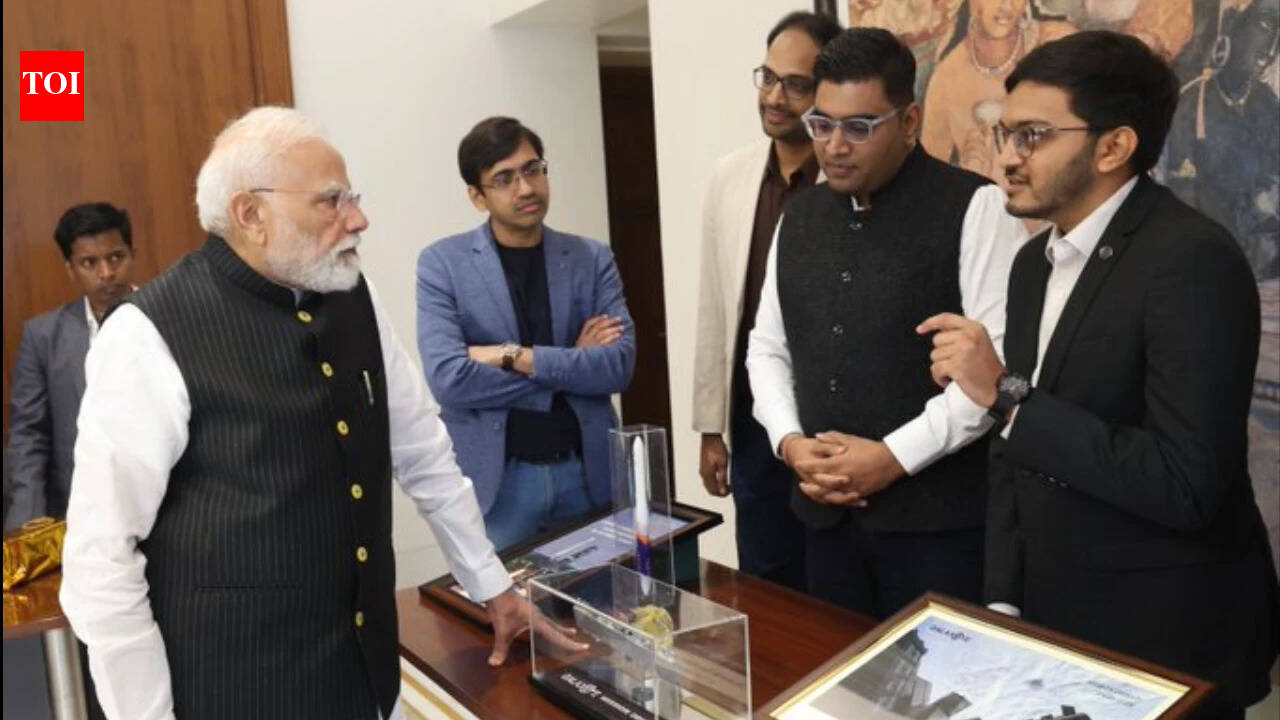
PM Modi met with 20 space startup CEOs, urging them to think about how space technology can contribute to agriculture, livestock management, dairy, environment, and other areas that touch everyday lives. He emphasized greater collaboration between the space industry and other social development sectors.
Imagine a world where space technology can help us grow more food, manage our environment better, and improve our daily lives. That's what PM Modi wants to happen. He met with 20 space startup CEOs to encourage them to think about how space technology can make a difference in people's lives.
Analysis
India's Private Space Industry Targets Major Growth
India's private space industry is set to enter a phase of commercial ramping up, with growth expected from $8 billion to $44 billion by 2033. Of this, $11 billion is expected to come from foreign customers. Currently, 450 space startups are operational, with 20 having matured to enter the commercial phase.
Key Players and Their Contributions
- Skyroot Aerospace has an order book booked for 2-3 years.
- Agnikul is the first company in India to work on a reusable rocket.
- Pixxel is building a constellation of earth observation satellites under IN-SPACe public-private partnership.
- Digantara is working on end-to-end space situational awareness (SSA) and space domain awareness (SDA) infrastructure.
Growth Engines
The growth of India's private space industry is driven by three key engines: government demand as an anchor customer, wider adoption of space technology across agriculture, defence, mining, fisheries, weather forecasting, automotive, and stronger international market access. The defence sector is the biggest customer, with orders for 31 dedicated military surveillance satellites to be built by domestic private sector companies, while Isro will manufacture an additional 21 satellites.
Implications and Opportunities
The meeting between PM Modi and the space startup CEOs highlights the potential of space technology to improve people's lives. By encouraging greater collaboration between the space industry and other social development sectors, the government can unlock new opportunities for growth and development. The private space ecosystem can become a major force for India and the world, driving innovation and progress in various fields.
Key points
- India's private space industry is set to enter a phase of commercial ramping up, with growth expected from $8 billion to $44 billion by 2033.
- 450 space startups are operational, with 20 having matured to enter the commercial phase.
- The defence sector is the biggest customer, with orders for 31 dedicated military surveillance satellites to be built by domestic private sector companies.
- The government is encouraging greater collaboration between the space industry and other social development sectors to unlock new opportunities for growth and development.
If the private space industry continues to grow, it could lead to new opportunities for innovation and progress in various fields. This could also lead to the development of new technologies that can improve people's lives.
However, there are also risks associated with the growth of the private space industry. For example, the increasing demand for space technology could lead to environmental concerns and the depletion of resources.