Police arrest 30 people over public violence
South African police have arrested 30 individuals in KwaZulu-Natal and Gauteng provinces following public violence and unlawful protests, which were sparked by claims regarding a Constitutional Court ruling on asylum applications.
Intelligence analysis by Gemini 2.5 Flash
The arrests, including alleged ringleaders, were made in connection with public violence, malicious damage to property, and illegal gatherings. The protests erupted after a perceived misinterpretation that a recent Constitutional Court decision granted blanket amnesty to undocumented foreign nationals, leading to property destruction and confrontations.
Imagine some kids got confused about a new rule at school, thinking it meant they could do whatever they wanted, even if it caused trouble. So, they started making a big mess and breaking things. The teachers and principals, who are like the police and government, quickly stepped in. They caught the kids causing the most trouble, explained that breaking rules has consequences, and made sure everyone else could still play their games safely. They want to make sure everyone understands the real rules and stays safe.
Analysis
The recent wave of public violence and unlawful protests across South Africa, particularly in KwaZulu-Natal and Gauteng, underscores the fragility of social cohesion when sensitive issues are misconstrued. The catalyst for these disturbances was an alleged misinterpretation of a Constitutional Court ruling concerning asylum applications, which protesters claimed granted blanket amnesty to undocumented foreign nationals. This narrative, whether accurate or not, ignited significant unrest, leading to criminal acts such as the burning of vehicles, damage to buildings, looting, and direct confrontations within communities. The swift response by law enforcement agencies, coordinated through the National Joint Operational and Intelligence Structure (NATJOINTS), reflects the government's determination to assert control and uphold the authority of the law.
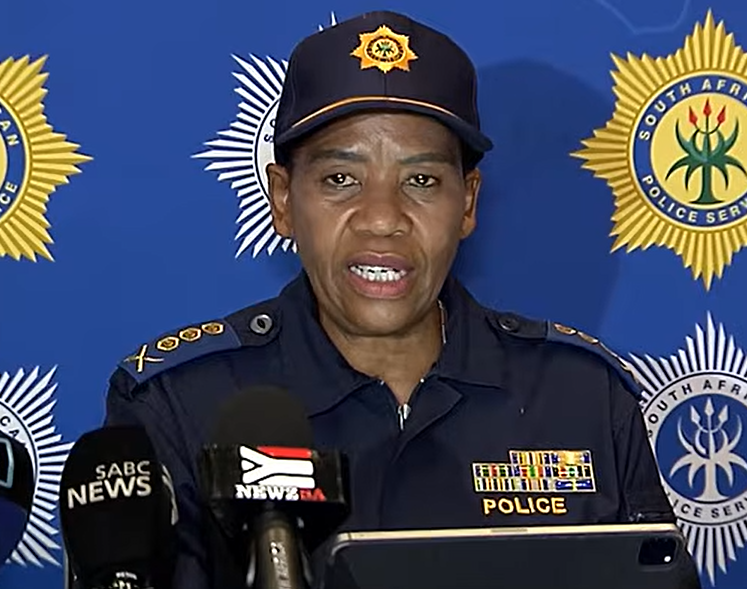
Lieutenant General Tebello Mosikili
Deputy National Commissioner for Policing, Lieutenant General Tebello Mosikili, played a pivotal role in communicating the state's response to the public violence. She confirmed the arrest of 30 suspects, including individuals identified as ringleaders, on charges ranging from public violence and malicious damage to property to illegal gathering and resisting arrest. Mosikili emphasized that these arrests demonstrate that unlawful conduct carries severe consequences, sending an unequivocal message that the state is firmly in control of its security response. Her statements highlighted the ongoing nature of investigations, with law enforcement actively pursuing all those implicated in the criminal acts, ensuring they will be processed through the criminal justice system.
Mosikili also underscored that the destruction of property and intimidation are not legitimate expressions of grievance but criminal acts that threaten lives, undermine livelihoods, and disrupt essential services. She reiterated the state's commitment to protecting communities, public institutions, and lawful activities from being held to ransom by intimidation or violence. The Deputy Commissioner's remarks served to reassure the public that despite attempts to create instability, coordinated security planning and operational deployments were enabling communities to continue with lawful activities, as evidenced by the undisturbed football and cricket matches in KwaZulu-Natal.
Constitutional Court ruling
The protests were directly linked to claims surrounding a recent Constitutional Court ruling on asylum applications. While the article does not detail the specifics of the ruling, it clearly states that the unrest was fueled by the belief that this decision granted blanket amnesty to undocumented foreign nationals. This perception, whether accurate or a misinterpretation, served as a powerful trigger for public discontent and mobilization. The incident highlights how legal decisions, especially those touching upon immigration and national identity, can be politicized or misunderstood, leading to significant social unrest.
Such misinterpretations can quickly escalate into widespread public disorder, as seen with the burning of vehicles and damage to property in KwaZulu-Natal and Gauteng. The underlying issue of undocumented foreign nationals is a sensitive and often contentious topic in South Africa, frequently leading to xenophobic sentiments and outbreaks of violence. The government's challenge lies not only in enforcing law and order but also in effectively communicating the nuances of legal judgments to prevent future misunderstandings from spiraling into similar destructive protests.
National Joint Operational and Intelligence Structure
The National Joint Operational and Intelligence Structure (NATJOINTS) has been central to the coordinated response to the public violence. This multi-agency structure, comprising various law enforcement and intelligence bodies, intensified national coordination and deployed additional resources to strengthen policing capacity in the affected provinces. Maximum operational deployments began across all nine provinces, increasing police visibility and readiness to respond swiftly to emerging threats and maintain policing services.
NATJOINTS' strategy involves intelligence-led interventions, with Crime Intelligence, the State Security Agency, and other relevant structures continuously monitoring developments, verifying information, identifying potential threats, and issuing early warnings. This proactive approach guides operational decisions and ensures a coordinated response through PROVJOINTS and other command structures. Notably, the South African National Defence Force (SANDF) was activated in KwaZulu-Natal to support the South African Police Service, further demonstrating the seriousness with which the state is addressing the situation and its commitment to restoring and maintaining law and order. The structure's ongoing efforts are focused on preventing further violence, protecting vulnerable communities, safeguarding properties, and preventing retaliatory attacks, ensuring the uninterrupted functioning of communities and essential services.
Key points
- South African police arrested 30 individuals in KwaZulu-Natal and Gauteng for public violence and unlawful protests.
- The protests were triggered by claims that a Constitutional Court ruling on asylum applications granted blanket amnesty to undocumented foreign nationals.
- Charges include public violence, malicious damage to property, illegal gathering, obstruction, and resisting arrest.
- The National Joint Operational and Intelligence Structure (NATJOINTS) coordinated law enforcement efforts, deploying additional resources and activating the South African National Defence Force in KwaZulu-Natal.
- Lieutenant General Tebello Mosikili emphasized that the state is in control and will not tolerate intimidation, violence, or property destruction.
The swift and coordinated response by NATJOINTS, including the deployment of additional resources and the activation of the SANDF, demonstrates the state's capacity to effectively manage public unrest and uphold the rule of law. The successful protection of planned sporting events suggests that with continued vigilance, stability can be maintained and further escalation prevented.
Despite the arrests and increased law enforcement presence, the underlying misinterpretations or grievances regarding the Constitutional Court ruling and foreign nationals could persist, potentially leading to renewed isolated incidents. The sensitivity of the issue means that tensions could easily flare up again if not addressed through clear communication and sustained community engagement.