Pope Leo visits Canary Islands to highlight perilous journeys of migrants
Pope Leo XIV began a Canary Islands visit by meeting migrants and urging legal, safe routes to Europe.
Intelligence analysis by GPT-5.4 Mini
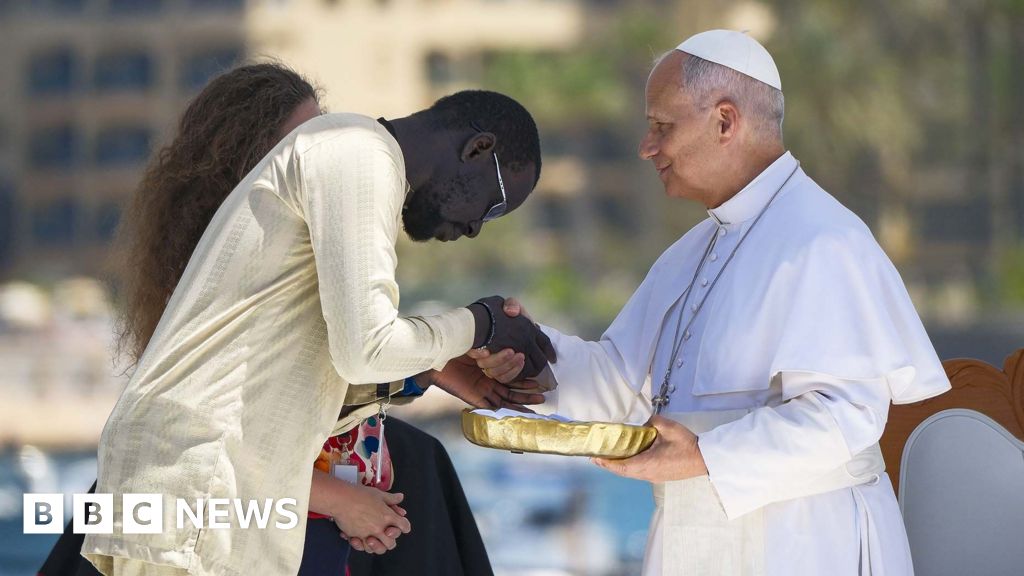
The Pope used his two-day trip to Gran Canaria and Tenerife to spotlight migrants who cross the Atlantic in dangerous boats. He paired a message of dignity and solidarity with a call for safer legal pathways, while Spain’s own migration debate and labor needs hovered in the background.
The Pope went to islands where many people arrive after dangerous boat trips, to remind everyone that migrants are human beings, not just numbers. It is like seeing a crowded lifeboat and asking how to make the road safer instead of only arguing about who gets on it.
Analysis
What happened
Pope Leo XIV opened a two-day visit to the Canary Islands by meeting migrants and framing them as people rather than statistics. On Gran Canaria, he stressed dignity and solidarity, and in the southern port of Arguineguín he called for more legal and safe ways to reach Europe.
He also visited the coast in memory of those who died trying to make the Atlantic crossing, throwing a wreath into the sea. The article says the Pope warned Europe not to get used to seas becoming unmarked graves.
The migration backdrop
The BBC says sea arrivals to Spain have fallen this year, partly because EU-funded patrols off West Africa have intercepted more boats. But people are still attempting the route, and some continue to die or disappear.
One migrant, Bakary Jaiju from Gambia, described a seven-day trip in a wooden boat with women and children on board, running out of food and water before rescue near El Hierro. After months in a camp, he joined a project helping him learn Spanish and try to stay legally in Tenerife.
Spain's political and economic split
The article also describes a wider Spanish fight over migration. Pedro Sánchez's government is allowing many undocumented migrants to regularise their status if they arrived before last December, while the opposition Popular Party and the far-right Vox party have attacked the move.
At the same time, local employers and support groups say migrants can fill jobs that are hard to staff. A workshop in Las Palmas has been hiring young migrants who age out of state care, reflecting the article's central tension: migration is treated as a crisis by some, but as a social and economic necessity by others.
Key points
- Pope Leo XIV began a Canary Islands visit by meeting migrants and stressing their dignity.
- He urged legal and safe pathways for migration and warned against becoming accustomed to deaths at sea.
- The article says sea arrivals to Spain have fallen, but dangerous crossings and fatalities continue.
- Spain's regularization plan for undocumented migrants has drawn sharp criticism from opposition parties.
- Local employers and migrant-support groups say newcomers can fill labor shortages and integrate successfully.
If the Pope's message gains traction, it could keep attention on safer legal routes and on treating migrants with dignity. The article also suggests migrants can help fill jobs that local employers struggle to staff, which could make integration more practical.
If Europe keeps relying mainly on patrols and deterrence, dangerous crossings may continue and more people could die or disappear at sea. The political backlash in Spain shows the issue could also deepen polarization, making practical regularization or integration harder.