Preventive Detention: Miersch Open to Preventive Detention for Dangerous Individuals
SPD parliamentary group leader Matthias Miersch has expressed openness to implementing preventive detention for individuals classified as "Gefährder" (dangerous individuals) in Germany.
Intelligence analysis by Gemini 2.5 Flash
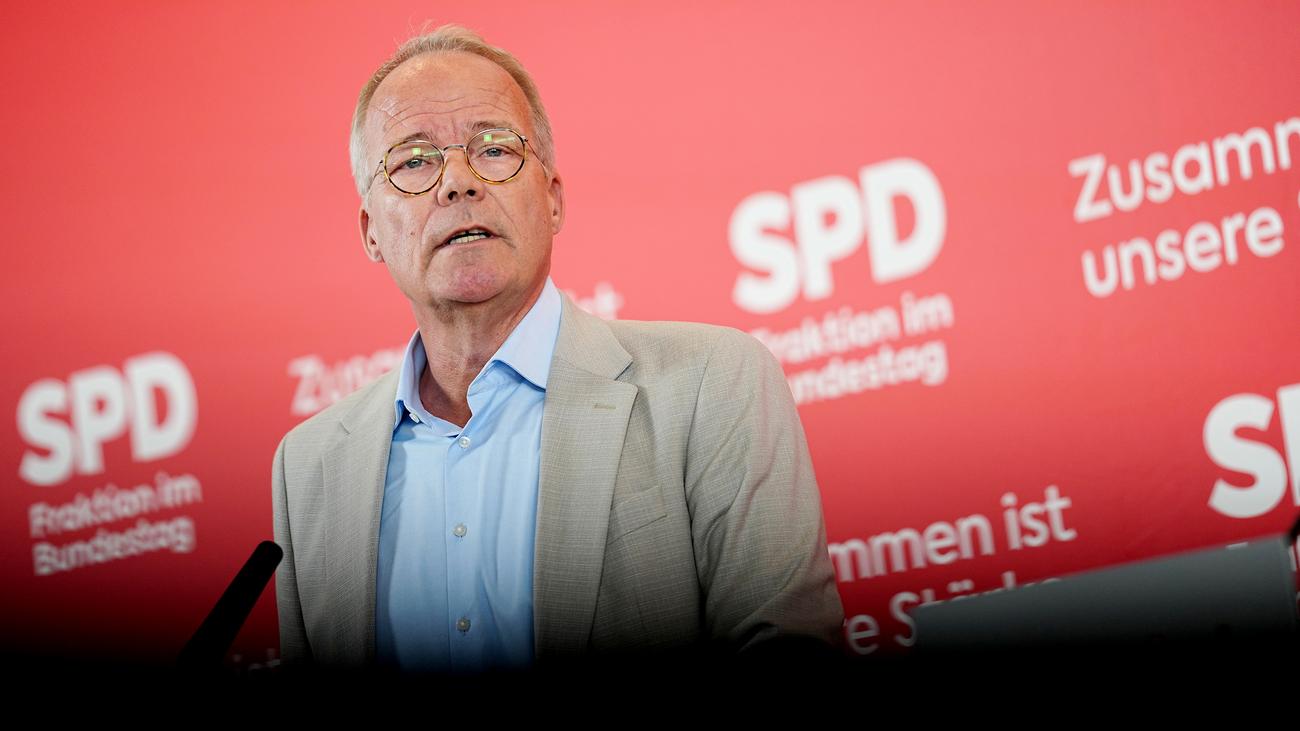
Miersch advocates for a unified federal framework for preventive detention and improved information sharing among security agencies and the judiciary. This comes after a recent Islamist attack in Berlin, where the perpetrator, previously classified as a "Gefährder," was released from custody due to a lack of information reaching the juvenile court.
Imagine there are some people who police think might do something really bad, like a big crime. A politician named Matthias Miersch thinks we should have a clear, nationwide rule to temporarily hold these people to keep everyone safe, especially if the police and courts aren't sharing all their important information properly. He wants to make sure everyone talks to each other so judges have all the puzzle pieces to make the best decisions.
Analysis
The Call for a Unified Framework
SPD parliamentary group leader Matthias Miersch has initiated a significant discussion by expressing his openness to a federal legal framework for preventive detention of "Gefährder." This move signals a potential shift in Germany's approach to national security, aiming for a more consistent and robust response to individuals deemed capable of serious political crimes, including terrorism. Miersch's emphasis on a unified regulation across federal states suggests an acknowledgment of the current patchwork of rules and the need for a cohesive national strategy to address this complex issue. The proposal seeks to empower authorities with a standardized tool to manage high-risk individuals, potentially preventing future attacks.
Bridging the Information Gap
The core of Miersch's argument, however, lies in the critical need for better information exchange between security authorities and the judiciary. The recent Islamist attack in Berlin, where the perpetrator was a known "Gefährder" but released due to a lack of crucial intelligence reaching the juvenile court, underscores this systemic failure. Miersch explicitly states that "A court can only decide with the information it receives," highlighting that the true oversight was the communication breakdown. He expects concrete proposals from Federal Interior Minister Alexander Dobrindt to rectify this, suggesting that procedural improvements are as vital as, if not more than, new legal instruments. This focus on operational efficiency and inter-agency cooperation is crucial for the effective application of any preventive measures.
Balancing Security and Justice
The debate also touches upon the delicate balance between security imperatives and the principles of the rule of law, particularly concerning the definition of "Gefährder" and the application of juvenile criminal law. Miersch notes that the term "Gefährder" lacks a legal definition and is currently a police classification not subject to judicial review, raising questions about due process. While open to preventive detention, he remains skeptical about removing specific offenses from juvenile criminal law, preferring to leave the discretion to judges regarding whether to apply adult or juvenile law to offenders aged 18 to 21. This stance reflects a cautious approach, aiming to enhance security without undermining fundamental legal principles or the rehabilitative aspects of the justice system.
Key points
- SPD parliamentary group leader Matthias Miersch is open to a federal legal framework for preventive detention of "Gefährder."
- Miersch emphasizes the urgent need for better information exchange between security authorities and the judiciary.
- The call for action follows an Islamist attack in Berlin where the perpetrator, a classified "Gefährder," was released due to a lack of information reaching the court.
- The term "Gefährder" is currently a police classification without a legal definition or judicial review.
- Miersch is skeptical about removing offenses from juvenile criminal law, preferring judicial discretion for 18-21 year olds.
If a unified federal framework for preventive detention is established alongside significantly improved information sharing between security agencies and the judiciary, Germany could enhance its ability to prevent serious political crimes and terrorist attacks. This could lead to greater public safety and restore confidence in the state's capacity to protect its citizens effectively.
Without a clear legal definition for "Gefährder" and robust judicial oversight, expanding preventive detention could risk infringing on civil liberties and lead to arbitrary detentions. Furthermore, if information exchange issues persist, even new laws might not prevent future incidents, potentially eroding public trust in both security agencies and the justice system.