Qatar’s air defence intercepts fresh Iranian missile barrage over Doha
Qatar's air defence successfully intercepted a new wave of Iranian ballistic missile attacks targeting Doha, with one child sustaining minor injuries from shrapnel.
Intelligence analysis by Gemini 2.5 Flash
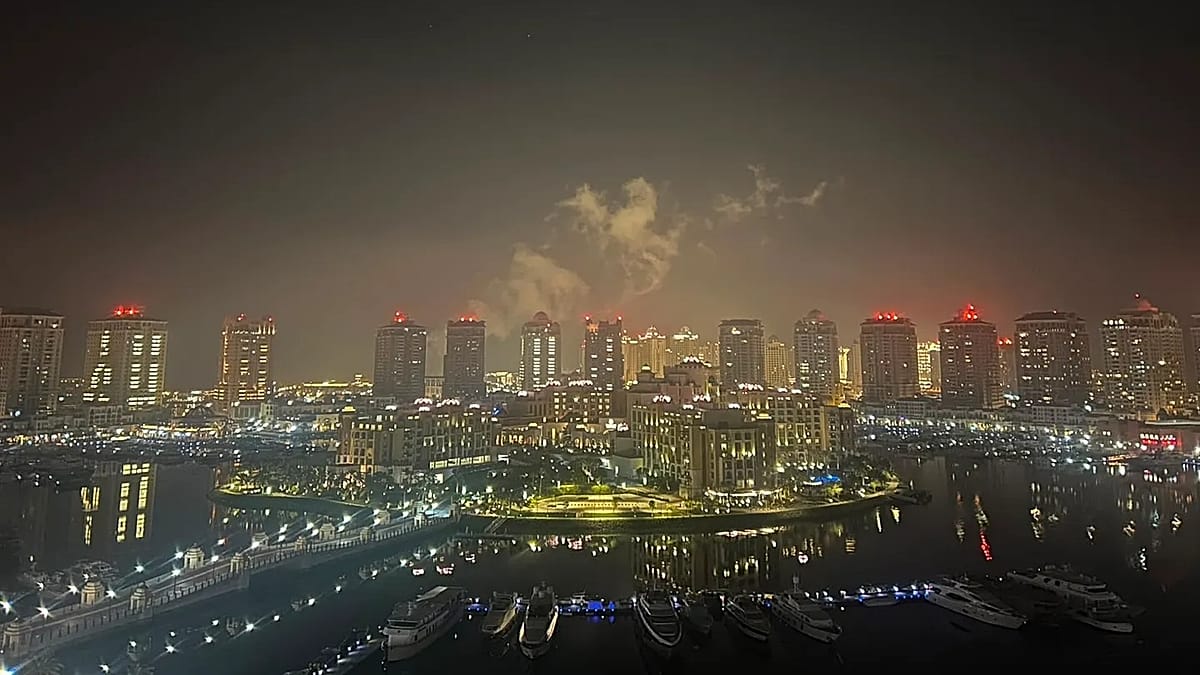
Iran launched two waves of missile strikes on Qatar, reportedly targeting the Al-Udeid US airbase, amidst ongoing threats to Gulf countries over its confrontation with the US in the Strait of Hormuz. The attacks followed the collapse of a ceasefire deal and renewed Iranian aggression across the region, despite Qatar's role as a key mediator.
Imagine two big kids, Iran and the US, are having a big argument. Iran is throwing things, like missiles, at places where the US has its toys, like a big airbase in Qatar. Qatar's air defense is like a shield that catches all the thrown things, but sometimes little bits can fall and hurt someone, like a child who got a small scratch. Qatar is also trying to help the two big kids talk and stop fighting.
Analysis
Renewed Aggression in the Gulf
Iran has initiated a fresh series of missile attacks across the Gulf, specifically targeting Qatar, Kuwait, Bahrain, and Jordan. These actions are framed by Tehran as a response to its escalating confrontation with the United States over the strategically vital Strait of Hormuz. In Qatar, the capital Doha experienced two distinct waves of ballistic missile strikes in the early hours of Friday morning, prompting city-wide alerts and waking residents. The attacks occurred shortly after Qatar concluded a four-day national mourning period for its former Emir, Sheikh Hamad bin Khalifa Al Thani, with Iran's Foreign Minister having visited Doha to offer condolences just days prior.
Strategic Targets and US Presence
The intercepted missiles in Qatar appeared to be aimed at the Al-Udeid US airbase, which is the largest American military installation in the Middle East. This base has been actively used by the US to conduct strikes in Iran over the past week, making it a clear and significant target for Iranian retaliation. The Iranian Revolutionary Guard Corps (IRGC) has previously claimed responsibility for similar missile launches on Qatar, explicitly stating their intent to target Al-Udeid. The repeated targeting of this critical US asset underscores the direct nature of the confrontation and Iran's willingness to project power against American interests in the region.
Qatar's Dual Role and Regional Stability
Qatar finds itself in a precarious position, serving both as a target of Iranian aggression and a crucial mediator in the stalled talks between Iran and the US. The renewed attacks follow the collapse of an interim ceasefire deal, which was intended to pave the way for a final peace agreement. This escalation complicates Qatar's diplomatic efforts, undertaken alongside Pakistan, to de-escalate tensions. The broader implications for regional stability are severe, as the widening conflict threatens to draw in more Gulf nations and disrupt vital global trade routes, potentially leading to further instability and humanitarian concerns across the Middle East.
Key points
- Iran launched two waves of ballistic missile attacks on Qatar, targeting Doha in the early morning.
- Qatar's air defence successfully intercepted all incoming missiles, with one child sustaining minor shrapnel injuries.
- The missiles appeared to target the Al-Udeid US airbase, the largest in the Middle East, used for US strikes in Iran.
- The attacks follow renewed Iranian aggression across the Gulf and the collapse of a US-Iran ceasefire deal.
- Qatar is a key mediator in the ongoing US-Iran talks, placing it in a complex diplomatic and security position.
Despite the missile attacks, Qatar's successful interception of all incoming projectiles demonstrates robust defensive capabilities, potentially deterring future direct assaults. Furthermore, Qatar's continued role as a key mediator offers a glimmer of hope for renewed diplomatic efforts to de-escalate the broader US-Iran confrontation.
The renewed Iranian missile barrages signal a dangerous escalation in the US-Iran confrontation, increasing the risk of wider regional conflict and destabilizing the Gulf. The targeting of a major US airbase could provoke a stronger military response, further jeopardizing peace talks and regional security.
Market signals
- OIL Escalating conflict in the Middle East, particularly near the Strait of Hormuz, increases supply-route risks and drives up crude oil prices.
AI-generated analysis of potential market relevance. Not financial advice.