Rare Cyananthus Hookeri: Rare plant discovered in the foothills of the Himalayas after 158 years!
A rare flowering plant, Cyananthus hookeri, has been rediscovered in the Himalayan foothills of Arunachal Pradesh after 158 years, sparking excitement in the botanical community.
Intelligence analysis by Gemini 2.5 Flash
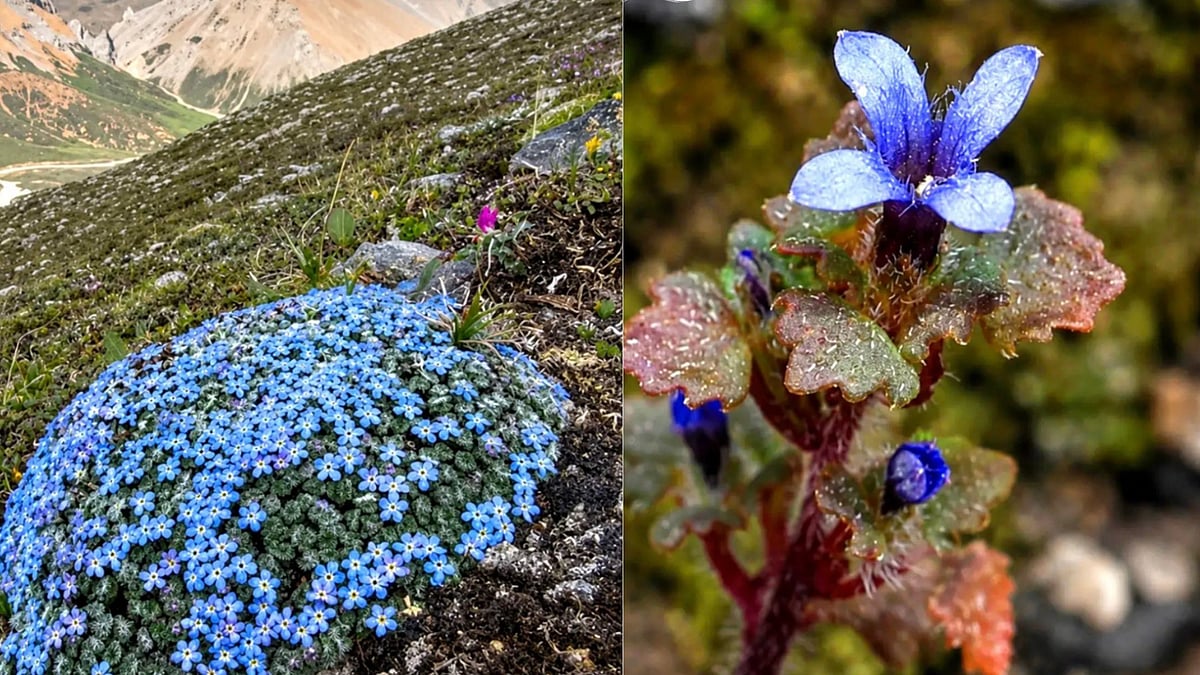
Scientists from the Botanical Survey of India found the beautiful blue-flowered herbaceous plant in the Chuna Valley of Tawang district, a species first documented in Sikkim in 1867 by British botanist Sir Joseph Dalton Hooker and believed lost since.
Imagine a super rare, pretty blue flower that scientists hadn't seen for 158 years – that's longer than your great-great-grandparents have been alive! Explorers found it again high up in the mountains of India. It's like finding a hidden treasure, and it reminds us how important it is to protect all the special plants and animals in nature.
Analysis
A Century and a Half Later: The Rediscovery
The botanical world is abuzz with the rediscovery of Cyananthus hookeri, a rare flowering plant found in the Chuna Valley of Arunachal Pradesh's Tawang district. This significant find comes 158 years after the plant was first documented, marking a remarkable moment for biodiversity research in India. Scientists from the Botanical Survey of India were conducting fieldwork when they stumbled upon this elusive species, bringing it back into scientific focus after more than a century and a half of being considered lost.
The initial discovery of Cyananthus hookeri dates back to 1867, when the renowned British botanist Sir Joseph Dalton Hooker identified it in Sikkim. Since then, the plant had vanished from scientific records and observations, leading many to believe it might have gone extinct. Its reappearance in a different part of the Eastern Himalayas underscores the vast, unexplored, and often hidden botanical wealth of the region, challenging previous assumptions about its distribution and survival.
Botanical Significance and Ecological Indicators
Cyananthus hookeri is a beautiful blue-flowered herbaceous plant belonging to the bellflower family (Campanulaceae). It is known for its ability to thrive in harsh climatic conditions, a characteristic common among many Himalayan flora. The plant's unique features and its long absence from scientific sight make its rediscovery particularly valuable for understanding plant evolution and adaptation in high-altitude environments. This find provides a rare opportunity to study a species that has persisted against the odds.
Beyond its intrinsic botanical value, the rediscovery of Cyananthus hookeri serves as a crucial ecological indicator. The article suggests that the plant's presence, or rather its scarcity, reflects the environmental damage occurring in the Himalayas. Its vulnerability highlights the delicate balance of the Himalayan ecosystem, which is increasingly threatened by climate change, habitat destruction, and human encroachment. The plant's survival, despite these pressures, offers insights into resilience but also underscores the urgent need for protective measures.
Urgent Calls for Conservation
The current status of Cyananthus hookeri is alarming. Experts estimate that fewer than 50 individual plants remain in India, a critically low number that places the species on the brink of extinction. Consequently, there is a strong recommendation to include Cyananthus hookeri in the Red List of endangered species, which would provide it with much-needed legal protection and conservation priority. This designation would facilitate targeted research, habitat preservation efforts, and potentially propagation programs to ensure its long-term survival.
The rediscovery not only celebrates a scientific achievement but also issues a stark warning about the broader state of Himalayan biodiversity. Arunachal Pradesh, known for its rich flora and fauna, is a hotspot of unique species, many of which remain undiscovered or poorly understood. The plight of Cyananthus hookeri emphasizes the importance of continuous botanical surveys and robust conservation policies to safeguard these irreplaceable natural treasures before they disappear forever, taking with them invaluable ecological knowledge and genetic diversity.
Key points
- Rare flowering plant, Cyananthus hookeri, rediscovered in Arunachal Pradesh after 158 years.
- First identified in Sikkim in 1867 by British botanist Sir Joseph Dalton Hooker.
- Found by scientists from the Botanical Survey of India in the Chuna Valley of Tawang district.
- Estimated fewer than 50 plants remain in India, making it critically endangered.
- Recommendation to include the species in the Red List for urgent conservation.
- Highlights the rich biodiversity and environmental fragility of the Himalayan region.
The successful rediscovery of Cyananthus hookeri offers a beacon of hope for finding other species thought to be lost, potentially inspiring increased funding and focus on botanical exploration and conservation efforts across the biodiverse Himalayan region. This could lead to better protection strategies for endangered flora.
With an estimated population of fewer than 50 plants remaining in India, the species faces an extremely high risk of extinction. This precarious situation highlights the severe threats posed by habitat loss and climate change in the Himalayas, suggesting that without immediate and robust conservation interventions, this rediscovered plant could soon be lost again, permanently.