Rebuilding Hope from War: South Korea's Heritage Strategy Offers Iran Key Lessons
A report by the Iran-South Korea Joint Chamber of Commerce highlights South Korea's successful post-war cultural heritage restoration, offering key lessons for Iran's recently damaged historical sites.
Intelligence analysis by Gemini 2.5 Flash
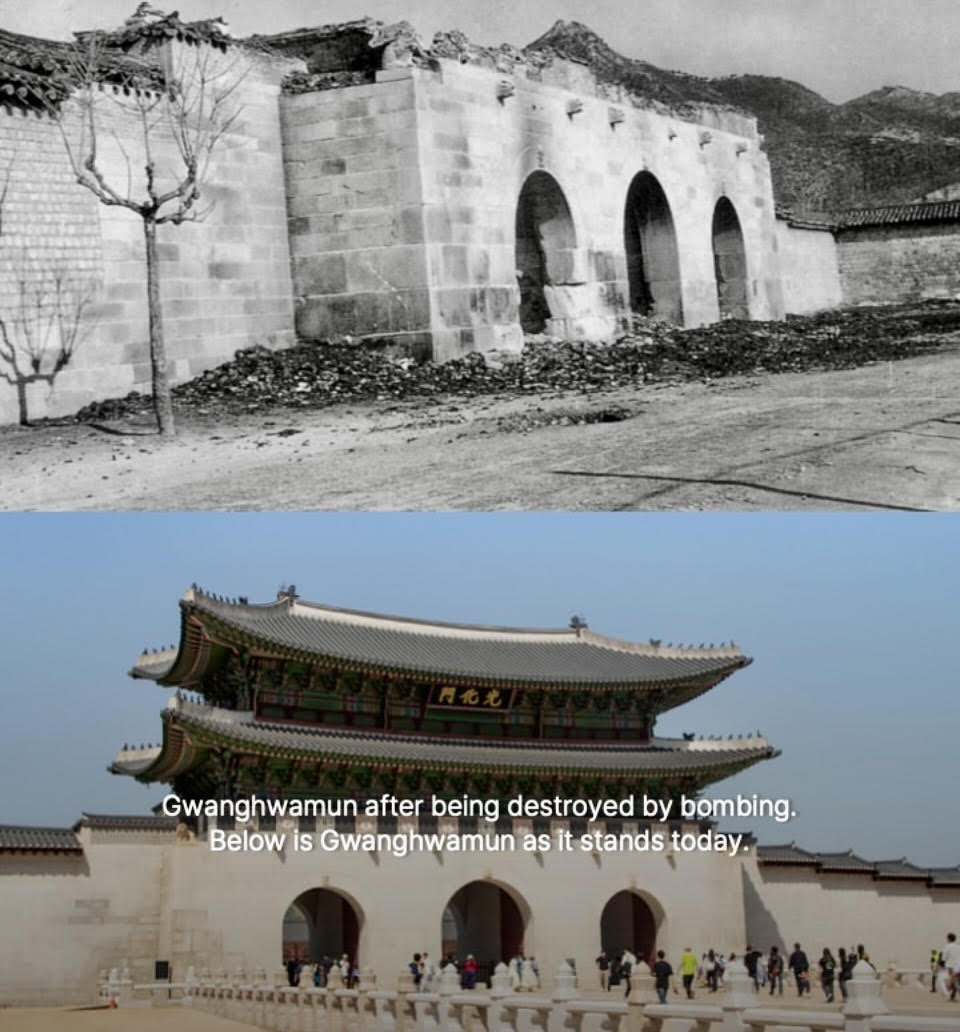
The article examines South Korea's comprehensive strategy for documenting, restoring, and economically revitalizing cultural heritage after the Korean War. It proposes this model as a blueprint for Iran, which has recently sustained damage to over 140 historical sites, including UNESCO World Heritage sites, from a conflict involving the US and Israel.
Imagine your favorite old playground was broken in a big storm. South Korea, after a big war, figured out how to fix all their broken old buildings and special places, not just making them look nice again, but also making them useful and helping people feel proud. They even made it into a way to make money! Iran can learn from their smart ideas to fix its own special places that got hurt recently.
Analysis
The Iran-South Korea Joint Chamber of Commerce has published a strategic report detailing South Korea's seventy-year journey in cultural heritage reconstruction following the devastating Korean War. This report serves as a critical resource for Iran, which is currently grappling with the aftermath of recent conflicts that have impacted over 140 historical sites, including five UNESCO World Heritage sites. The analysis underscores that cultural heritage is not merely a historical artifact but a vital component of national identity and social cohesion, capable of fostering collective self-confidence.
Korea Heritage Service (KHS)
Central to South Korea's success is the Korea Heritage Service (KHS), an institution operating under the Ministry of Culture, Sports and Tourism. Renamed in 2024, the KHS plays a pivotal role in designating national treasures, financing restoration projects, and regulating any modifications to registered structures. This governmental body provides direct subsidies for the maintenance and restoration of 'nationally designated' properties, ensuring a consistent and funded approach to preservation. Furthermore, it extends financial support to seven strategic heritage regions, demonstrating a targeted and comprehensive institutional framework for cultural preservation.
Public-Private Partnership Model
South Korea's strategy effectively leverages public-private partnerships, identifying three distinct contractual models tailored to different asset types. The 'Service Contract' involves private sector participation in research and specialized restoration, with government retaining ownership. The 'Construction and Restoration Contract' delegates physical restoration work and execution risks to the private sector, while the government handles financing and long-term maintenance. Lastly, the 'Lease or Operation Contract' temporarily transfers assets to private or local entities for economic use, such as cafes or galleries, shifting operational economic risk while government maintains ownership and conservation standards. This multi-faceted approach allows for diverse funding and expertise, transforming restoration from a cost into a productive economic asset.
Culture-K 2030
The broader vision guiding South Korea's heritage strategy is encapsulated in the Ministry of Culture's 'Culture-K 2030' initiative. This long-term plan aims to not only restore damaged heritage but also to transform cultural preservation into a significant economic sector. The report highlights that this industry was valued at 9.05 trillion won in 2025, with an ambitious cumulative target of 100 trillion won by 2030. This economic regeneration aspect, alongside the five policy pillars—preventive documentation, pre-restoration engineering diagnosis, intergenerational transfer through technology, economic regeneration of ruins, and selective preservation of war scars—provides a holistic framework. For Iran, adopting such a vision could mean not just repairing historical sites but also creating a sustainable economic engine and reinforcing national pride.
Key points
- South Korea's post-war cultural heritage strategy offers a successful model for documentation, restoration, and economic revitalization.
- The Korean War damaged at least 351 Buddhist temples and numerous other historical sites, but South Korea transformed restoration into a 9.05 trillion won economic sector by 2025.
- The strategy relies on five policy pillars: preventive documentation, pre-restoration engineering diagnosis, intergenerational technology transfer, economic regeneration of ruins, and selective preservation of war scars.
- Key institutional support comes from the Korea Heritage Service (KHS) and a robust public-private partnership model.
- Iran faces similar challenges with over 140 historical sites, including UNESCO World Heritage sites, damaged in recent conflicts, making South Korea's experience highly relevant.
By adopting South Korea's comprehensive heritage strategy, Iran could effectively restore its war-damaged historical sites, fostering national pride and social cohesion. This approach could also transform cultural preservation into a significant economic sector, generating revenue and employment opportunities, much like South Korea's 'Heritage-K' industry.
Without a robust institutional framework, adequate financing, and effective public-private partnerships, Iran might struggle to implement a successful heritage restoration strategy. This could lead to prolonged damage to historical sites, a loss of cultural identity, and a missed opportunity to leverage heritage for economic growth, exacerbating the impact of recent conflicts.