Risk-off wave drags bitcoin below $63,000 as AI selloff spreads from stocks to crypto
Bitcoin fell below $63,000 as a broad risk-off wave, driven by AI stock fatigue and rising Middle East tensions, impacted crypto and tech stocks. Gold rose as a safe haven, though a technical indicator suggests crypto may be nearing oversold conditions.
Intelligence analysis by Gemini 2.5 Flash
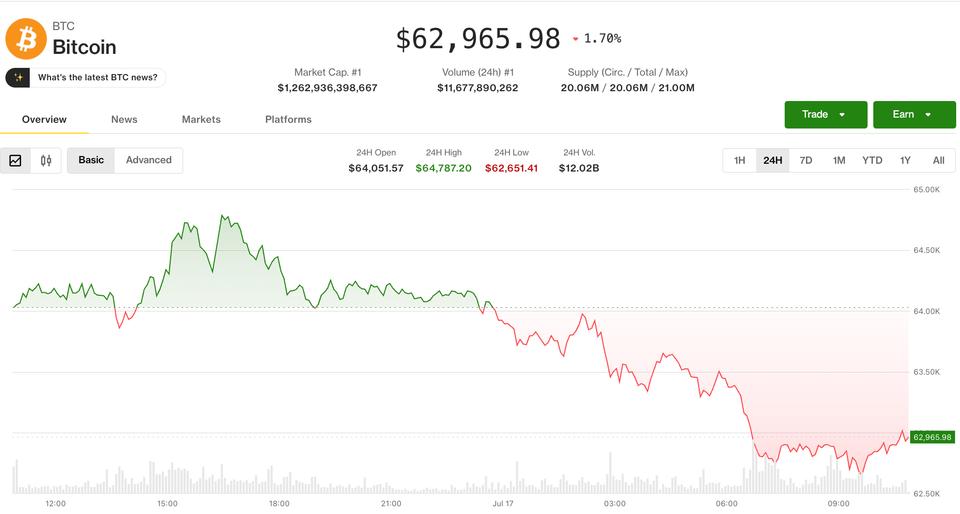
A widespread market selloff, fueled by investor fatigue in AI stocks and geopolitical concerns in the Middle East, pushed Bitcoin below $63,000 and dragged down the broader crypto market. This risk-off sentiment also hit major equity indices like the Nasdaq 100, while safe-haven assets like gold and the U.S. Dollar gained.
Imagine everyone suddenly got tired of a popular new toy, like a super-smart robot, and started selling their shares in the companies that make them. At the same time, there's some worry about trouble far away in the world. This made people nervous, so they sold off their digital money like Bitcoin too, making its price drop. They put their money into safer things, like gold, just in case. But some signs suggest the digital money might have fallen too much, and could bounce back soon.
Analysis
Macroeconomic Headwinds Drive Market Retreat
The recent downturn in the cryptocurrency market, exemplified by Bitcoin's dip below $63,000, is not an isolated event but rather a symptom of broader macroeconomic pressures. A significant factor is the growing "AI fatigue" in traditional stock markets, particularly impacting semiconductor stocks across Asia and North America. This sentiment shift has evolved from mere profit-taking to a more aggressive "position-clearing," signaling a deeper investor apprehension towards the high-flying tech sector.
Compounding this tech-driven selloff are escalating geopolitical tensions in the Middle East, specifically concerns around the Strait of Hormuz. Such instability typically triggers a "risk-off" rotation among investors, leading them to divest from riskier assets like cryptocurrencies and tech stocks in favor of traditional safe havens. This dynamic is clearly visible in the concurrent rise of the Dollar Index (DXY) and gold, which climbed back above $4,000, underscoring a flight to safety.
Crypto's Technical Posture Amidst the Selloff
Despite the price declines, several technical indicators offer a nuanced view of the crypto market's current state. The average Relative Strength Index (RSI) across crypto pairs has fallen to 42.23, nearing the "oversold" territory that historically preceded relief bounces. This suggests that while current sentiment is bearish, the market might be approaching a point where a rebound could occur, offering a potential foothold for bulls.
However, derivatives markets paint a picture of immediate bearish control. The long-short ratio in crypto futures has dropped to 0.94, its lowest since early June, indicating that "takers" (those executing market orders) are predominantly selling. While overall trading volume has cooled and open interest (OI) remains largely steady for major tokens like BTC and ETH, the negative 24-hour cumulative volume delta (CVD) across most coins confirms aggressive selling pressure. This suggests an orderly, rather than panicked, price drop, with no widespread margin calls or aggressive new shorts for the largest assets.
Divergent Token Performance and Options Market Activity
Within the broader market downturn, certain tokens exhibited divergent behavior. Privacy coins such as Zcash (ZEC) and Dash (DASH) notably bucked the trend, posting gains and continuing their recent relative strength. Similarly, AI tokens like FET and TAO showed resilience with slight advances, despite the sector's struggle to maintain momentum since mid-June, hinting at underlying demand or specific narratives. Conversely, tokens like Lighter (LIT) experienced significant losses due to profit-taking after substantial earlier surges.
The options market reveals a mixed sentiment. While bitcoin's 30-day implied volatility remains low, suggesting a lack of panic, the $62,500 put option has become a clear favorite for traders, indicating a desire for downside protection. For Ether, a notable purchase of large-scale straddles suggests bets on significant price swings, while three of the top five most-traded ETH contracts are puts. Yet, the $2,100 call option also remains highly traded, reflecting a complex interplay of hedging and speculative bullish bets on future price movements.
Key points
- Bitcoin fell below $63,000 as a broad risk-off wave impacted crypto and tech stocks.
- The selloff is attributed to 'AI fatigue' in semiconductor stocks and rising Middle East tensions.
- Traditional safe-haven assets like gold and the U.S. Dollar Index (DXY) saw gains.
- Crypto's average Relative Strength Index (RSI) is nearing oversold territory, potentially signaling a relief bounce.
- Derivatives markets show bears in control, with a low long-short ratio and negative cumulative volume delta (CVD) for most tokens.
The average Relative Strength Index (RSI) across crypto pairs has dipped to 42.23, approaching oversold conditions that previously triggered relief bounces. This technical signal offers a potential foothold for bulls, suggesting the market might be due for a rebound in the near term.
The long-short ratio in crypto futures has slipped to its lowest point since early June, indicating that bears are currently in control and aggressively selling. Furthermore, the negative cumulative volume delta (CVD) across most major tokens confirms sustained selling pressure, suggesting further downside could be possible.
Market signals
- BTC Fell below $63,000 due to broad risk-off sentiment and tech stock selloff.
- ETH Lost 1.74% as part of the wider crypto market decline driven by macro forces.
- XAU Advanced above $4,000 in a classic risk-off rotation, indicating safe-haven demand.
- Nasdaq 100 Futures dropped 1.91%, reflecting the tech stock selloff and broader macro forces.
AI-generated analysis of potential market relevance. Not financial advice.