Romania shuts only nuclear plant as heat causes huge drop in Danube River level
Romania has shut down its only nuclear power station due to extremely low water levels in the Danube river caused by prolonged hot weather affecting much of Europe.
Intelligence analysis by Llama
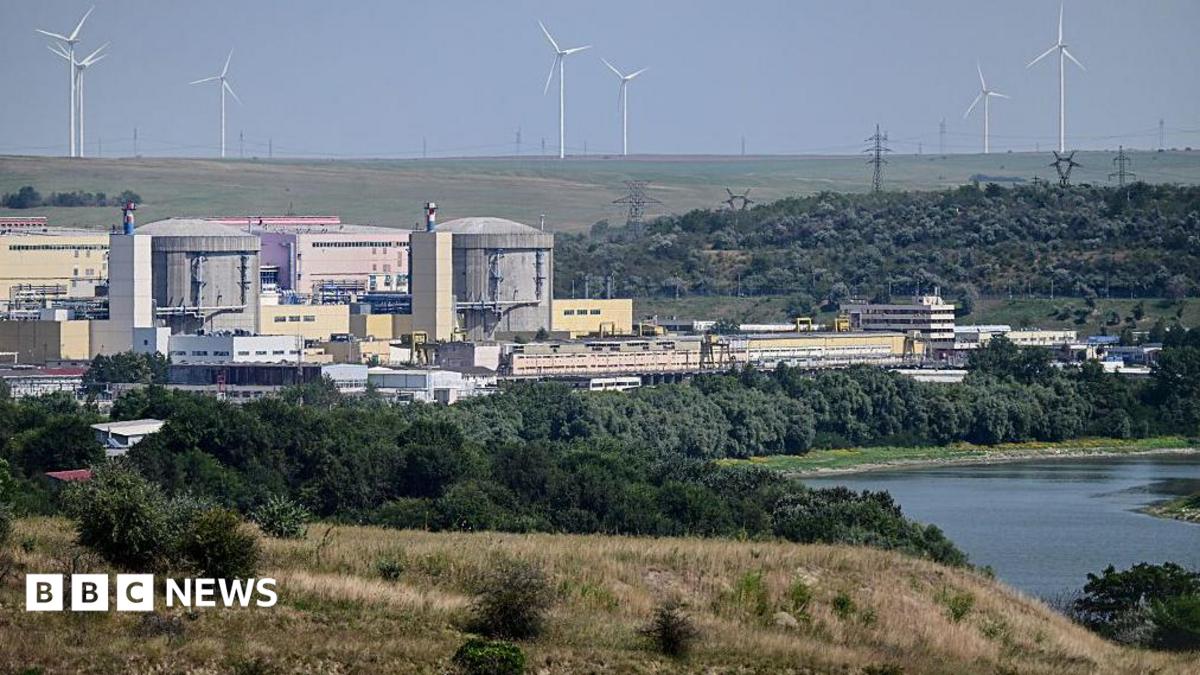
Romania's only nuclear power station has been shut down due to low water levels in the Danube river, which is used for cooling. The plant is not expected to be restarted within the next 10 days.
The Danube river's low water levels are causing problems for Romania's nuclear power station, which uses the river for cooling. This is because of the hot weather affecting much of Europe, which is causing the river to dry up. Imagine a big pipe that needs water to work properly, but the water is not coming in because it's too hot outside.
Analysis
Danube River's Low Water Levels Expose WWII Remains and Motorcycle
The Danube river's low water levels have revealed the remains of WWII soldiers and a motorcycle, highlighting the devastating effects of climate change on Europe's waterways. The river's water levels have fallen to the lowest levels in 30 years, causing significant disruptions to the region's economy and way of life.
Climate Change Driving Up Temperatures in Europe
Climate change is driving up temperatures around the world, but particularly in Europe. The continent is heating up twice as fast as the global average, according to the Copernicus climate service. This is causing increased summer heatwaves, greater pressure on Europe's waters, and more intense wildfires.
Economic Consequences of Climate Change
The economic consequences of climate change are already being felt in Europe. Italy's largest agricultural trade association, Coldiretti, has estimated that climate-related damage could exceed €3bn (£2.6bn; $3.5bn). France's Environment Minister Monique Barbut has warned that the recent heatwaves could rack up €10bn to €15bn in direct and indirect costs. The Dutch bank Triodos has said that the extreme heat and its consequences could wipe out much of the projected economic growth for the EU.
Heatwaves and Wildfires Across Europe
The heatwaves and wildfires are not limited to Romania. Greece has seen over 200 people evacuated from popular resorts due to a raging wildfire. Spain has recorded temperatures as high as 37C in central areas, while the UK has seen its hottest day of the year so far, with temperatures reaching 38.1C in London.
Key points
- Romania's only nuclear power station has been shut down due to low water levels in the Danube river.
- The Danube river's water levels have fallen to the lowest levels in 30 years, causing significant disruptions to the region's economy and way of life.
- Climate change is driving up temperatures in Europe, causing increased summer heatwaves, greater pressure on Europe's waters, and more intense wildfires.
- The economic consequences of climate change are already being felt in Europe, with estimates suggesting that climate-related damage could exceed €3bn (£2.6bn; $3.5bn).
- The heatwaves and wildfires are not limited to Romania, with Greece, Spain, and the UK also experiencing severe weather conditions.
If the heatwaves and wildfires are brought under control, the economic consequences of climate change could be mitigated. The EU could also take steps to reduce its reliance on fossil fuels and transition to renewable energy sources, which could help to reduce the impact of climate change on the continent's energy supply and economy.
If the heatwaves and wildfires continue, the economic consequences of climate change could be severe. The EU's economy could be severely impacted, and the region's waterways and agriculture could be devastated. The situation could also lead to social unrest and migration, as people are forced to leave their homes due to the lack of water and food.