Rs. 1 Lac in National Savings Now Earns Less Than Rs. 1,000 per Month
The federal government of Pakistan has reduced profit rates on several National Savings Schemes, directly impacting the monthly returns for pensioners, regular investors, and welfare account holders.
Intelligence analysis by Gemini 2.5 Flash
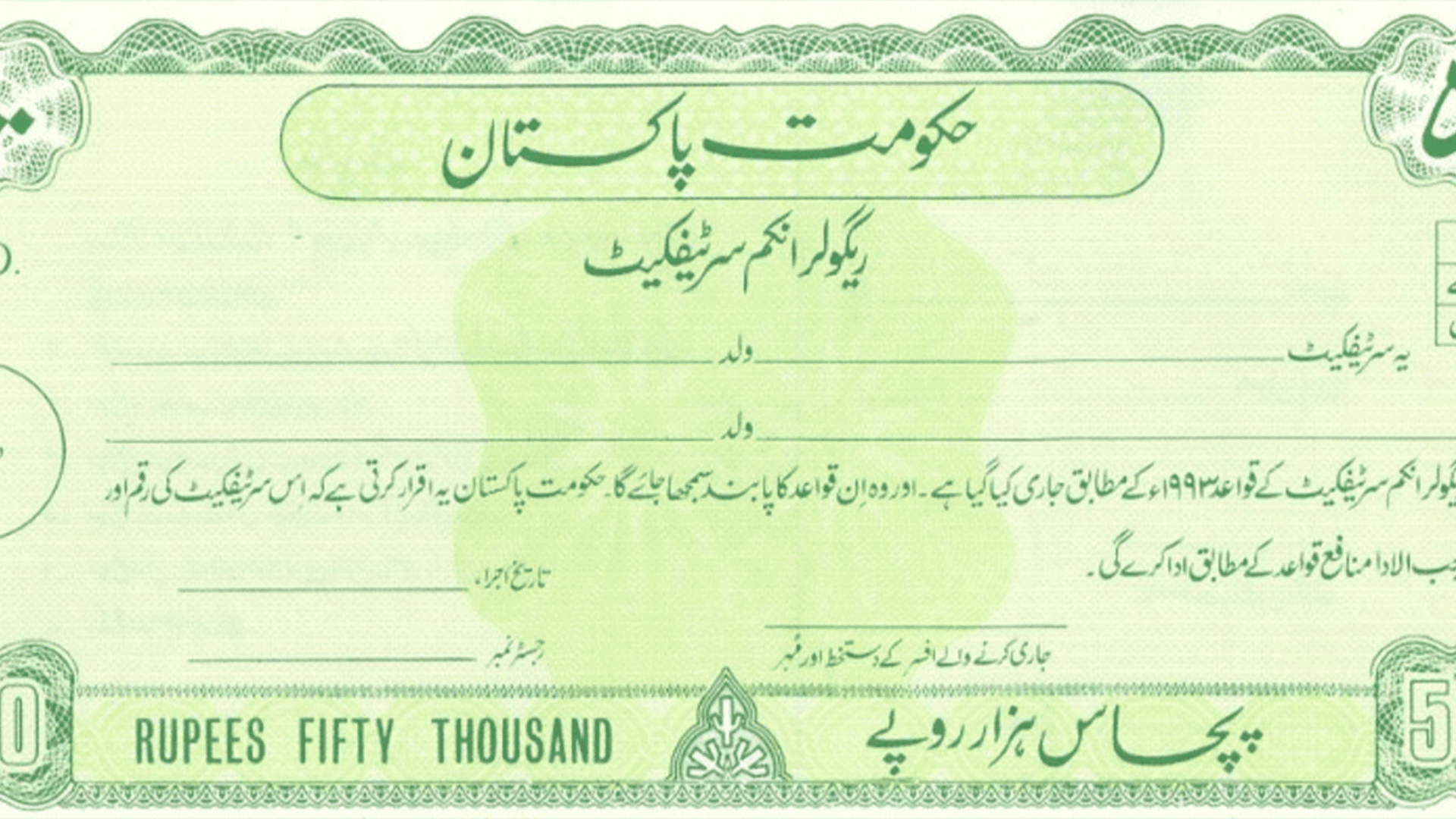
Pakistan's government has cut the profit rates on various National Savings Schemes, including Regular Income Certificates, Behbood Savings Certificates, and Pensioners’ Benefit Accounts. This move significantly lowers the monthly income generated from these investments, with a Rs. 100,000 investment now yielding less than Rs. 1,000 per month.
Imagine you put your pocket money in a special piggy bank that gives you a little extra money each month. The government has decided that this piggy bank will now give you less extra money. So, if you put in 100,000 rupees, you'll get less than 1,000 rupees back each month, making it harder for people, especially grandmas and grandpas, to save up or live off their savings.
Analysis
Significant Cuts Across Key Schemes
The federal government of Pakistan has implemented immediate reductions in the profit rates offered across several of its National Savings Schemes. These adjustments directly diminish the returns for a broad spectrum of investors, from individual savers to vulnerable groups like pensioners. For instance, the Regular Income Certificate (RIC), a popular choice for civilian investors, now offers a monthly profit rate of 11.52 percent. This translates to a monthly profit of only Rs. 960 for an investment of Rs. 100,000, a notable decrease in potential earnings.
Beyond the RIC, other critical schemes have also seen their rates lowered. The annual profit rate for both the Behbood Savings Certificate and the Pensioners’ Benefit Account has been reduced to 12.96 percent. Similarly, the Special Savings Certificate will now provide an annualized profit rate of 11.2 percent for the initial six months, followed by 12.6 percent for the subsequent six months. The Shuhada Family Welfare Account, designed to support families of martyrs, has also experienced a reduction, with its annual profit rate set at 12.96 percent. These changes, announced via an official National Savings notification, are effective immediately.
Direct Impact on Fixed-Income Households
The implications of these reduced profit rates are particularly severe for fixed-income households and vulnerable segments of society. Pensioners, who often rely heavily on the steady returns from schemes like the Pensioners’ Benefit Account and Behbood Savings Certificates to cover their living expenses, will now face a diminished monthly income. This reduction can significantly strain their ability to meet daily needs, especially in an economic environment where the cost of living may be rising. For welfare account holders, including families of martyrs, the lower returns mean less financial support, potentially exacerbating existing economic challenges.
Regular investors, who choose National Savings Schemes for their perceived safety and consistent returns, will also find their investment strategies impacted. The reduced profitability makes these government-backed options less attractive compared to previous periods, potentially forcing individuals to either accept lower returns or seek alternative, possibly riskier, investment avenues to maintain their desired income levels. This shift could lead to greater financial insecurity for those who prioritize capital preservation and stable, albeit modest, income streams.
Rethinking Savings Strategies
The government's decision to lower profit rates on National Savings Schemes may prompt a broader re-evaluation of savings strategies among the Pakistani populace. With traditional safe havens offering less competitive returns, investors might be compelled to explore other financial instruments, such as mutual funds, equities, or real estate, which typically carry higher risks but also offer the potential for greater yields. This could lead to a reallocation of capital within the domestic economy, moving away from government-backed fixed-income products.
However, for many small savers and those with limited financial literacy or access to diverse investment options, the reduced rates simply translate into a lower real income. This situation underscores the challenge faced by individuals trying to preserve their purchasing power and secure their financial future amidst evolving economic policies. The immediate effect of these changes is a tangible reduction in the monthly earnings for countless Pakistanis who have entrusted their savings to these national schemes.
Key points
- The federal government has reduced profit rates on several National Savings Schemes.
- A Rs. 100,000 investment in a Regular Income Certificate (RIC) will now yield Rs. 960 per month, based on an 11.52% monthly profit rate.
- Annual profit rates for Behbood Savings Certificate and Pensioners’ Benefit Account are reduced to 12.96%.
- The Special Savings Certificate now offers 11.2% for the first six months and 12.6% for the next six months.
- The Shuhada Family Welfare Account's annual profit rate has also been cut to 12.96%.
The reduced profit rates on National Savings Schemes could significantly diminish the monthly income for many Pakistanis, particularly pensioners and welfare recipients, making it harder for them to manage daily expenses. This might also discourage domestic savings and push investors towards riskier, less secure investment options in search of better returns.