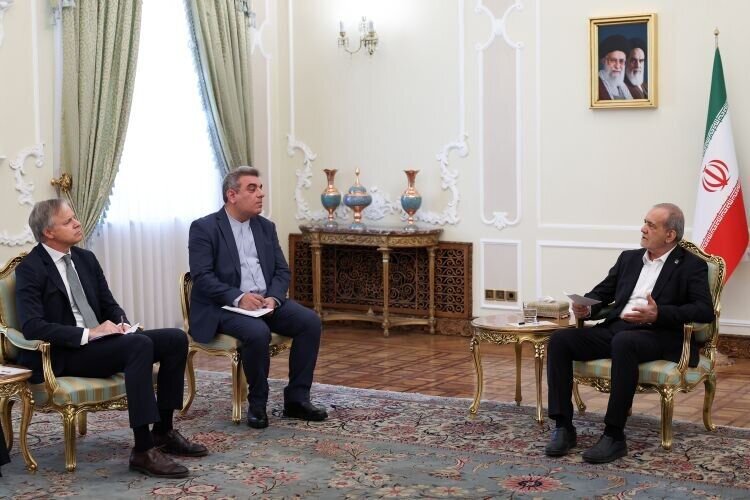
Rubio: Trump's Response to Iran Will Be 'A Head for an Eye'
US Secretary of State Marco Rubio said President Trump's policy toward Iran is 'a head for an eye,' sharply contrasting with Tehran's stated 'eye for an eye' approach, as American airstrikes on Iran entered a twelfth consecutive night.
Intelligence analysis by Llama
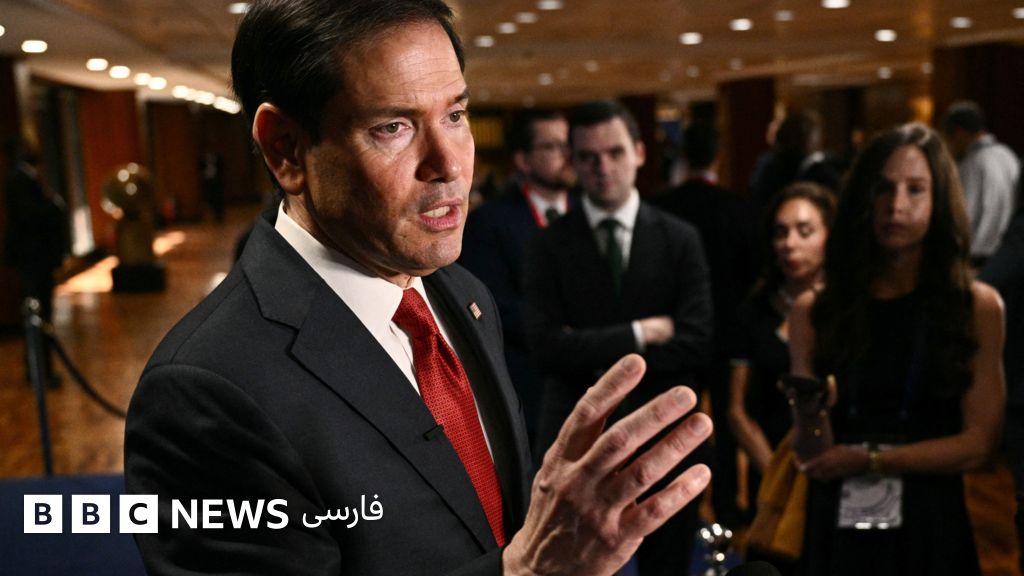
Marco Rubio escalated the US rhetorical posture against Iran, framing Trump's doctrine as overwhelming retaliation rather than proportional response. With US bombers striking nightly, Iran hitting bases in Bahrain, Kuwait, and Jordan, and Houthi attacks in the Red Sea pushing oil near $100 a barrel, two global energy chokepoints are under simultaneous strain.
The US and Iran are in a big fight. America's top diplomat said that if Iran hits back, America won't just poke an eye out in return — it will go much further, like taking the whole head. At the same time, both sides are blocking the sea routes that oil ships use, which makes gasoline more expensive for everyone.
Analysis
The 'Head for an Eye' Doctrine
Rubio's framing marks a sharp rhetorical escalation. By explicitly contrasting Trump's approach ("a head for an eye") with Iran's stated "eye for an eye" policy, the Secretary of State is signaling that Washington has moved well beyond proportional retaliation. Rubio's accompanying claim that "Iran begs for a deal every day" but then violates it is the public posture of an administration committed to sustained pressure rather than negotiation. The twelfth consecutive night of US airstrikes on Iranian territory, including heavy-bomber missions reported on Wednesday night, confirms that the operation has shifted from a punitive round into a sustained air campaign, with Rubio warning that the damage inflicted on Iran "will grow heavier every night" until Tehran agrees to a deal it will actually honor.
Two Choke Points Under Simultaneous Pressure
The economic spillover is already visible in commodity markets. Houthi strikes on two Saudi oil tankers in the Red Sea, one of them identified as the "Anselia," pushed crude prices to roughly $100 a barrel, a level not seen since early June. Saudi Arabia had been compensating for partial closure of the Strait of Hormuz by quintupling its Red Sea exports. With Houthi threats now targeting Saudi shipping as well, the two most important maritime energy corridors in the world are simultaneously under stress. The article underscores that the renewed US-Iran fighting restarted after both sides accused the other of breaching Article 5 of their memorandum of understanding, which governs shipping in the Persian Gulf and the Sea of Oman, meaning the legal scaffolding that was supposed to keep oil flowing is itself part of the battlefield.
Diplomacy in Free Fall
Iranian Foreign Minister Abbas Araghchi insists the MOU placed "management and full reopening" of Strait of Hormuz traffic squarely in Tehran's hands, while Rubio denounces attacks on vessels using the southern route as a violation. Iranian army spokesman Brigadier General Mohammad Akram-Nia has said retaliation will continue as long as US strikes on Iranian infrastructure persist, and the IRGC has messaged the publics of Jordan and Kuwait directly, arguing that Iranian missiles are hitting US-occupied territory rather than their soil. With each side accusing the other of breaking the deal, and Rubio publicly demanding "a peace agreement Iran will actually abide by," the negotiating track has effectively collapsed even as the kinetic track widens to include Yemen-based actors.
Key points
- Marco Rubio said Trump's policy toward Iran is 'a head for an eye,' a sharp escalation from Tehran's stated 'eye for an eye' doctrine.
- US airstrikes on Iran have continued for twelve consecutive nights, with heavy bombers reported to have hit targets on Wednesday.
- Iran has retaliated against US bases in Bahrain, Kuwait, and Jordan, and the IRGC has addressed Jordanian and Kuwaiti publics directly.
- Houthi attacks on two Saudi oil tankers in the Red Sea pushed crude to roughly $100 a barrel, its highest level since early June.
- The renewed fighting erupted after both sides accused the other of violating Article 5 of their memorandum of understanding on Persian Gulf and Sea of Oman shipping.
If Iran accepts a verifiable, binding framework for Strait of Hormuz traffic that satisfies Washington's demand for a deal Tehran will not renege on, the nightly bombing campaign could wind down quickly and the two chokepoints could reopen, allowing crude to retreat from the $100 level. Rubio's pointed framing of Iran's previous deal-breaking suggests Washington would accept a credible diplomatic outcome if one is offered.
If both sides continue to cite the MOU's Article 5 as violated by the other, the fighting will likely broaden beyond Iran to Iranian proxies already striking Saudi shipping in the Red Sea, keeping crude near or above $100 a barrel and risking direct Iranian strikes on Jordanian, Kuwaiti, and Bahraini territory that could pull those states into the war. The collapse of the negotiating track also raises the odds of miscalculation, with both capitals operating under fog-of-war conditions.
Market signals
- OIL The article reports Brent crude has risen to roughly $100 a barrel as the Strait of Hormuz dispute and Houthi attacks on Saudi Red Sea tankers simultaneously threaten the two main global oil shipping corridors.
AI-generated analysis of potential market relevance. Not financial advice.