Russia's prominent anti-war politician jailed for 11 years
Russian opposition politician Lev Shlosberg has been sentenced to 11 years and one month in a penal colony for discrediting the armed forces and spreading false information about them.
Intelligence analysis by Llama
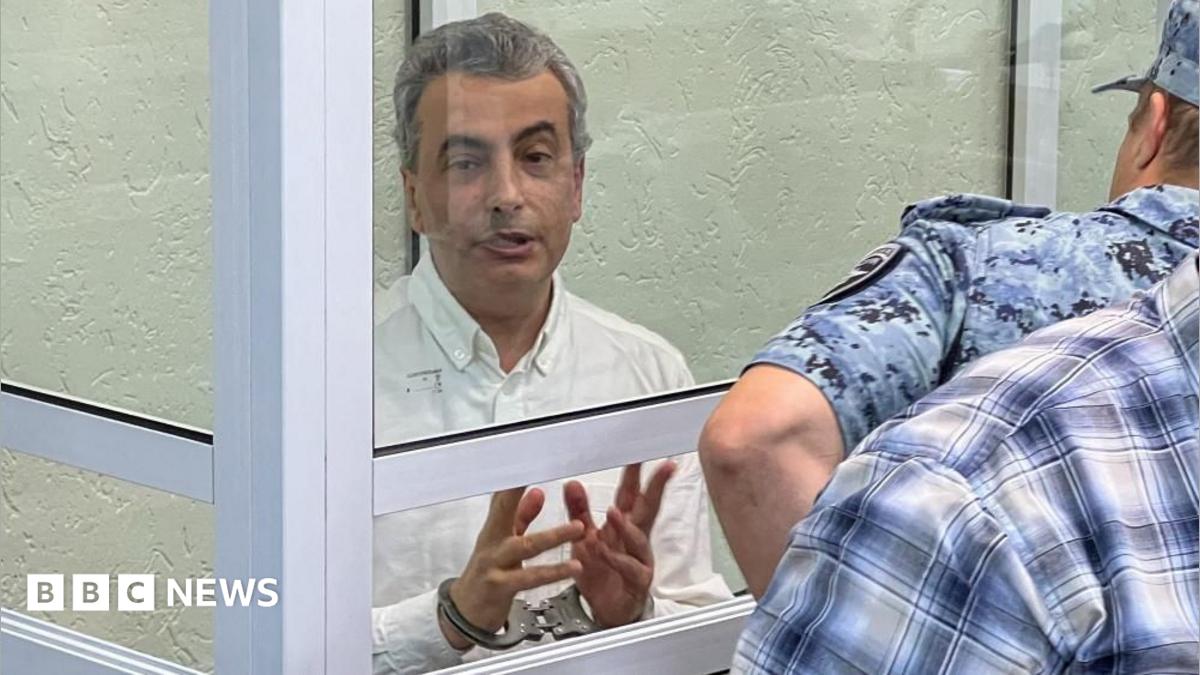
A court in Pskov sentenced Lev Shlosberg, deputy head of Russia's only anti-war registered party Yabloko, to over 11 years in a penal colony. The ruling came minutes before the Supreme Court upheld Yabloko's ban from September's elections.
A man in Russia who spoke out against the war got sent to prison for 11 years. The political party he belonged to was also kicked off the election list, so now no party on the ballot says the war is a bad idea. It's like if in a school election, the only kid who wanted to cancel the big game got disqualified, and then got detention for a really long time.
Analysis
Pskov's role as a stage for repression
The verdict was delivered by a court in Pskov, a north-western Russian city near the Estonian and Latvian borders. Shlosberg had long been a prominent local figure there, and the region's proximity to NATO territory makes the symbolism of jailing a liberal politician in this particular city notable. In his closing statement, Shlosberg described the trial as "an imitation of an investigation" designed to "achieve an obviously illegal goal," according to a transcript published by Novaya Gazeta. The prosecution had pushed for 12 years and one month — a sentence the court shaved down by exactly one year, suggesting the outcome was preordained but calibrated to look measured. Shlosberg's repeated interruptions by the presiding judge while calling for a ceasefire and "political dialogue" underscored how limited the space for even procedural dissent has become inside Russian courtrooms.
Yabloko's parallel elimination
The criminal case against Shlosberg unfolded alongside the administrative destruction of his party. Russia's Supreme Court rejected Yabloko's appeal against being barred from September's parliamentary elections just minutes after the Pskov verdict, effectively closing the only legal channel through which a Russian voter could cast a ballot against the war. Yabloko had been struck off the ballots earlier in the month on two grounds: accusations of supporting the "international LGBT movement," which Russia's Supreme Court has designated extremist, and a copyright infringement claim brought by the pro-Kremlin nationalist party Rodina. The party rejects both accusations. With all 10 other registered parties supporting the invasion, the ballot paper now offers voters no legislative representation for the anti-war position — a structural change that outlives any individual prosecution.
32.1% and the managed election
The political backdrop is a managed electoral environment in which United Russia's ratings slipped to 32.1% in VCIOM's latest poll, the lowest figure since May, even as independent watchdogs have been stripped of most monitoring powers. The Kremlin is widely believed to retain the administrative resources to deliver the result it wants. Shlosberg's 11-year sentence lands in this context: it removes the most visible anti-war campaigner from circulation precisely when the state's preferred outcome is being engineered. For European policymakers, the episode confirms that the wartime political settlement inside Russia is not a temporary emergency measure but a deliberate consolidation, with consequences for any diplomatic strategy that assumed a future opening for internal Russian pressure on the war.
Key points
- Lev Shlosberg, 63, deputy head of liberal party Yabloko, sentenced to 11 years and one month in a penal colony in Pskov
- He was convicted of discrediting the Russian armed forces and spreading false information about them via social media posts
- Russia's Supreme Court rejected Yabloko's appeal against its ban from September's parliamentary elections just minutes after the verdict
- Yabloko was the only registered party to oppose the 2022 full-scale invasion of Ukraine; all 10 other parties support the war
- United Russia's polling slipped to 32.1% in VCIOM's latest survey, its lowest since May, though independent watchdogs have been largely neutered
Yabloko has stated it will appeal the verdict, and Shlosberg's case has drawn international attention, which could eventually create diplomatic pressure for his release. If United Russia's slipping poll numbers and the harshness of the sentence create friction within the political establishment, some moderation of the treatment of high-profile opposition figures could follow — though the broader ban on anti-war parties is unlikely to be reversed before September.
The simultaneous jailing of Yabloko's deputy head and the party's removal from the ballot removes the last institutional vehicle for anti-war representation in Russian politics, hardening the wartime consensus ahead of September. Independent watchdogs have already been gutted, and the combination suggests a fully managed election outcome with no legal avenue for anti-war voters, further isolating Russia from any negotiated path out of the Ukraine war.