SA-Netherlands empowerment pact to be measured by impact, says Letsike
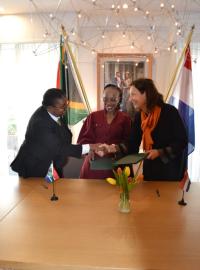
South Africa and the Netherlands have signed a Memorandum of Understanding (MoU) to strengthen cooperation on empowering women, youth, and persons with disabilities, with its success to be measured by tangible impact.
Intelligence analysis by Gemini 2.5 Flash
The newly signed MoU between South Africa and the Netherlands aims to foster collaboration in areas like gender equality, youth development, and disability inclusion. Deputy Minister Mmapaseka Letsike emphasized that the agreement's true value will be determined by its effective implementation and the positive, measurable changes it brings to the lives of vulnerable groups, rather tha…
Imagine two friends, South Africa and the Netherlands, making a special promise to help each other make life better for girls, boys, and people with disabilities. They wrote down their promise in a special book, and they said the most important thing isn't just signing the book, but actually doing things that make a real difference, like making sure everyone gets a fair chance to learn and play.
Analysis
A Framework for Inclusive Development
The Memorandum of Understanding (MoU) between South Africa and the Kingdom of the Netherlands establishes a formal framework for bilateral cooperation focused on critical social development areas. These include gender equality, youth development, disability inclusion, and the broader promotion of human rights. The agreement underscores a shared commitment to addressing systemic inequalities and fostering a more inclusive society, leveraging the experiences and institutions of both nations.
Deputy Minister Mmapaseka Letsike highlighted that the partnership is not merely symbolic but a practical step towards tangible progress. The MoU provides for the establishment of a bilateral working group under the South Africa-Netherlands Joint Commission for Cooperation. This group will be instrumental in developing a two-year implementation plan, monitoring progress against defined responsibilities and measurable targets, and submitting annual reports on the partnership's outcomes. This structured approach aims to ensure accountability and drive concrete results.
Prioritizing Measurable Impact and Active Participation
A central tenet of this cooperation is the emphasis on measurable impact over rhetoric. Letsike explicitly stated that the agreement's significance will be judged by the actual changes it brings about in the lives of women, young people, and persons with disabilities. This focus on 'what changes after we leave this room' signals a results-oriented approach, moving beyond diplomatic formalities to practical application.
Crucially, the Deputy Minister called for the active involvement of civil society organizations, youth formations, disability advocacy groups, LGBTI+ organizations, researchers, and frontline practitioners. This inclusive approach, particularly the adherence to the 'Nothing About Us Without Us' principle for disability inclusion, is vital for ensuring that initiatives are relevant, effective, and truly representative of the communities they aim to serve. Such broad participation is expected to enrich the implementation process and ensure that the partnership addresses real-world challenges.
Strengthening Human Rights in a Challenging Global Context
The cooperation framework is also positioned as a means to strengthen efforts in protecting human rights and democratic values, especially at a time when progressive rights face increasing global challenges. Both South Africa and the Netherlands acknowledge that they are 'not a completed project,' bringing both experience and existing inequalities to the partnership. This mutual recognition of ongoing challenges fosters a spirit of collaborative learning and shared responsibility.
Letsike's upcoming visit to Amsterdam for WorldPride, where she plans to engage Dutch government counterparts, further illustrates the commitment to leveraging this partnership for immediate priorities. Discussions with the Netherlands' Ministry of Foreign Affairs and the Ministry of Health, Welfare and Sport are expected to identify specific areas for implementation, connect operational teams, and maintain the momentum generated by the MoU's signing. This strategic engagement aims to translate the agreement into actionable programs that can contribute to advancing equality and inclusion on both national and international fronts.
Key points
- South Africa and the Netherlands signed an MoU to boost cooperation on empowering women, youth, and persons with disabilities.
- Deputy Minister Mmapaseka Letsike stressed that the agreement's success will be measured by its positive, tangible impact on people's lives.
- A bilateral working group will be established to create a two-year implementation plan, monitor progress, and report annually.
- Active involvement of civil society, youth, disability, and LGBTI+ groups is crucial for implementation and review.
- The partnership aims to strengthen human rights and democratic values, acknowledging both countries face ongoing challenges in equality and inclusion.
If effectively implemented with clear timelines and measurable targets, this MoU could significantly advance gender equality, youth development, and disability inclusion in South Africa. The shared knowledge and experience between the two nations could lead to innovative solutions and stronger protections for human rights, fostering a more equitable society.
Without robust monitoring and genuine commitment from all stakeholders, the agreement risks becoming a symbolic gesture with limited tangible impact. Bureaucratic hurdles or a lack of sustained funding could hinder the development and execution of effective programs, failing to deliver the promised benefits to vulnerable populations.