Sacked Ukrainian defence minister calls for presidential election
Ukraine's former defence minister, Mykhailo Fedorov, has called for wartime elections, posing a significant challenge to President Volodymyr Zelensky's leadership amidst ongoing martial law.
Intelligence analysis by Gemini 2.5 Flash
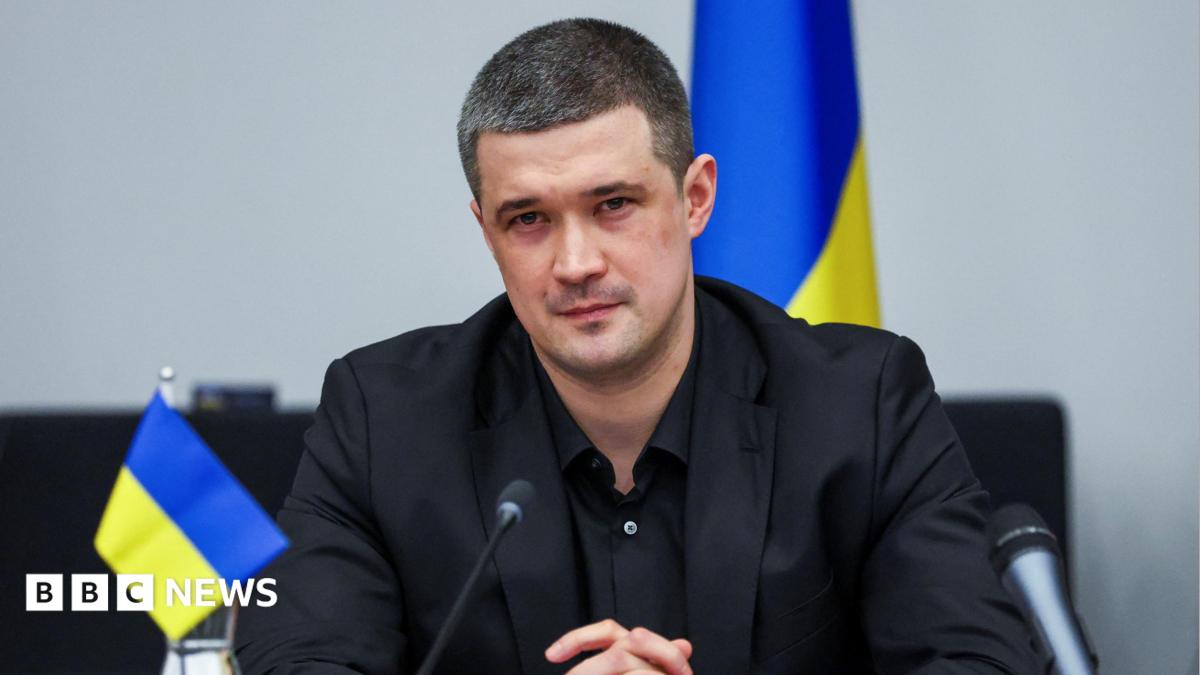
Mykhailo Fedorov, recently dismissed from his defence post, has publicly advocated for presidential elections despite martial law suspending them. His call, made in a YouTube video, is seen as the most substantial political challenge to President Zelensky since the full-scale invasion, sparking debate over Ukraine's democratic process during wartime.
Imagine Ukraine is in a big, important game, and the rules say they can't pick a new team captain while the game is still on. But a popular player, Mykhailo, who used to be in charge of the team's defense but got benched, now says it's super important to pick a new captain anyway, even during the game, because it's about being fair and having the best leader. This is a big deal because the current captain, Zelensky, is trying to win the game, and some people worry that changing leaders now could make the team weaker.
Analysis
Mykhailo Fedorov's recent call for wartime elections represents a significant inflection point in Ukrainian domestic politics, challenging the established wartime consensus under President Volodymyr Zelensky. Fedorov, a charismatic figure credited with modernizing the defence ministry and combating corruption, was unexpectedly dismissed last month, a move that sparked public protests and highlighted underlying tensions within the government and military leadership. His subsequent refusal of other government posts and his public demand for elections underscore a growing sentiment among some Ukrainians for a return to full democratic processes, even amidst the ongoing conflict.
Mykhailo Fedorov
Mykhailo Fedorov, 35, quickly rose to prominence for his innovative approach to the defence ministry, where he championed technological advancements and pushed for reforms against outdated military structures. His tenure was marked by initiatives like the 'Army of Drones' and the integration of 'gamification' into the war effort, earning him considerable popularity, particularly among younger Ukrainians. His dismissal in mid-July, reportedly due to tensions with army commander-in-chief Oleksandr Syrskyi, ignited public discontent, leading to weekly protests demanding his reinstatement. Fedorov's video, posted on Tuesday, articulated a sense of injustice, warning against a system where personal loyalty trumps professionalism and results, a clear critique of the current administration's appointment criteria.
Fedorov's intervention is not merely a personal grievance but a broader critique of governance, framing Ukraine's challenges as a "systemic crisis of governance" and a fear of change. He pointed to corruption as a factor hindering the war effort, aligning with public frustrations. While he has not explicitly declared his intention to run for president, his rhetoric about institutions being stronger than names, widely interpreted as a reference to Zelensky's personal profile, positions him as a potential formidable political contender. His shift from demanding his old job back to advocating for widespread political reform signals a strategic move to broaden his appeal and challenge the status quo.
Volodymyr Zelensky
President Volodymyr Zelensky finds himself in a precarious position, navigating both an existential war and increasing domestic political pressure. His five-year presidential term constitutionally ended in May 2024, but martial law, in place since the 2022 invasion, suspends elections. This legal framework has been a cornerstone of maintaining national unity and stability during the conflict. Zelensky has previously stated Ukraine's readiness for elections within 60-90 days if allies could guarantee security, a response to suggestions from figures like former US President Donald Trump that Kyiv was using the war to avoid a vote. However, the practicalities of holding a fair and safe election under constant Russian bombardment are immense, a point acknowledged even by some of Fedorov's supporters.
Zelensky's administration has attempted to manage the fallout from Fedorov's dismissal, with the president confirming he had asked parliament to confirm acting defence minister Yevhenii Khmara just hours before Fedorov's video was released. The ongoing protests and Fedorov's direct challenge highlight a growing disconnect between parts of the populace and the presidential administration. While Zelensky's loyalists, such as MP Oleksandr Merezhko, argue that wartime elections would weaken the country and play into Vladimir Putin's hands, opposition figures like Volodymyr Aryev contend that the country has reached a point where it must choose between elections and chaos, suggesting a perceived detachment from reality within the current leadership.
Wartime Elections
The debate over wartime elections in Ukraine is fraught with constitutional, practical, and strategic complexities. Under martial law, the constitution explicitly prohibits elections, a measure designed to ensure stability and focus during national emergency. Proponents of holding elections, like Fedorov, argue that democracy cannot be held hostage by Russia and that a return to democratic processes is essential for Ukraine's identity as a free European state. They seek a "legal, safe, and realistic mechanism" to restore full democratic function, even amidst prolonged conflict. This perspective emphasizes the importance of legitimacy and accountability, suggesting that a renewed mandate could strengthen the government's hand.
Conversely, many, including some of Zelensky's detractors and even some Fedorov supporters, view wartime elections as impractical and dangerous. The logistical challenges are immense: ensuring security for voters and polling stations under bombardment, facilitating participation for millions of refugees and internally displaced persons, and guaranteeing a free and fair campaign environment. More critically, opponents argue that such elections would inevitably create divisions, divert resources from the war effort, and undermine national unity, thereby playing directly into Russia's strategic interests by weakening Ukraine from within. The consensus among many is that while democratic principles are vital, the immediate priority must remain national survival and victory against the aggressor, making the timing of elections a deeply contentious issue.
Key points
- Former Ukrainian Defence Minister Mykhailo Fedorov has called for wartime presidential elections, challenging President Zelensky's leadership.
- Elections are currently suspended under martial law, which has been in place since Russia's full-scale invasion in 2022.
- Fedorov was dismissed last month, sparking protests, and has since refused other government posts.
- He argues that democracy cannot be held hostage by Russia and that Ukraine faces a 'systemic crisis of governance'.
- Critics, including some loyal to Zelensky, warn that holding elections during wartime would weaken national unity and play into Russia's hands.
If a safe and fair mechanism for wartime elections could be established, it might strengthen Ukraine's democratic legitimacy and address public discontent, potentially fostering greater national unity and resolve against Russia by reaffirming the people's choice of leadership.
However, holding elections during active warfare could severely destabilize the country, divert critical resources, and create divisions, potentially playing into Russia's narrative and weakening Ukraine's overall resilience and war effort, as warned by MP Oleksandr Merezhko.