Saudi capital issues first air raid alert since renewed fighting in Yemen
Saudi Arabia's capital, Riyadh, experienced its first air raid alert since renewed fighting in Yemen, rattling residents and highlighting the escalating regional conflict.
Intelligence analysis by Gemini 2.5 Flash
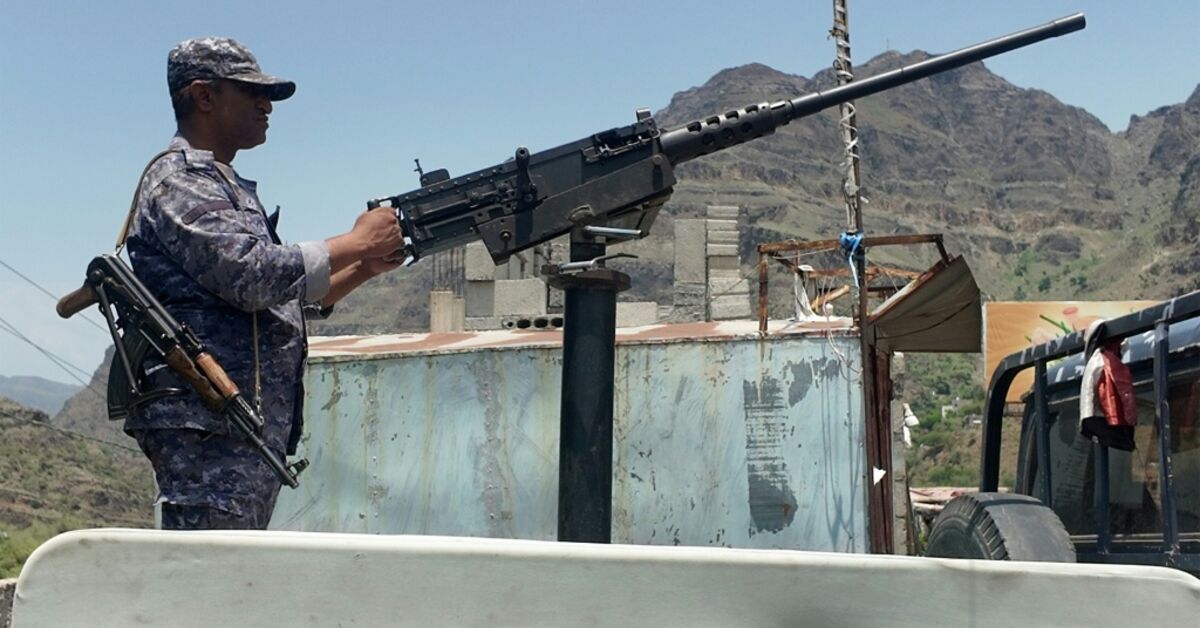
Riyadh residents were alerted to a hostile aerial threat and heard explosions, marking a significant escalation in the Yemen conflict as Houthi forces advance and threaten Saudi territory. This incident underscores the broader regional instability, including a seven-month war between the US and Iran, and its impact on the global economy.
Imagine two neighbors, Saudi Arabia and Yemen, are having a big argument, and one side, called the Houthis, has started throwing things over the fence into Saudi Arabia's yard, even hitting their house in Riyadh. This is scary for the people living there, and it's making everyone worried because it's also messing with the important sea roads where big ships carry oil and other goods around the world, like a busy highway for boats. The US is trying to help Saudi Arabia protect itself by selling them fancy new fighter jets, but it's a tricky situation for everyone.
Analysis
The recent air raid alert in Riyadh marks a critical turning point in the protracted Yemen conflict, signaling a direct threat to Saudi Arabia's heartland after a period of renewed Houthi offensive. This development not only heightens tensions between the warring factions but also underscores the broader geopolitical instability gripping the Middle East, with implications for international trade and regional alliances.
Riyadh
The issuance of the first air raid alert in Riyadh since the resurgence of fighting in Yemen has profoundly impacted the Saudi capital's residents. The early morning alarm and subsequent explosions created a palpable sense of fear and anxiety, as described by locals who were unaccustomed to such direct threats after a period of relative calm. This incident serves as a stark reminder that the conflict, previously confined largely to Yemen's borders, now directly imperils Saudi civilian areas.
This direct targeting of Riyadh carries significant symbolic weight, demonstrating the Houthis' enhanced capabilities or willingness to project power deeper into Saudi territory. It also challenges Saudi Arabia's defensive posture, despite its extensive military resources and previous airstrikes against Houthi positions. The psychological impact on the populace, coupled with the strategic implications of the capital being under threat, could influence future Saudi military and diplomatic strategies in the conflict.
Bab al-Mandab strait
The Houthi offensive has not only threatened Saudi Arabia directly but has also extended their control over significant portions of Yemen's Red Sea coastline, including areas near the vital Bab al-Mandab strait. This strait is a crucial choke point for global maritime trade, particularly for oil shipments from the Middle East to Europe and North America. The Houthis' presence and stated intent to target Saudi ships in this lane raise serious concerns for international shipping and energy markets.
Reports of Iranian Revolutionary Guards visiting the newly conquered Houthi-held areas along the coastline, coupled with the installation of radar and digging of tunnels, suggest a concerted effort to fortify these strategic positions. This development could exacerbate existing disruptions to international maritime trade, which is already under pressure from Iran's blockade on the Strait of Hormuz. The potential for further escalation in this critical waterway poses a direct threat to global supply chains and energy security.
F-35 fighter jets
In response to the escalating threats, Saudi Arabia has sought assistance from its ally, the United States, though direct military intervention against the Houthis was reportedly refused. However, Washington recently approved a substantial $24.3 billion sale of 48 F-35 fighter jets to the kingdom. This significant arms deal is intended to bolster Riyadh's capabilities to "deter current and future threats," according to the US State Department.
While the F-35 sale represents a long-term investment in Saudi defense, its immediate impact on the current Houthi offensive remains to be seen. The US's approach appears to be a combination of diplomatic pressure and strengthening its allies' defensive capacities, rather than direct engagement. This strategy reflects the complex dynamics of the region, where the US seeks to balance its security interests with avoiding deeper entanglement in ongoing conflicts, even as its allies face direct attacks.
Key points
- Riyadh issued its first air raid alert since renewed fighting in Yemen, with residents hearing explosions.
- Yemen's Houthis have launched a lightning offensive, seizing territory and threatening Saudi Arabia.
- Saudi Arabia has conducted airstrikes but failed to stop the Houthi advance and sought US help.
- The US approved a $24.3 billion sale of 48 F-35 fighter jets to Saudi Arabia to help deter threats.
- The renewed fighting has displaced over 112,000 people and impacted international maritime trade via the Bab al-Mandab strait.
The approval of the $24.3 billion sale of 48 F-35 fighter jets to Saudi Arabia could significantly enhance the kingdom's defensive capabilities, potentially deterring future Houthi attacks and stabilizing the conflict in the long term. This strategic reinforcement might allow Saudi Arabia to better protect its borders and critical infrastructure, reducing the immediate threat to its capital.
The renewed Houthi offensive and the direct threat to Riyadh could lead to a dangerous escalation of the Yemen conflict, potentially drawing in more regional and international actors. This escalation risks further destabilizing the global economy, particularly through disruptions to vital shipping lanes like the Bab al-Mandab strait, and could worsen the already dire humanitarian crisis in Yemen.
Market signals
- OIL Escalation of conflict in the Middle East and threats to vital shipping lanes like the Bab al-Mandab strait increase supply-route risks, pushing oil prices higher.
AI-generated analysis of potential market relevance. Not financial advice.