Scenes of Displacement Return to South Lebanon After Recent Escalation
Renewed displacement is occurring in South Lebanon following intensified Israeli airstrikes, with a recent attack killing seven civilians, including children, in the town of Ansar.
Intelligence analysis by Gemini 2.5 Flash

Despite a US-brokered framework agreement aimed at de-escalation, Israeli airstrikes have resumed in South Lebanon, leading to civilian casualties and renewed displacement, prompting strong condemnation from Lebanese officials.
Imagine two neighbors who have been fighting a lot, but then they made a promise to try and be peaceful. Recently, one neighbor started throwing rocks again, hitting houses and hurting people, even kids. Now, families are scared and leaving their homes, and the leaders of the other neighbor are very upset, saying this breaks their promise and makes things dangerous again.
Analysis
The recent surge in Israeli airstrikes on South Lebanon has triggered a fresh wave of displacement, forcing residents from their homes in search of safety. This development is particularly alarming given that it follows a period of reduced violence, which was largely attributed to a memorandum of understanding signed between Washington and Tehran in June, and a subsequent framework agreement between Lebanon and Israel.
Ansar Airstrike
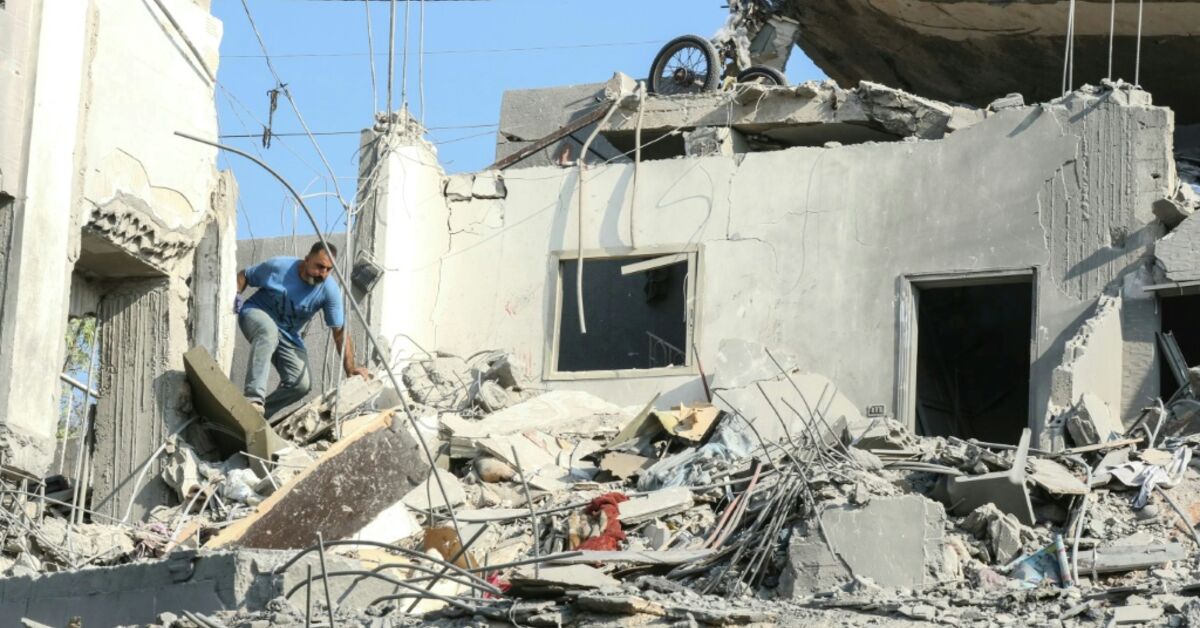
Early Saturday morning, the town of Ansar in the Nabatieh district experienced one of the most severe Israeli airstrikes in recent memory. Warplanes reportedly targeted three adjacent residential buildings with three missiles, resulting in seven fatalities, including children, and four injuries. The intensity of the explosions was such that some victims' bodies were dismembered, complicating rescue efforts. This incident marks the highest casualty count since the June agreements, highlighting a significant breach of the relative calm that had prevailed.
The National News Agency further reported that the strike on the valley between Ansar and Zrarieh was the first to penetrate such geographical depth since the two-month ceasefire. Additionally, Israeli forces were noted to have demolished several buildings in the border city of Bint Jbeil, and another strike in Deir al-Zahrani caused multiple injuries, exacerbating the humanitarian situation and physical destruction in the southern regions.
Framework Agreement
The current escalation directly challenges the framework agreement brokered by the United States between Lebanon and Israel. This agreement, reached after five rounds of negotiations, was intended to facilitate the disarmament of Hezbollah, the gradual withdrawal of Israel from occupied Lebanese territories, and the deployment of the Lebanese army in designated 'experimental' zones. However, Hezbollah has consistently rejected direct negotiations with Israel and refused to relinquish its weapons, indicating fundamental obstacles to the agreement's full implementation.
The ongoing Israeli operations, including airstrikes and demolitions, are perceived by Lebanese authorities as repeated violations of this framework agreement and international laws designed to protect civilians. The agreement's efficacy is now under severe scrutiny, with the recent violence suggesting a significant setback to the diplomatic efforts aimed at securing lasting stability in the volatile border region.
Nawaf Salam
Lebanese Prime Minister Nawaf Salam issued a stern warning regarding the gravity of the Israeli escalation, particularly in Nabatieh, Ansar, Deir al-Zahrani, and surrounding villages. He explicitly stated that the intense airstrikes, shelling, and intimidation of residents directly undermine efforts to establish stability in the South. Salam emphasized that the seven victims of the Ansar raid, including women and children, were not military infrastructure or targets, asserting that any military structures on Lebanese soil are solely the responsibility of the Lebanese state and its legitimate institutions.
President General Joseph Aoun echoed these condemnations, highlighting the continuous Israeli aggressions and their repeated violations of the framework agreement and international humanitarian law. Both leaders underscored that the security and right to life of Lebanese citizens on their land are non-negotiable, urging Israel to cease its escalation immediately. Hezbollah's Secretary-General Naeem Qassem, meanwhile, accused Lebanese authorities of subjecting the Lebanese army to Israeli pressures in the context of implementing the framework agreement, adding another layer of political tension to the crisis.
Key points
- Scenes of displacement have returned to South Lebanon following a recent escalation in Israeli airstrikes.
- Seven people, including children, were killed in an Israeli airstrike on the town of Ansar, marking the worst toll since June.
- The escalation undermines a US-sponsored framework agreement between Lebanon and Israel aimed at de-escalation.
- Lebanese President Joseph Aoun and Prime Minister Nawaf Salam condemned the Israeli actions as violations of international law and the framework agreement.
- Hezbollah's Secretary-General Naeem Qassem accused Lebanese authorities of succumbing to Israeli pressures regarding the agreement's implementation.
The international community, particularly the United States, could intensify diplomatic efforts to reinforce the existing framework agreement and ensure adherence to its terms, potentially leading to a renewed de-escalation of hostilities. A strong, unified stance from Lebanese authorities, supported by international partners, might pressure all parties to prioritize civilian safety and stability.
The continued Israeli airstrikes and the resulting civilian casualties risk completely unraveling the fragile de-escalation agreements, potentially drawing Lebanon deeper into a broader regional conflict. Hezbollah's rejection of disarmament and direct talks with Israel, coupled with accusations against Lebanese authorities, could further destabilize the internal political landscape and empower non-state actors.