SEC's Peirce warns some DeFi vaults, onchain lending may fall under securities laws
SEC Commissioner Hester Peirce said some crypto vaults and lending strategies may fall within federal securities laws. Morpho's token fell about 5% after the statement, underperforming the broader crypto market.
Intelligence analysis by Llama
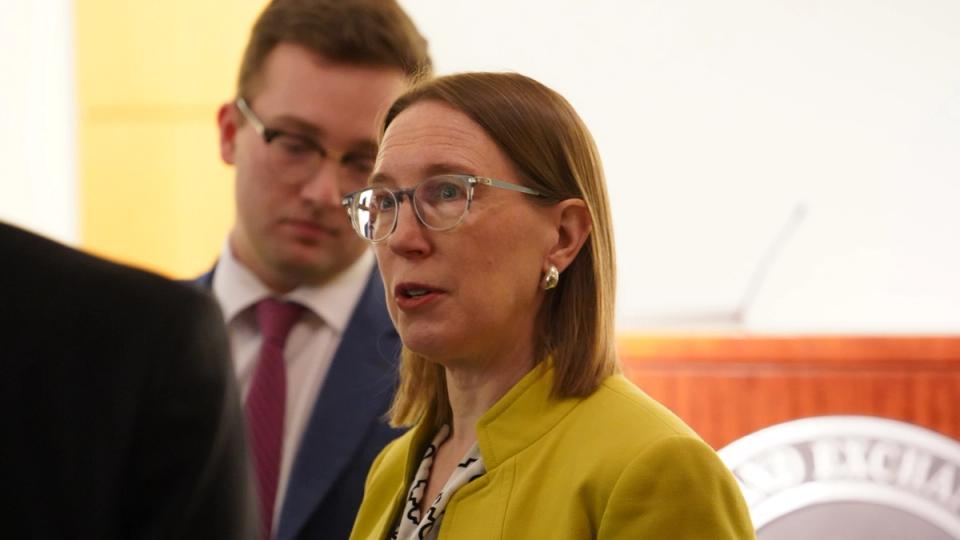
SEC Commissioner Hester Peirce warned that some DeFi vaults and onchain lending strategies may fall under federal securities laws, citing their resemblance to investment funds or advisers. This could lead to greater regulatory scrutiny for the sector.
Imagine you have a special kind of savings account that lets you earn interest on your money. This is called a vault. Some people are worried that these vaults might be breaking the rules, and that could make it harder for them to exist. This is a big deal because a lot of people are using these vaults to save and earn money.
Analysis
A Warning Shot Across the Bow of DeFi's Fastest-Growing Sector
SEC Commissioner Hester Peirce's warning that some DeFi vaults and onchain lending strategies may fall under federal securities laws has sent shockwaves through the crypto market. The commissioner's statement, made in a recent interview, has sparked concerns that the sector's rapid growth may be curtailed by increased regulatory scrutiny.
The warning is not entirely unexpected, given the SEC's long-standing position that tokenized securities are still securities. However, the commissioner's comments have highlighted the need for DeFi developers to engage with the SEC and grapple with the intersection between their asset deployment tools and federal securities laws.
Peirce's warning has already had an impact on the market, with Morpho's token falling roughly 5% following the statement. This is a significant development, given the token's recent price action and the broader market's performance.
The DeFi sector has been growing rapidly, with over $8 billion in assets across 788 curated vaults. These vehicles have become increasingly popular, with large exchanges and brokerages like Coinbase and Robinhood integrating them to offer users yield on their stablecoin balances.
However, the commissioner's warning has highlighted the need for DeFi developers to be mindful of the regulatory landscape. The sector's future status is uncertain, and this warning may lead to increased scrutiny and potential changes to the way DeFi products are structured and managed.
The SEC's Position on Tokenized Securities
The SEC's position on tokenized securities is clear: they are still securities. This principle holds for vaults, which are a type of DeFi product that allows users to deposit crypto into smart contracts that automatically allocate capital across lending markets and other yield-generating strategies.
Peirce's warning has highlighted the need for DeFi developers to engage with the SEC and grapple with the intersection between their asset deployment tools and federal securities laws. This is a complex issue, and one that requires careful consideration and analysis.
The Road Ahead
The road ahead for the DeFi sector is uncertain, and this warning from SEC Commissioner Hester Peirce has highlighted the need for developers to be mindful of the regulatory landscape. The sector's future status is uncertain, and this warning may lead to increased scrutiny and potential changes to the way DeFi products are structured and managed.
In conclusion, the warning from SEC Commissioner Hester Peirce has significant implications for the DeFi sector. The sector's future regulatory status is uncertain, and this warning may lead to increased scrutiny and potential changes to the way DeFi products are structured and managed.
Key points
- SEC Commissioner Hester Peirce warned that some DeFi vaults and onchain lending strategies may fall under federal securities laws.
- The warning has sparked concerns that the sector's rapid growth may be curtailed by increased regulatory scrutiny.
- The DeFi sector has been growing rapidly, with over $8 billion in assets across 788 curated vaults.
- The sector's future status is uncertain, and this warning may lead to increased scrutiny and potential changes to the way DeFi products are structured and managed.
If the DeFi sector can adapt to the SEC's warning and find ways to comply with federal securities laws, it could lead to a more stable and secure environment for users. This could also lead to increased innovation and growth in the sector, as developers find new ways to create and manage DeFi products.
If the DeFi sector is unable to adapt to the SEC's warning and comply with federal securities laws, it could lead to a decline in the sector's growth and popularity. This could also lead to increased regulatory scrutiny and potential changes to the way DeFi products are structured and managed.