Senegal-Mali: Why Bassirou Diomaye Faye is moving closer to Assimi Goïta
Senegal's President Bassirou Diomaye Faye made his first official visit as ECOWAS chair to Mali, signaling a thaw between the regional bloc and the Alliance of Sahel States.
Intelligence analysis by Gemini 2.5 Flash Lite
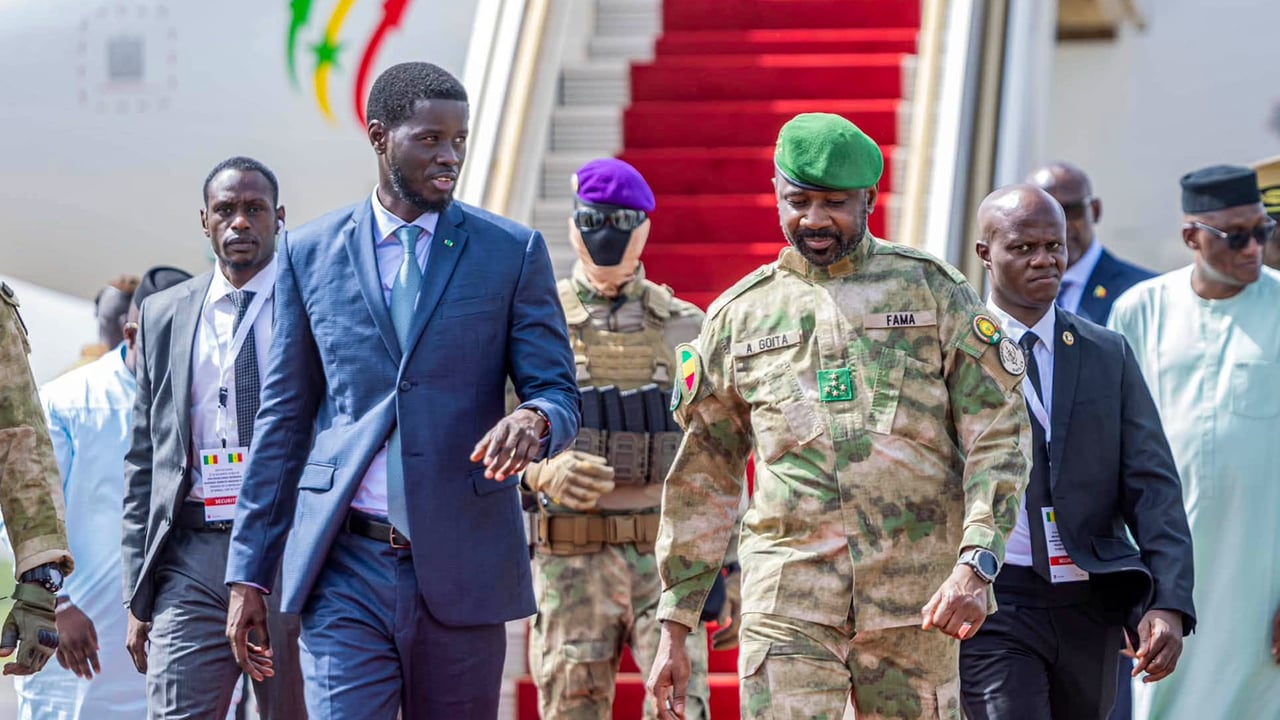
President Faye's visit to Bamako, shortly after assuming the ECOWAS presidency, underscores a strategic shift towards mending relations with Mali and other Sahelian nations that had withdrawn from the bloc.
Imagine two groups of friends who had a big argument and stopped talking. The leader of one group, who is now also the leader of a bigger club, decided to visit the leader of the other group first. This visit is like a friendly handshake, showing they want to talk again and maybe solve problems together.
Analysis
A Strategic Overture to Bamako
The recent visit of Senegalese President Bassirou Diomaye Faye to Bamako, the Malian capital, marks a significant diplomatic maneuver. Coming just ten days after Faye assumed the rotating presidency of the Economic Community of West African States (ECOWAS), this trip to meet Malian leader Assimi Goïta was Faye's first official foreign visit in his new capacity. The choice of Bamako is not coincidental; it signals a deliberate effort to bridge the growing divide between ECOWAS and the Alliance of Sahel States (AES), which includes Mali, Burkina Faso, and Niger – nations that had previously announced their withdrawal from ECOWAS.
The warm reception and carefully chosen words exchanged during the meeting suggest a desire to de-escalate tensions and explore avenues for renewed dialogue. Faye's leadership within ECOWAS, coupled with his proactive engagement with Goïta, indicates a strategic intent to reintegrate these key Sahelian nations back into the regional fold, or at least to foster a more cooperative relationship.
Navigating the AES Withdrawal
The formation of the AES and its subsequent departure from ECOWAS represented a major rupture in West African regional integration. These nations cited dissatisfaction with ECOWAS's handling of security issues and perceived external interference as primary reasons for their exit. Faye's visit, therefore, can be interpreted as an attempt to understand and address the grievances that led to this schism, rather than simply demanding their return.
By choosing to engage directly with Goïta, Faye is acknowledging the political realities in Mali and signaling a willingness to work within the current geopolitical landscape. This approach is a departure from the more confrontational stance ECOWAS had previously adopted towards the military juntas in these countries. It suggests a pragmatic strategy focused on finding common ground, particularly on issues of mutual concern such as counter-terrorism and economic development.
Rebuilding Regional Bridges
The implications of this diplomatic initiative extend beyond the bilateral relationship between Senegal and Mali. It could set a precedent for how ECOWAS engages with its member states that have experienced political upheaval and sought new alliances. A successful de-escalation and potential reintegration of the AES countries could revitalize ECOWAS, strengthening its capacity to address the complex security and economic challenges facing the region.
However, the path forward remains complex. The underlying issues that led to the AES's formation and withdrawal are deep-seated. Faye's diplomatic efforts will need to be sustained and complemented by concrete actions that address the security concerns and foster economic cooperation. The success of this rapprochement will ultimately depend on the willingness of all parties to compromise and work collaboratively towards shared regional goals.
Key points
- Senegalese President Bassirou Diomaye Faye made his first foreign visit as ECOWAS chair to Mali.
- The visit aimed to improve relations between ECOWAS and the Alliance of Sahel States (AES).
- Faye's engagement with Malian leader Assimi Goïta signals a shift towards dialogue.
- This move could help mend the rift caused by Mali, Burkina Faso, and Niger's withdrawal from ECOWAS.
- The rapprochement is seen as crucial for regional stability and cooperation.
This visit could herald a new era of cooperation, potentially leading to a more unified approach to regional security and economic development across West Africa. It might also pave the way for the reintegration of Mali, Burkina Faso, and Niger into ECOWAS, strengthening the regional bloc.
Despite the positive overtures, deep-seated mistrust and differing political agendas could hinder genuine reconciliation. The visit might only offer a temporary de-escalation, with the underlying issues of security and governance remaining unresolved, potentially leading to continued fragmentation.