Senior UK rabbis express support for settlement sanctions
Prominent UK rabbis have publicly supported British sanctions against illegal Israeli settlements, directly contradicting the country's chief rabbi who called it a "dark day for British Jews."
Intelligence analysis by Gemini 2.5 Flash
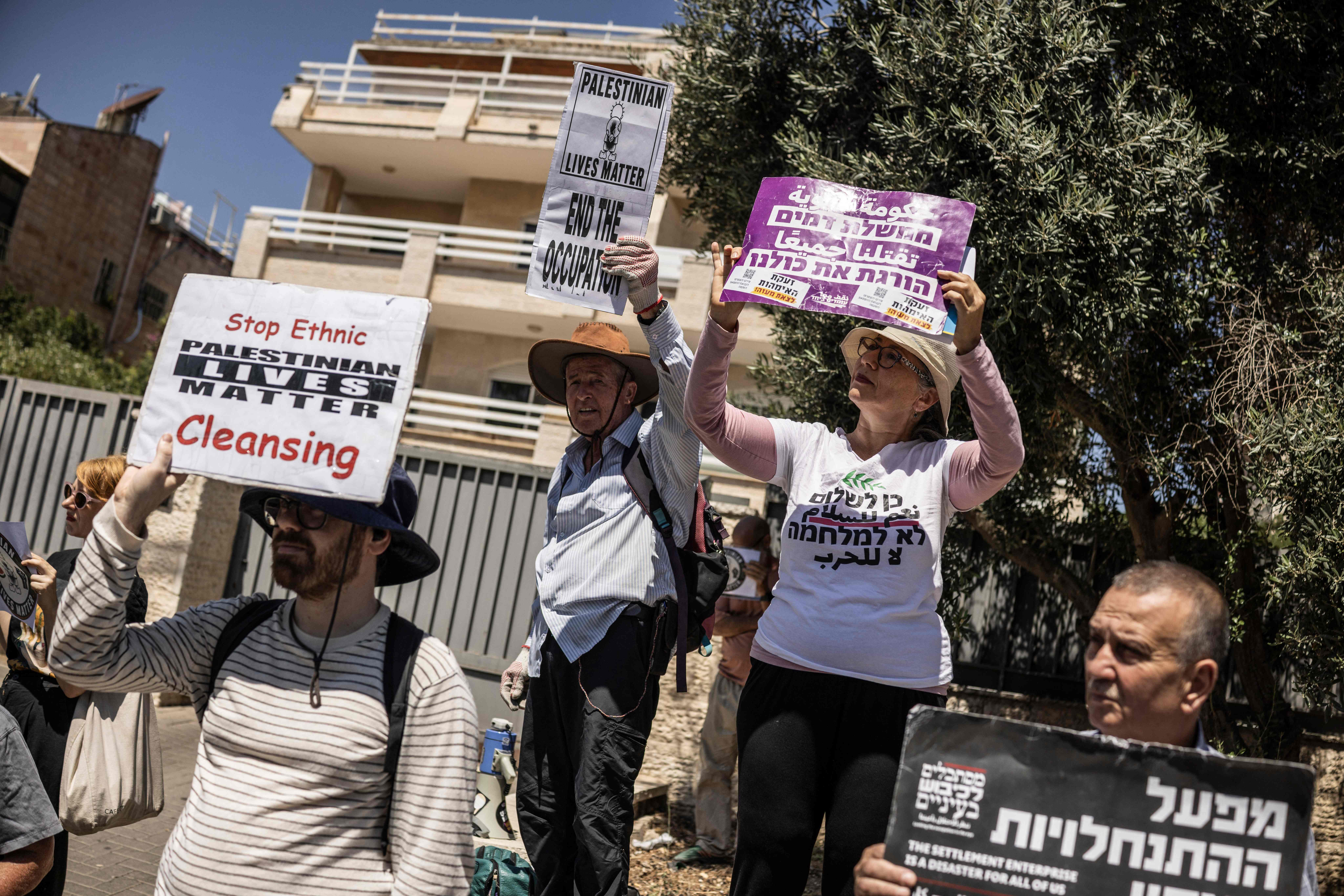
Several senior UK rabbis, including those from Masorti and Liberal Judaism, have voiced strong support for new British sanctions targeting illegal Israeli settlements in the West Bank. They argue that the occupation and escalating violence harm both Palestinians and Israelis, and that inaction is a moral failing, contrasting with the Chief Rabbi's condemnation of the sanctions.
Imagine if a group of kids kept building their sandcastles on a part of the playground that everyone agreed belonged to another group of kids. Now, some grown-ups from the first group are saying it's wrong and that other grown-ups should stop playing with them until they move their sandcastles. But the main grown-up leader of their group thinks this is a bad idea and will make everyone sad. It's a big disagreement about what's fair and how to make things right.
Analysis
Rabbi Jonathan Wittenberg, a prominent voice within Masorti Judaism, articulated a strong moral condemnation of the situation in the West Bank, describing it as a 'Chillul HaShem,' or a profound violation of God's name. His presence in the Palestinian village of Umm Al-Khair as the sanctions were announced lent a direct, eyewitness perspective to his advocacy. He emphasized that silence is not an option, asserting that the ongoing occupation and violence are detrimental to both Palestinian aspirations for peace and Israel's own moral standing.
Wittenberg's stance underscores a growing sentiment among certain Jewish religious leaders who believe that supporting sanctions is a necessary act of conscience. He highlighted the suffering of Palestinian people and the broader implications for the region, arguing that speaking out is essential for the sake of humanity, justice, Israel, and Judaism itself. This perspective challenges the notion that criticism of Israeli policies equates to disloyalty, instead framing it as a deeply held religious and ethical obligation.
Ephraim Mirvis
The Chief Rabbi of the UK, Ephraim Mirvis, offered a starkly different interpretation of the sanctions, labeling the day of their announcement as a 'dark day for British Jews.' This statement reflects a concern that such measures could be perceived as targeting the wider Jewish community or undermining Israel's security, potentially fostering antisemitism or creating a sense of alienation among Jewish citizens. His position highlights the complex and often painful internal debates within Jewish communities regarding the Israeli-Palestinian conflict.
Mirvis's comments illustrate the profound discomfort many mainstream Jewish leaders feel when international pressure is applied to Israel, particularly concerning issues as sensitive as settlements. The divergence between his view and that of the supporting rabbis reveals a significant ideological rift, where some prioritize communal solidarity with Israel while others prioritize a critique of specific Israeli government policies based on ethical and religious principles. This internal tension is a critical aspect of the broader discourse surrounding the conflict.
Progressive Judaism
The co-leaders of Progressive Judaism in the UK, Rabbis Charley Baginsky and Josh Levy, further amplified the call for active engagement rather than passive observation. They directly challenged those who oppose sanctions to move beyond mere condemnations of settler violence, asserting that 'Inaction is not neutral. It too is a political and moral choice.' This statement frames the debate not just as a policy disagreement but as a fundamental ethical imperative, urging individuals and communities to take a stand.
Their argument suggests that remaining silent or advocating for 'carrots' over 'sticks' effectively enables the settler movement, which they believe operates on the assumption of appeasement or being ignored. This perspective aligns with the broader movement among some Jewish groups globally that advocate for human rights and international law in the context of the Israeli-Palestinian conflict, pushing for accountability and a clear path towards a two-state solution. The emphasis on moral choice highlights the deep conviction driving their support for the sanctions.
Key points
- Several senior UK rabbis have publicly supported British sanctions against illegal Israeli settlements.
- This stance contradicts UK Chief Rabbi Ephraim Mirvis, who called the sanctions a "dark day for British Jews."
- Rabbis supporting sanctions cite the occupation and escalating violence as harmful to both Palestinians and Israelis.
- The UK's sanctions were coordinated with France, Canada, and nine other countries.
- Supporters argue that inaction against settler movements is a political and moral choice that enables illegal activities.
The support from these rabbis could strengthen international resolve for a two-state solution, potentially leading to reduced settler violence and greater adherence to international law in the West Bank. This unified stance from diverse religious leaders might encourage more constructive dialogue and pressure for a peaceful resolution to the conflict.
The public disagreement among UK rabbis could deepen divisions within the Jewish community, potentially leading to increased internal conflict and accusations of disloyalty. Furthermore, the sanctions themselves might be perceived as counterproductive by some, potentially escalating tensions rather than fostering peace, and could be seen as an attack on Israel.